








Pope Leo XIV’s Spain visit highlights peace, migration, youth, and Church’s role shaping Europe’s future amid cultural and social challenges.
Newsroom (04/06/2026 Gaudium Press ) Pope Leo XIV’s fourth international Apostolic Journey, scheduled for June 6–12, marks a pivotal moment not only for the Catholic Church but also for Spain and Europe at large, as the pontiff prepares to address some of the most pressing social, cultural, and political challenges of the modern era. Covering approximately 2,500 kilometers, the journey will take the Pope to Madrid, Barcelona, and the Canary Islands—Gran Canaria and Tenerife—bringing him face to face with nearly half a million faithful expected to attend a series of high-profile events.
Presenting the visit, Matteo Bruni, Director of the Holy See Press Office, emphasized the magnitude of the trip, describing Spain as “a land of ancient Christian tradition” and a historical crossroads of dialogue. He noted the country’s legacy as a “laboratory of dialogue between different worlds” during the Middle Ages, and highlighted its intellectual contributions through institutions such as the School of Salamanca, where early reflections on human rights and dignity helped shape international law.
The journey is rooted in this rich heritage while clearly focused on the future. Pope Leo XIV is expected to deliver 23 speeches, greetings, and homilies, addressing themes ranging from peace and disarmament to youth, migration, technological development, and the role of the Church in a rapidly changing society. Bruni underscored that expectations are high, given both the breadth of topics and the symbolic significance of the locations the Pope will visit.
A Church Engaged in Public Life
At the heart of the Apostolic Journey lies an effort to reaffirm the relevance of the Church in contemporary public discourse. According to Bruni, the Pope’s visit aims to encourage a Church that “still has much to say on many levels,” particularly in Spain and Europe, where secularization has intensified but where Christian cultural roots remain deeply embedded.
The dialogue between Church, politics, and culture will serve as a central thread throughout the trip. In a context marked by polarization, the Pope is expected to highlight these interactions as essential tools for fostering understanding and unity. His reflections will also draw on his encyclical Magnifica Humanitas, especially in addressing the intersection of technological progress and human dignity.
Peace, however, remains a dominant theme. In an era overshadowed by ongoing conflicts, Leo XIV will emphasize the urgency of disarmament, warning against the increasing normalization of weapon use. The message is expected to resonate strongly in a European context grappling with both geopolitical tensions and internal divisions.
Migration and the Peripheries
One of the most poignant segments of the journey will unfold in the Canary Islands, where the Pope will encounter migrants arriving via the Atlantic route—often described as one of the world’s most dangerous migration corridors. At the port of Arguineguín in Gran Canaria, a site known as the “pier of shame” due to overcrowded and precarious conditions, the Pope will witness firsthand the humanitarian challenges associated with migration.
There, he will listen to migrants’ stories and observe the efforts of local communities working to provide care and support. The visit highlights the Church’s commitment to defending “every life,” particularly the most vulnerable, a theme Bruni linked directly to migration and broader concerns about human dignity.
This focus reflects a broader pastoral strategy: entering society through its most fragile spaces. Cardinal José Cobo Cano, Archbishop of Madrid, noted that the Pope’s journey effectively begins in the “world of vulnerability,” underscoring a preference for engagement with marginalized communities.
Faith in a Secular Age
The Pope’s stops in Madrid and Barcelona will offer a different but equally significant perspective: the encounter with a largely secularized society that nonetheless retains strong cultural ties to Christianity. Leo XIV will participate in public religious expressions such as the Corpus Christi procession, reinforcing the idea of a faith that is lived openly rather than confined to private spaces.
Bruni described this as a faith that “does not remain confined within church walls but walks through the streets,” echoing Pope Francis’ vision of a dynamic and outward-looking Church. It is not, he stressed, “a museum faith,” but one that continues to bear fruit and shape the future.
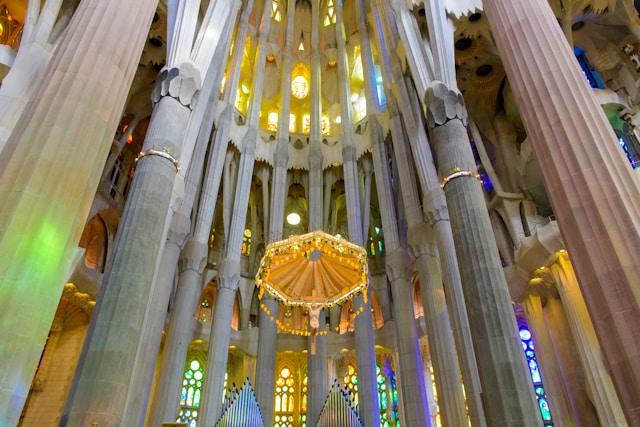
The visit to Barcelona’s Sagrada Família will serve as one of the journey’s most symbolically rich moments. Coinciding with the centenary of architect Antoni Gaudí’s death, the Pope will inaugurate the Tower of Jesus Christ—the basilica’s crowning feature—during a ceremony that includes a public blessing followed by a display of light and fireworks. The event encapsulates the intersection of faith, art, and cultural identity that defines much of Spain’s religious heritage.
Youth and the Future
Young people will occupy a prominent place in the Pope’s itinerary, with events designed to engage youth from Spain and beyond. Leo XIV aims to deliver a message that not only addresses their concerns but also invites them to actively shape the future of the Church and society.
Bruni indicated that the Pope intends to inspire a generation capable of envisioning a different kind of leadership, one rooted in holiness and service rather than power. In what he described as “an age of strong men,” the Pope’s call is to “raise up holy men and women,” offering an alternative vision for societal progress.
A Journey of Symbolism and Substance
The Apostolic Journey is also notable for its symbolic richness. Stops range from institutional centers such as the Royal Palace and the Congress of Deputies to iconic venues including the Santiago Bernabéu Stadium and Madrid’s Movistar Arena. These diverse settings reflect the dual nature of the Pope’s mission—both ecclesial and public.
An especially significant moment will occur early in the visit, when Leo XIV travels to the “Cedia 24 Horas” project in Madrid, a center dedicated to supporting vulnerable individuals and the homeless. This gesture underscores the Pope’s emphasis on concrete action and solidarity.
Looking Ahead
While the visit will address numerous contemporary issues—including the Church’s ongoing efforts to confront abuse through prevention and reparative justice—its broader message is one of hope and engagement. Even in the absence of certain anticipated events, such as a private meeting with abuse victims, the journey seeks to position the Church as an active and constructive participant in society.
As Pope Leo XIV prepares to embark on this significant trip, his message is clear: the Church, grounded in its historical legacy, remains a vital voice in addressing the challenges of today and shaping the possibilities of tomorrow.
- Raju Hasmukh with files from Vatican News
Related Images: