
















New U.S. sanctions targeting key Cuban sectors intensify economic hardships as the Catholic Church and Caritas expand aid efforts.
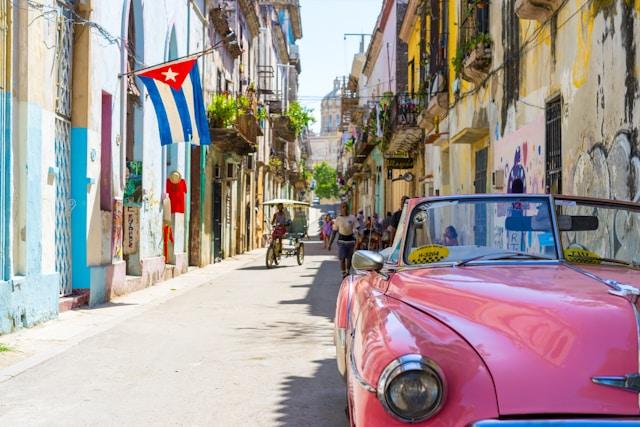
Newsroom (15/07/2026 Gaudium Press ) Cuba is facing renewed economic pressure following the announcement of new United States sanctions that target key state institutions at a time when the island is already struggling through one of its most severe economic and social crises in recent decades.
On July 13, the U.S. State Department unveiled additional restrictions aimed at Cuba’s Ministry of Tourism and nine other state entities involved in sectors including foreign trade, fuel and public services. The measures, published by the Office of Foreign Assets Control (OFAC), strike at areas considered central to the country’s economic functioning and development.
The tourism sector, one of Cuba’s principal sources of economic activity, is among the industries most directly affected by the latest sanctions. The restrictions come at a particularly sensitive moment for the nation, whose energy system continues to endure persistent fuel shortages and extended power outages.
For ordinary Cubans, the combined weight of economic difficulties and infrastructure challenges is increasingly evident in daily life. Access to food and medicines has become more difficult, while essential public services continue to deteriorate. The ongoing energy crisis has placed additional burdens on households, especially the most vulnerable, making it harder to preserve food, obtain water and carry out routine activities.
Against this backdrop, the Catholic Church in Cuba has intensified its calls for dialogue and national solidarity.
For months, Church leaders have publicly highlighted the gravity of the situation. Earlier this year, the Cuban bishops appealed for “paths of dialogue, shared responsibility and solutions capable of restoring hope.” Their message emphasized fraternity, cooperation and a commitment to the common good as essential elements in addressing the country’s challenges.
In a pastoral letter addressed to the Cuban people, the bishops reaffirmed the Church’s commitment to accompanying those most affected by the crisis. They pledged continued support for the poor, the sick, families, prisoners and others living in vulnerable circumstances.
The bishops also expressed a willingness to contribute to easing tensions if called upon to do so, stating their readiness “to help lower the level of hostility between the parties and create spaces for fruitful cooperation for the sake of the common good.”
While Church leaders advocate for dialogue, Caritas Cuba continues its work on the ground, providing practical assistance to communities in need.
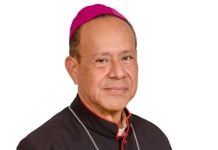
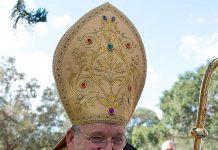
Through the organization’s social media channels, Archbishop Dionisio Guillermo García Ibáñez of Santiago de Cuba, who serves as President of Caritas Cuba, detailed the distribution of humanitarian aid sent from the United States to assist families affected by Hurricane Melissa, which struck eastern Cuba in 2025.
According to the Archbishop, more than 50 containers of humanitarian assistance entered the country through ports and airports. The aid, while limited compared with the scale of need, has benefited approximately 8,000 families.
“This does not solve all the problems,” Archbishop García Ibáñez said, “but at least around 8,000 families have benefited, and that is already something.”
He also clarified the nature of the financial support connected to the relief effort. Funds initially announced at three million dollars and later increased by an additional six million dollars were not transferred directly to Caritas Cuba as cash. Instead, the assistance was provided in the form of humanitarian supplies that were distributed through the Church’s network.
The aid reached the eastern dioceses of Guantánamo, Holguín, Bayamo-Manzanillo and Santiago de Cuba. Families in these areas received food, hygiene products and other essential items aimed at helping them recover from the hurricane’s impact.
Despite the importance of these efforts, Archbishop García Ibáñez stressed that humanitarian assistance cannot by itself resolve the structural difficulties facing the country.
“So many people are asking for help,” he said. “And the assistance available is simply not enough to meet everyone’s needs.”
The Archbishop also underscored Caritas Cuba’s nonpartisan approach to humanitarian work. Assistance is distributed without regard to political views, religious affiliation or the origin of the aid itself.
“Caritas does not ask which country the aid comes from,” he explained. “It simply recognizes that help has been offered, and we receive it in order to distribute it.”
Distribution efforts have involved priests, volunteers and Catholic communities working to reach beneficiaries across eastern Cuba, including remote rural regions that are often difficult to access. According to Archbishop García Ibáñez, these initiatives demonstrate that cooperation in response to human suffering remains possible despite deep political disagreements.
As Cuba confronts mounting economic pressures, energy shortages and social uncertainty, Church leaders continue to promote a message of faith, unity and solidarity. For Archbishop García Ibáñez, the current challenges call not only for material assistance but also for spiritual perseverance.
“In these difficult times we are living through,” he said, “let us keep the Gospel in our minds, upon our foreheads and before our eyes.”
- Raju Hasmukh with files form Fides News
Related Images: