

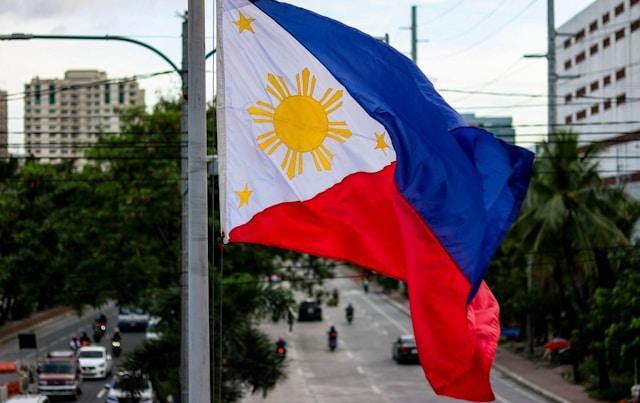
Philippine bishops caution Catholics against visiting South Korea’s Naju shrine, citing Church rulings rejecting alleged Marian apparitions.
Newsroom (17/07/2026 Gaudium Press ) The Catholic Bishops’ Conference of the Philippines (CBCP) has renewed warnings to the faithful against making pilgrimages to the shrine of Our Lady of Naju in South Korea, a site associated with decades-old claims of Marian apparitions and other alleged supernatural phenomena that remain unrecognized by the Catholic Church.
The caution comes as interest in the site has reportedly grown among Catholic groups across Asia, including pilgrims from the Philippines, Malaysia, and other countries seeking to visit the shrine linked to claims of extraordinary religious experiences.
At the center of the controversy is Julia Kim, a South Korean woman who since 1985 has claimed to receive messages from the Virgin Mary and Jesus Christ in the city of Naju. Over the years, her followers have promoted numerous alleged supernatural events connected to the site, including reports that a statue of the Virgin Mary shed tears of blood, claims of Eucharistic miracles in which consecrated hosts transformed into flesh and blood, and accounts of mystical experiences, including stigmata, attributed to Kim.
Despite widespread promotion by supporters, Church authorities have never granted ecclesiastical recognition to the alleged apparitions or messages.
Following years of investigation, the Archdiocese of Gwangju, which has jurisdiction over Naju, concluded that the supernatural origin of the reported phenomena had not been established. Church authorities subsequently prohibited liturgical celebrations and organized pilgrimages connected to the site. The archdiocese also instructed Catholics not to disseminate the alleged messages as authentic revelations.
According to Church findings, many of the purported messages associated with the apparitions appeared to have been copied from other sources, further contributing to concerns over their authenticity.
The Church’s position hardened further under a subsequent Archbishop of Gwangju, who maintained the prohibition against activities tied to the shrine. The archbishop also decreed that priests, religious, and lay faithful who participated in the celebration of sacraments or sacramentals at the shrine established by Kim would incur automatic excommunication.
Nevertheless, supporters of the Naju phenomenon have continued to promote the alleged apparitions and associated messages. As a result, Church authorities have repeatedly reaffirmed that the shrine built on the so-called “Mountain of the Most Holy Mother,” along with the religious services conducted there and the messages attributed to supernatural sources, lack official ecclesiastical approval.
Catholic leaders have consistently advised the faithful not to visit the site as a destination for religious pilgrimage.
As reported by The Pillar, Philippine bishops have emphasized that obedience to the Church’s discernment remains a fundamental measure of authentic Marian devotion. In reminding Catholics of the Church’s long-standing judgment on Naju, the prelates stressed that genuine devotion to the Blessed Virgin Mary must always remain rooted in fidelity to the Gospel, participation in the sacramental life of the Church, and adherence to the Church’s Magisterium.
Church leaders say the warnings are intended not to discourage Marian devotion, but to safeguard the faith of believers and prevent confusion, division, or misunderstanding arising from unverified private revelations. By urging Catholics to follow official Church guidance, the bishops seek to reinforce the principle that claims of supernatural phenomena must be carefully discerned and evaluated before being embraced by the faithful.
The renewed warning underscores the Church’s continuing effort to direct Catholics toward approved expressions of devotion while discouraging participation in movements and sites that have been judged to lack ecclesiastical recognition. For Philippine bishops, fidelity to the Church’s discernment process remains essential in ensuring that devotion to Mary strengthens, rather than complicates, the spiritual life of the faithful.
- Raju Hasmukh with files from Infocatholica
Related Images: