










Why did the Virgin Mary present herself as Our Lady of Mount Carmel in one of the apparitions at Fatima?
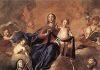
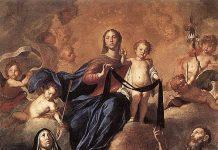
Editorial ( July 15, 2026, 8:00 PM , Gaudium Press ) In her last apparition at Fatima, during the Miracle of the Sun, the Blessed Virgin showed the assembled crowd a sequence of scenes representing the Mysteries of the Rosary. With each new scene unfolding in the sky, She appeared under a title by which the faithful usually invoke Her. And it was thus that, in the vision of the Glorious Mysteries, She appeared as Our Lady of Mount Carmel, whose feast the Church celebrates on July 16.
Since everything that the Blessed Virgin Mary does has its reason for being, there will undoubtedly be a connection between this manifestation of Our Lady of Mount Carmel, the Glorious Mysteries, and the message of Fatima that She revealed on that occasion. It seems to me of great interest, therefore, to seek to deepen this relationship, also considering the special beauty it contains.
Devotees of Our Lady even before She was born.
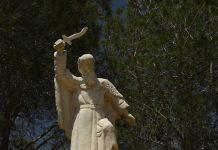
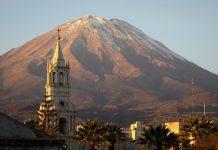
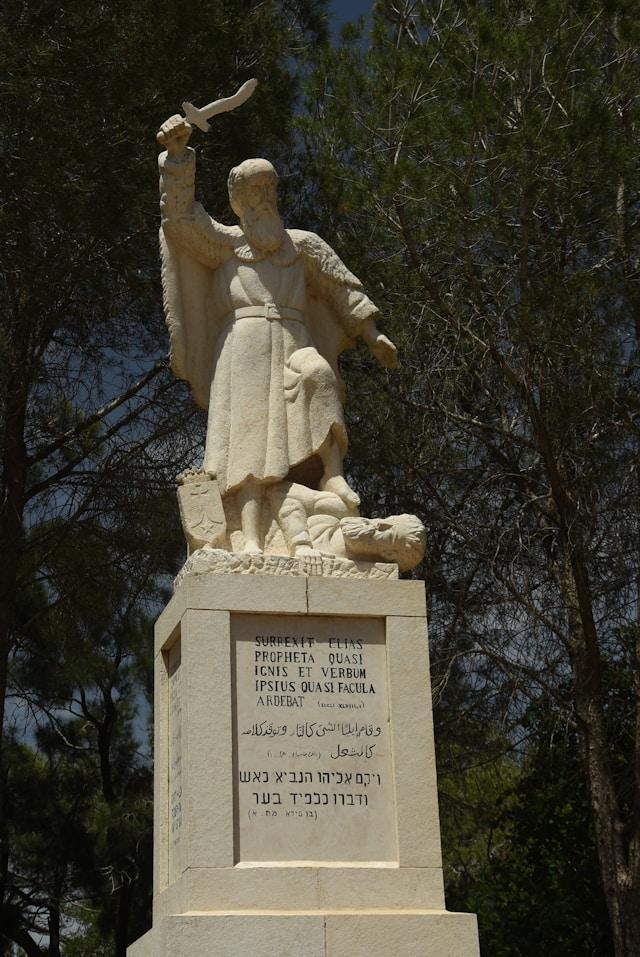
The term Carmo refers to Mount Carmel in the East. There, according to a highly respectable tradition – and there is every reason to believe it to be true – the prophet Elijah gathered a group of disciples and with them formed the Carmelite Order, in praise of the Virgin Mother who was to come, and in anticipation of Her.
Thus, the first wave of devotion to Our Lady, centuries before her birth, was formed by the sons of the prophet Elijah who awaited her. And Saint Elijah represents the extreme of this devotion because, as is common doctrine in the Church, he will fight at the end of the world against the Antichrist, the last enemy of Our Lord and his Blessed Mother. Elijah, therefore, constitutes a kind of bridge between the beginning and the end of devotion to Our Lady in the history of humanity.
It is to be supposed that, in its beginnings, this devotion developed and persevered amidst all kinds of difficulties and objections. For it arose at a time when the chosen people were increasingly closing themselves off from their own mission, from their own spirit, and, therefore, would have been repulsed by this Carmelite vein that foreshadowed the Virgin Mother, just as later heretics of all times hated devotion to Our Lady.
Probably, the hermits of Mount Carmel, representatives of the first fruits of love for the Holy Mother of God, were persecuted, looked down upon, slandered, and silenced. Despite this, and in the humility of their situation, they foresaw the coming of Our Lady.
And they were right, for She came. And not only did She come, but She received the greatest glorification that could be bestowed upon a mere creature: She became the Spouse of the Divine Holy Spirit, the Word, the Second Person of the Holy Trinity, becoming incarnate in Her.
The honor of worshipping the Blessed Virgin in flesh and blood.
At the end of her sublime earthly existence, Mary had an extremely gentle death: an effective and complete separation of soul and body, but in such a delicate way that the Church, in its incomparable language, calls Our Lady’s passing “dormition.” Shortly afterward, by the design and work of Our Lord Jesus Christ, the Blessed Virgin Mary resurrected and was taken to Heaven in body and soul. Thus Our Lady received another glorification: a resurrection in the manner of Jesus, and an Assumption also comparable to His Ascension. Indeed, in the language of old, Our Lady of the Assumption is also called Our Lady of Glory, to signify the incomparable brilliance that marked her entry into Heavenly Paradise.
This conclusion to Our Lady’s earthly life can be taken as the end of the Carmelite history of the Old Testament (although, strictly speaking, it was already in the New Testament). Those Carmelites had the joy and the distinguished honor of venerating the Blessed Virgin in flesh and blood, and not through images. Nothing prevents us from presuming that Our Lady ascended Mount Carmel and there placed herself before her children and devotees, in hours of ineffable communion. The pious, entirely reasonable hypotheses that can be made in this regard are countless.
With the Assumption of Our Lady and her glorification in Heaven, this stage in the existence of the Carmelite Order ended in a magnificent, splendid way. A relationship is established between Carmel and glory: the devotion, pursued, faithful, prophetic, struggles until the moment it is confirmed by God, and begins to shine in the highest Heaven, in the person of the Virgin Mother.
A dry, old tree trunk, destined to crumble?
Then, the story of Carmel begins again. The order, existing only in the Near East, developed somewhat, but one gets the impression that the Christians of that region, in the first centuries, did not give it much importance, depriving themselves of the benefits it could bring them. This attitude towards Carmel was one among many infidelities of Eastern Christendom, which ended up being punished by the Saracen invasions, which, among other calamities, caused the Carmelites to flee to the West.
Europe, entirely Catholic and full of faith, was undertaking the Crusades to liberate the Holy Land. On this continent, the Carmelite friars began to wander, like members of an almost unknown order, little admired and on the verge of disappearing. Elias’s religious family seemed like a dry, old trunk, destined to crumble to dust.
It was the moment Our Lady had been waiting for to make a flower bloom atop the withered branch: Saint Simon Stock. This Englishman of recognized virtue had been elected to the position of General of the order. However, he did not exercise effective authority over his subjects, because Carmel still lacked a cohesive and uniform legal structure capable of preserving its spirit, promoting it, and transmitting it to posterity. [A situation that persisted even after Pope Innocent IV approved the rule of the Brothers of Our Lady of Mount Carmel in 1245.]
However, virtue compensated for the lack of authority. Praying fervently to Our Lady, Saint Simon implored Her not to allow the Carmelite Order to disappear. In the midst of this distressing situation, the Blessed Virgin appeared to her good servant [in 1251] and gave him the scapular, to be worn over his clothing.
At that time, servants wore a tunic as civilian attire. Over it, they wore a smaller tunic, which, by its color and distinctive characteristics, indicated the identity of their master. The Carmelite scapular was similar to this small tunic. Our Lady, therefore, gave Saint Simon Stock a livery proper to her servants, to be worn by all Carmelites, and promised: “Those who die clothed in it will not suffer the fires of hell.” Whoever devoutly wears the Carmelite scapular will receive the grace of final perseverance.
From this merciful intervention of the Mother of God, the Carmelite Order flourished again and experienced other periods of glory, emphasizing devotion to the Blessed Virgin throughout the Catholic Church. In the succession of splendors that began then, three suns were born, to mention only these, which will shine forever in the firmament of the Church: Saint Teresa the Great, Saint John of the Cross, and Saint Thérèse of the Child Jesus.
In times of desolation and chaos, Mary makes herself present.
Let us therefore retain the grandeur of the history of Carmo: an alternation of glories and misfortunes leading to a decline that foreshadows its disappearance. But an intervention of Our Lady occurs, saving and giving incomparably more than what was there before. Prosperity in the West will be much greater than that seen in Asia.
Alongside her unfathomable goodness, Our Lady, in intervening, also demonstrated the trust that should be placed in Her, as well as her central role in the works She especially loves. Even when these works reach the point where all seems lost, they must await the moment She reserves for Herself to act. As a certain Catholic thinker said, the great interventions of Providence are preceded by dramatic situations, so as to make clear the futility of any human help. Once the failure of men is proven, and in the very hour of desolation and chaos, God intervenes, and Our Lady makes Herself present.
This lesson in trust is even more necessary in light of what followed: while the order founded by Saint Elias experienced new brilliance and glory, the Christendom that had welcomed it became prey to an inexorable process of ruin, which accelerated over the centuries. Until, in 1917, on a hill in Fatima, Our Lady rebuked the decadence, reproached the world for the torrent of sins in which it was immersed, and announced the punishments that would befall humanity if it did not repent and amend its faults. Then, expressing herself with the famous words that we keep in our souls, she made the promise of her reign: “In the end, my Immaculate Heart will triumph!”
And here we return to the consideration of that link to which we referred at the beginning of this article: at the apex of the apparitions in which Our Lady proclaims the establishment of her kingship, in the form of the triumph of her Immaculate Heart, She appears clothed in the garment of her oldest devotion – that of Carmel. And, in this way, she achieves a synthesis between the historically most remote, the most recent – the devotion to the Immaculate Heart of Mary – and the glorious future, which is the victory and reign of that same Heart.
Text extracted from the Herald of the Gospel Magazine, July 2018, no. 199.
Related Images: