









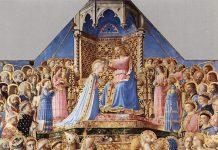









The Brown Scapular is a powerful means of fervently strengthening the spiritual life and a visible sign of our consecration to the Immaculate Heart of Mary.
Editorial Staff (07/15/2026 Gaudium Press) On July 16, the Church celebrates the feast of Our Lady of Mount Carmel, the Virgin Flower of Carmel. This date is an excellent opportunity to recall one of the most beloved and widespread sacramentals among Catholics: the Brown Scapular of Our Lady of Mount Carmel.
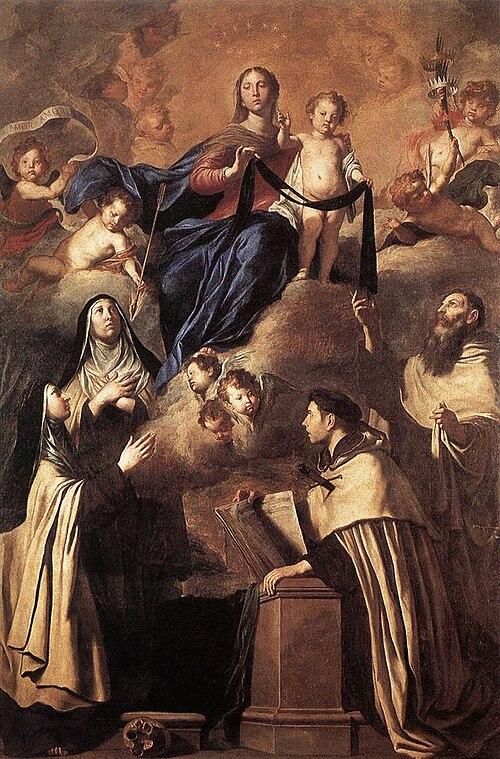
In 1322, the Virgin appeared to Pope John XXII wearing the Carmelite habit and revealed to him the “Sabbatine Indulgence.” “I, the Mother of Mercy, will free from purgatory and lead to Heaven, on the Saturday after their death, those who have worn my Scapular.”
Pope Pius XII stated that “devotion to the Scapular of Carmel has caused a copious shower of spiritual and temporal graces to descend upon the world.” Millions of the faithful throughout the centuries have found in it a visible sign of consecration to the Mother of God and trust in her maternal protection.
What is the Scapular?
The word “scapular” comes from the Latin scapulae, meaning “shoulders.” Originally, it was a garment worn by monks over the shoulders while working. The Carmelites adopted it as a sign of special consecration to the Virgin Mary, imitating her total self-giving to Christ and to neighbor.
The scapular we use today is like a miniature Carmelite habit. It consists of two small pieces of brown cloth connected by a cord, worn around the neck: one piece rests on the chest and the other on the back. It is generally worn under clothing.
Its Origin
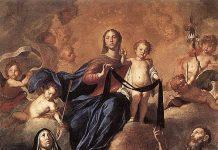
According to tradition, on July 16, 1251, Our Lady appeared to Saint Simon Stock, Prior General of the Carmelites, and handed him the scapular with these words:
“Receive, my most beloved son, this scapular of your Order, a special sign of my fraternal friendship, a privilege for you and for all Carmelites. Whoever dies wearing it shall not suffer eternal fire. It is a sign of salvation, protection in dangers, and a covenant of peace forever.”
Later, the Church extended the use of the scapular to the laity, making it accessible to all who wish to live a more intimate consecration to the Virgin Mary.
12 Important Points About the Scapular
1. It Is Not an Amulet
It is not a magical object nor an automatic guarantee of salvation. Saint Claude de la Colombière warned:
“If you wish to die in sin, you will die in sin, but you will not die wearing the scapular.”
2. It Is a Gift from the Virgin Mary
It was offered by the Mother of God herself as a sign of love and protection.
3. A Sign of Belonging
Whoever wears it publicly declares that he belongs to the family of Mary and places himself under her maternal mantle.
4. A Mini-Habit
It represents the Carmelite habit, symbolizing the desire to live as Carmelites do: in prayer, penance, and service.
5. A Sign of Service
Saint Alphonsus Liguori said that just as we are pleased when someone wears our insignia, Mary rejoices when she sees her children wearing the scapular.
6. Three Principal Meanings
Mary’s maternal love and protection, belonging to her, and the gentle yoke of Christ that she helps us to carry.
7. It Is a Sacramental
The Church recognizes it as a sacred sign that disposes the faithful to God’s grace, fostering devotion and repentance.
8. It May Be Given to Non-Catholics
There are accounts of extraordinary graces, including conversions, among people who wore it with good intentions.
9. Present at Fatima
At the final apparition on October 13, 1917, Our Lady appeared clothed in the Carmelite habit, holding the scapular, and asked that her true children wear it.
10. Miracles Throughout History
The scapulars of Blessed Pope Gregory X and Saint Alphonsus Liguori were found intact centuries after their deaths. Saint John Bosco, Saint John Paul II, and Saint Peter Claver were also great devotees and promoters of it.
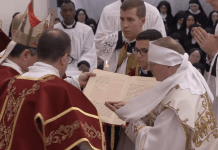
11. Proper Investiture
The first scapular should be blessed by a priest and imposed with the proper prayer, preferably in a community setting.
12. Only the First One Is Blessed
After the initial blessing, newly acquired scapulars do not need to be blessed. Worn-out scapulars should be burned or buried respectfully.
In cases of extreme necessity, such as patients in hospitals, if the scapular is removed, the faithful do not lose the benefits of Our Lady’s promise.
In danger of death, even a layperson may invest someone with the scapular. It is sufficient to recite a prayer to Our Lady and place upon the person a scapular that has already been blessed by a priest.
Those who wear the scapular may also benefit from a plenary indulgence (remission of all punishment due in Purgatory) on the day they receive it; on the feast of Our Lady of Mount Carmel, July 16; of Saint Elijah, July 20; Saint Thérèse of Lisieux, October 1; the Carmelite saints, November 14; Saint John of the Cross, December 14; and Saint Simon Stock, May 16.
To wear the Brown Scapular of Our Lady of Mount Carmel is far more than carrying an object; it is living a covenant of love with the Mother of God. It is a daily reminder that we are not alone on our journey toward Heaven. Mary accompanies us, protects us, and intercedes for us.
[1] With information from ACI Digital
The Brown Scapular of Our Lady of Mount Carmel: A Sign of Protection and Covenant with the Virgin Mary appeared first on Gaudium Press Portugese.
Related Images: