










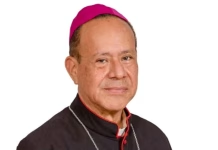

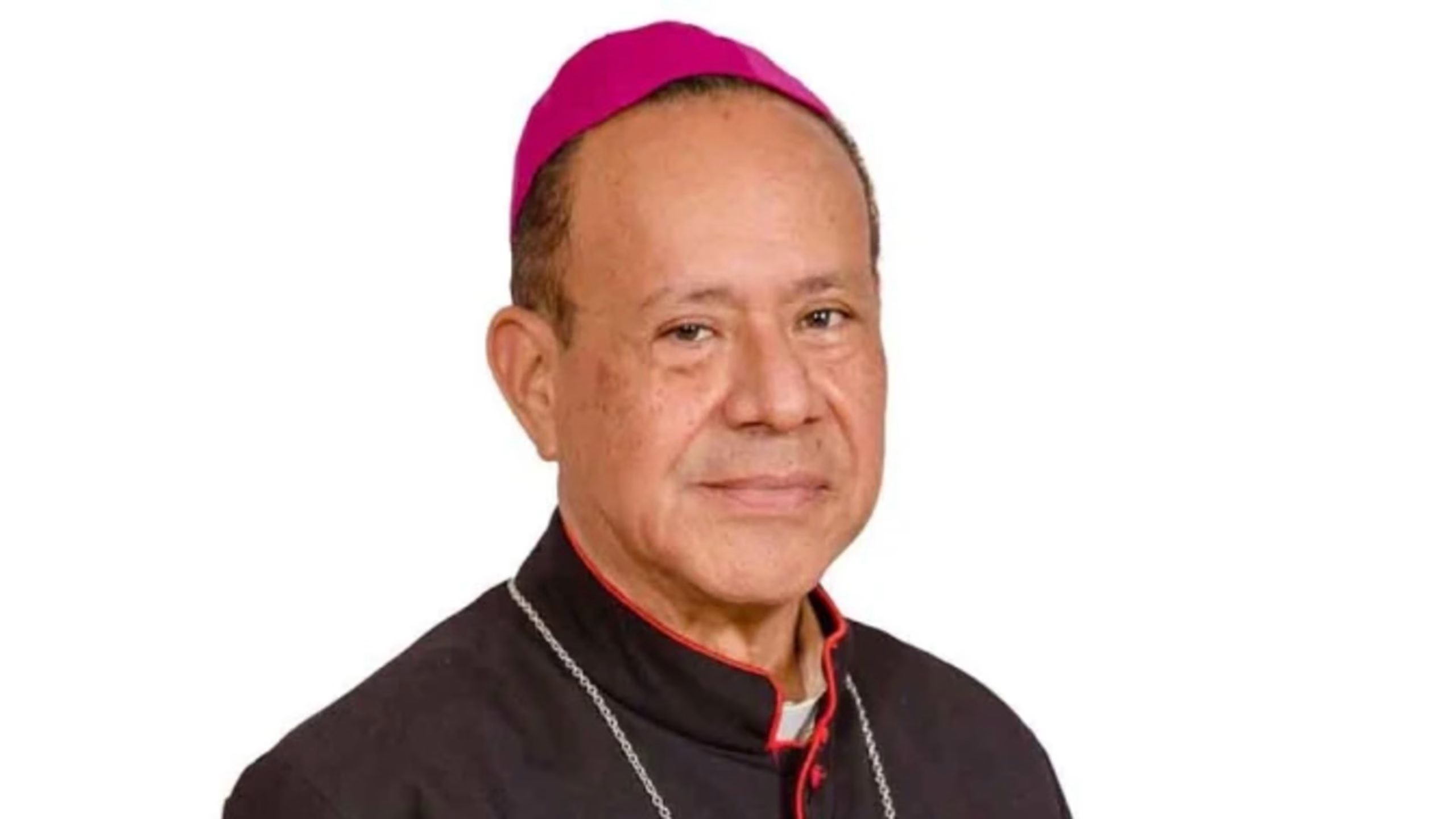
Central American bishops urge Nicaragua to allow medical access to Bishop Juan Abelardo Mata amid growing concerns over his health and uncertain whereabouts.
Newsroom (14/07/2026 Gaudium Press ) The bishops of the Episcopal Secretariat of Central America (SEDAC) have called on the Nicaraguan government of Daniel Ortega and Rosario Murillo to permit access to the trusted physician of Bishop Juan Abelardo Mata, the Bishop Emeritus of Estelí, as uncertainty continues to surround his health and whereabouts.
In a statement issued on July 10, the Central American bishops expressed deep concern for the 80-year-old prelate and respectfully requested authorization for a visit by his personal doctor and the staff responsible for his daily care. The appeal comes amid mounting questions regarding Mata’s condition and location following reports that he has not been seen publicly since the end of June.
The bishops emphasized that the retired bishop suffers from several serious health conditions, including diabetes, vision problems, and the need for a pacemaker, making regular medical supervision particularly important.
Contradictory Accounts Fuel Questions
The concerns intensified after the Nicaraguan Ministry of the Interior released an official account on July 4 regarding Mata’s situation.
According to authorities, the Salesian bishop was first detained by police on June 29 and released later that same day. Officials stated that he was arrested again on June 30 before being transferred to his residence.
However, church sources have challenged the official narrative, arguing that no independent verification has been possible. Information provided to ACI Prensa indicates that Mata’s residence in Tisma, a municipality in the department of Masaya, remains under police surveillance.
Despite government claims that he is at home, sources report that no visitors have been allowed to see the bishop and that no one has been able to confirm his current condition or even his exact whereabouts.
The lack of access has deepened concerns among clergy and faithful alike, prompting regional church leaders to seek humanitarian assurances regarding the retired bishop’s well-being.
A Longtime Critic of the Ortega-Murillo Government
Bishop Juan Abelardo Mata has been one of the most prominent voices within the Nicaraguan Catholic Church for decades.
Born on June 23, 1946, he professed as a Salesian in 1966 and was ordained a priest in 1976. His episcopal ministry expanded when Saint John Paul II appointed him Auxiliary Bishop of Managua in 1988. Two years later, he was named Bishop of Estelí, a diocese he led for more than 30 years until his retirement in 2021.
Throughout his ministry, Mata became widely known for his outspoken criticism of the Ortega-Murillo administration. His public interventions frequently addressed issues related to democracy, governance, and civil liberties, making him one of the most recognizable episcopal critics of the government.
Former Nicaraguan ambassador to the Organization of American States (OAS), Arturo McFields, recently issued a stark warning regarding the bishop’s situation. McFields argued that if the circumstances surrounding Mata are not vigorously denounced, the regime could place the bishop’s life at risk. He attributed this danger to what he described as lingering resentment among authorities toward the prelate because of his consistent and direct criticism.
Bishop Báez Offers a Message of Hope
As uncertainty surrounding Bishop Mata continues, another leading Nicaraguan church figure has sought to encourage those concerned about the country’s future.
During a July 12 homily at St. Agatha Parish in Miami, exiled Auxiliary Bishop of Managua Silvio Báez delivered a message centered on hope and perseverance despite ongoing difficulties.
Speaking to Nicaraguans facing fear, repression, and uncertainty, Báez acknowledged that the history of nations can at times appear “barren and harsh.” Yet he insisted that signs of renewal remain present.
“Not everything is thorns and stones,” the bishop said, emphasizing that the desire for justice remains alive and that the aspiration for freedom has not been extinguished.
He concluded by expressing confidence that enduring values would ultimately prevail.
“Jesus continues to sow the seeds of life, truth, and freedom in our history,” Báez said. “This is the seed of the future.”
Regional Church Awaits Answers
The appeal from SEDAC highlights growing concern within the Catholic Church across Central America regarding the fate of Bishop Juan Abelardo Mata. While Nicaraguan authorities maintain that the retired bishop is at his residence, the absence of independent confirmation and the inability of medical personnel, aides, or church representatives to verify his condition have fueled continued uncertainty.
As calls for transparency intensify, regional bishops are pressing for what they describe as a simple humanitarian measure: allowing the elderly prelate’s trusted physician and caregivers to see him and assess his health. Until that occurs, questions surrounding one of Nicaragua’s most prominent church leaders are likely to persist.
- Raju Hasmukh with files from Infovaticana
Related Images: