











Pope Leo XIV’s 2026 Barcelona visit highlights Gaudí’s legacy, Sagrada Família’s progress, and renewed debate over faith, art, and unity in Spain.
Newsroom (28/05/2026 Gaudium Press ) On June 9, during his apostolic journey to Spain, Pope Leo XIV is scheduled to visit Barcelona, marking a significant moment for both the Catholic Church and the cultural legacy of Antoni Gaudí. The visit will center on the Basílica de la Sagrada Família, where the pope will inaugurate the Tower of Jesus Christ and celebrate a Mass commemorating the 100th anniversary of Gaudí’s death.
The occasion underscores a renewed global fascination with Gaudí, whose contributions extend far beyond architecture into the realms of theology, symbolism, and spiritual experience. This resurgence of interest has been further fueled by his recognition as “venerable” by Pope Francis in 2025 and ongoing speculation regarding a potential beatification.
A Basilica Still in the Making
Nearly a century and a half after construction began, the Sagrada Família continues to evoke discussion about artistic fidelity and historical continuity. Gaudí witnessed only about 10% of the project’s completion during his lifetime, leaving future generations with the challenge of realizing his vision.
Jordi Faulí, the seventh architect to oversee the basilica and its current director since 2012, insists that the project remains firmly rooted in Gaudí’s original intent. “Our obligation is to continue with the construction of Sagrada Família, faithfully following Gaudí’s project,” he said.
Unlike many architectural projects completed posthumously, Gaudí fully anticipated that he would not see the basilica finished. In response, he devoted the final 12 to 14 years of his life exclusively to the project, living modestly while meticulously preparing its future. His preparations included detailed drawings, large-scale models, and a comprehensive theological and symbolic framework designed to guide successive architects.
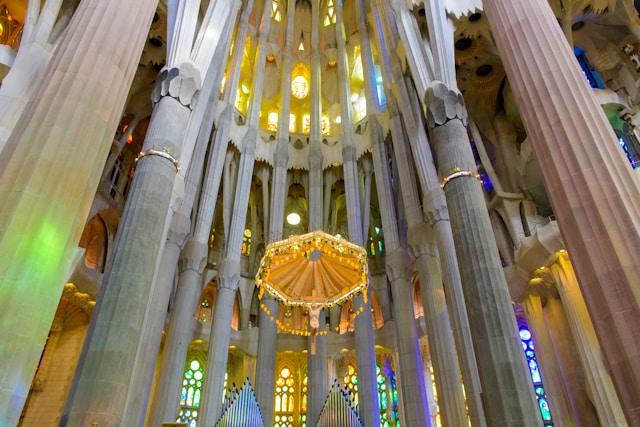
Faulí emphasizes that Gaudí’s work transcends conventional architecture. The basilica, he explains, is “a catechesis sculpted in stone,” intended not only to inspire awe but to invite spiritual reflection. The soaring, tree-like interior structures and richly symbolic façades are crafted to draw visitors into contemplation of Christ’s life and their own, evoking a sense of being “loved, welcomed, and ready to love others.”
Faith at the Core of Genius
For experts involved in Gaudí’s canonization process, his work cannot be separated from his faith. Father Reniel Ramírez Herrera, postulator of Gaudí’s cause since 2025, stresses that the architect’s genius is inseparable from his spiritual worldview.
“Surely the figure of Gaudí is incomprehensible without a vision of faith,” Ramírez said. He notes that even during his formative years, Gaudí approached architecture and art through a deeply religious lens. According to Ramírez, it is this “transcendental element” that not only shaped his designs but also points toward his potential recognition as a saint.
This perspective aligns with earlier assessments by Catholic leaders. During his 2010 visit to Spain, Pope Benedict XVI described Gaudí as “a brilliant architect and devout Christian, whose faith burned brightly,” highlighting the harmony between artistic mastery and personal devotion.
Symbol of Dialogue in a Divided Society
Beyond its architectural and spiritual significance, Gaudí’s legacy has taken on renewed relevance in Spain’s contemporary social and political climate. The country’s long history of tension between secular institutions and the Catholic Church remains a defining feature of its public life.
Ramírez expressed hope that Pope Leo XIV’s visit could serve as a catalyst for dialogue, particularly in a context marked by “deep divisions and elements of an ideological nature.” He pointed to Gaudí’s own life as a model for bridging such divides.
The architect lived through periods of intense anticlerical violence, including the events of the 1909 Tragic Week, yet remained steadfast in his mission. He envisioned the Sagrada Família not merely as a place of worship but as a “courtyard of the gentiles” — a space where believers and nonbelievers alike could encounter the transcendent.
“Even an unbeliever could not only raise their gaze but also open their heart,” Ramírez explained, describing Gaudí’s aspiration for the basilica to foster openness and reflection across ideological boundaries.
A Visit Rich in Symbolism
Pope Leo XIV’s planned inauguration of the Tower of Jesus Christ adds further symbolic weight to the visit. As the tallest and most significant of the basilica’s towers, it represents the culmination of Gaudí’s vision of a structure that unites artistic innovation with profound theological meaning.
The papal visit, therefore, is not only a ceremonial milestone but also an opportunity to revisit Gaudí’s enduring message: that beauty, faith, and dialogue can coexist in ways that transcend time and conflict.
As Barcelona prepares to welcome the pope, the Sagrada Família stands as both a testament to unfinished ambition and a living symbol of continuity — a place where Gaudí’s vision continues to evolve, inviting each generation to reflect on the deeper connections between art, spirituality, and society.
- Raju Hasmukh with files from CNA
Related Images: