












Explore Louis Pasteur’s scientific breakthroughs in microbiology, germ theory, and vaccination, and his enduring Catholic faith.
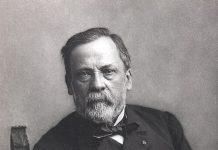
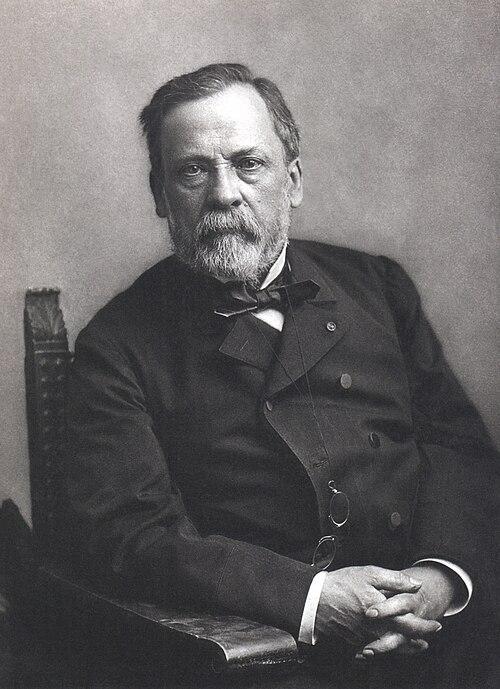
Newsroom (13/07/2026 Gaudium Press ) Louis Pasteur remains one of the most influential figures in the history of science. Celebrated for his pioneering contributions to microbiology, vaccination, and food safety, the French scientist transformed humanity’s understanding of disease and laid foundations that continue to shape modern medicine. Yet behind his scientific achievements stood another defining characteristic that is often given less attention: a lifelong and deeply held Catholic faith.
Born in 1822 and active during a period of extraordinary scientific change, Pasteur distinguished himself as a scientist, logician, philosopher, and believer. As a professor of both physics and chemistry, he pursued questions that would ultimately alter the course of science and public health.
Unlocking the Mystery of Fermentation
One of Pasteur’s most significant discoveries emerged from a practical problem. In 1854, a winemaker sought his advice regarding fermentation, a process crucial to the production of wine. Through careful investigation, Pasteur challenged prevailing assumptions and demonstrated that fermentation was not the result of decomposition. Instead, it was caused by the activity of living yeast.
His research also revealed that the presence of oxygen reduced fermentation, a phenomenon that later became known as the Pasteur effect. This breakthrough represented a major advance in understanding biological processes and established Pasteur as a leading scientific thinker of his generation.
The Birth of Pasteurization and Germ Theory
Pasteur’s investigations extended beyond fermentation. He discovered that microorganisms were responsible for spoiling milk, beer, and wine. Seeking a solution, he developed a method of heating liquids to eliminate harmful bacteria while preserving the product itself.
The technique became known as pasteurization, a process still widely used around the world today.
These experiments also provided critical support for Germ Theory, the idea that microorganisms can cause disease. Although the concept had previously been proposed by German-Hungarian scholar Ignaz Semmelweis, it was Pasteur’s research that helped secure broad scientific acceptance. His findings fundamentally changed medicine, sanitation, and public health.
Defeating the Theory of Spontaneous Generation
Among Pasteur’s most famous scientific achievements was his decisive challenge to the ancient doctrine of abiogenesis, commonly known as spontaneous generation. For centuries, many believed that life could arise naturally from nonliving matter.
In 1864, during a renowned lecture at the Sorbonne, Pasteur described his now-famous swan-neck flask experiments. By sterilizing nutrient-rich broth and placing it in specially designed flasks that prevented airborne contaminants from reaching the liquid, he demonstrated that no microbial life appeared unless the flask was broken or tilted, allowing microorganisms to enter.
The results were clear and transformative. Pasteur confidently declared:
“Never will the doctrine of spontaneous generation recover from the mortal blow struck by this simple experiment.”
His work effectively ended one of science’s longest-standing debates and reinforced the understanding that microorganisms originate from existing life.
A Scientist of Faith
While Pasteur’s scientific accomplishments are universally recognized, his religious convictions are less frequently emphasized. Some biographical accounts have portrayed him as reserved or indifferent toward religion. Yet his personal correspondence and statements reveal a man whose Catholic faith remained central throughout his life.
Raised in the town of Arbois, France, Pasteur grew up in a modest and hardworking family. His father, a tanner and veteran of Napoleon’s army, instilled in him discipline, duty, and belief in God. Alongside his classical education, Pasteur received religious instruction and maintained his Catholic practice as he advanced into the increasingly secular scientific world of nineteenth-century France.
Although he never sought to become a public religious advocate, he regularly attended Mass and frequently referred to God in his writings. His faith endured until the end of his life, symbolized by the rosary placed in his hand at burial.
Faith and Reason in Harmony
Pasteur rejected claims that scientific progress required abandoning religious belief. At a time when some intellectuals promoted atheistic interpretations of science, including thinkers such as Émile Littré and Auguste Comte, Pasteur maintained that faith and reason were not enemies.
To him, scientific inquiry and spiritual truth pointed toward the same ultimate reality. Rather than viewing religion as an obstacle to knowledge, he saw the study of nature as a path that deepened wonder and appreciation for creation.
Near the end of his life, Pasteur expressed this conviction in one of his most famous remarks:
“I have the faith of a Breton peasant, and by the end of my life I hope to have the faith of a Breton peasant’s wife.”
The statement reflected a humility that contrasted sharply with his international scientific fame. Despite his achievements, Pasteur continued to value simple and steadfast faith.
Science in Service of Humanity
Pasteur’s religious worldview also influenced his understanding of scientific responsibility. He viewed the laboratory not merely as a place of discovery but as a place of service. The advancement of medicine, he believed, should benefit the poor, the sick, and the suffering.
This perspective helped shape a career dedicated to improving human well-being. His work in microbiology and medicine saved countless lives and demonstrated how scientific innovation could become a powerful force for compassion and public good.
A well-known anecdote further illustrates this outlook. According to the story, an atheist once mocked the rosary Pasteur was holding, unaware that he was speaking to one of the world’s greatest scientists. Saddened by the ridicule, Pasteur reportedly replied:
“The more I study nature, the more I stand amazed at the work of the Creator.”
Only afterward did the critic realize the identity of the man he had challenged.
An Enduring Legacy
Louis Pasteur died in 1895, leaving behind a legacy that transformed medicine, biology, and public health. His discoveries concerning fermentation, microorganisms, pasteurization, and Germ Theory changed the world and continue to influence scientific practice today.
Yet his life also offers another enduring lesson. For Pasteur, scientific excellence and religious faith were not opposing forces but complementary pursuits. His example stands as a testament to the possibility of combining rigorous empirical inquiry with deep spiritual conviction.
The words chosen for his epitaph at the Institut Pasteur capture this vision:
“Happy the man who bears within him a divinity, an ideal of beauty and obeys it: an ideal of art, an ideal of science, an ideal of country, and an ideal of the virtues of the Gospel.”
In both science and faith, Louis Pasteur sought truth with humility, dedication, and a profound sense of wonder—a legacy that continues to inspire generations around the world.
- Raju Hasmukh with files from NC Register
Related Images: