












New Vatican Gardens mosaic of Our Lady of Gietrzwald highlights Poland’s Marian heritage and strengthens ties with the Holy See.
Newsroom (13/07/2026 Gaudium Press ) A newly inaugurated mosaic of Our Lady of Gietrzwald in the Vatican Gardens is being hailed as both a spiritual symbol and a diplomatic gesture, reinforcing centuries-old ties between Poland and the Holy See while renewing hopes for a future papal visit to one of the country’s most significant Marian shrines.
The June 30 inauguration ceremony was attended by Cardinal Pietro Parolin, the Vatican secretary of state, and Archbishop Tadeusz Wojda, president of the Polish bishops’ conference. Speaking at the event, Archbishop Wojda said the installation represents far more than an artistic tribute.
“In inaugurating this mosaic, we believe it will contribute to an even deeper relationship between Poland and the Holy See,” he said, adding that “Poland and the Church in Poland are awaiting the Holy Father’s visit.”
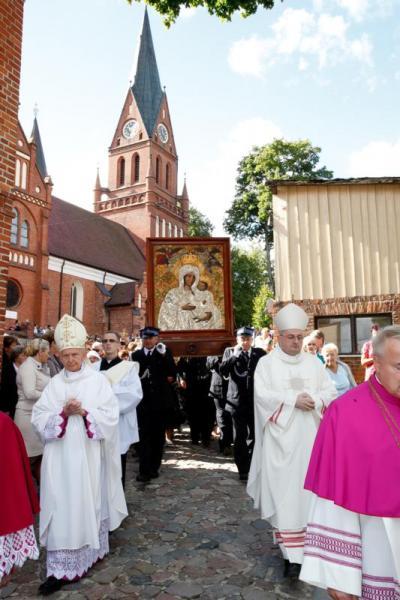
The mosaic commemorates the Marian apparitions reported in the village of Gietrzwald, located in Poland’s northeastern Warmian-Masurian lake region. Often referred to as the “Polish Lourdes,” the rural sanctuary is preparing for major celebrations in 2027, marking the 150th anniversary of the events that have made it a unique destination in Catholic history.
A Shrine Preparing for Global Attention
Interest in Gietrzwald has grown amid invitations extended to Pope Leo XIV by Polish church leaders and political figures, including President Karol Nawrocki, who visited the Vatican in September 2025. Such invitations have fueled speculation that the normally quiet pilgrimage site could become a center of international attention and renewed Marian devotion.
For Archbishop Wojda, the Vatican mosaic serves as both a reminder of the shrine’s significance and a symbolic invitation to the Pope.
“It is a great honor that the image of Our Lady of Gietrzwald, deeply rooted in Poland’s spiritual history, has found a place near the See of Peter,” he said. “One could say that today Gietrzwald comes to the Vatican, and Poland brings to the heart of the Church a part of its history, its faith, and its spirituality.”
He further described the installation as “much more than a work of art,” calling it a testimony to the enduring faith of the Polish people and a sign of the Church’s unity across nations, languages, and traditions.
A Historic Message in the Polish Language
The apparitions of Gietrzwald occurred in 1877, during a period when Polish national identity, language, and culture faced significant challenges. According to accounts, the Virgin Mary appeared to two young girls approximately 160 times over the course of two months, with some apparitions occurring twice daily.
Archbishop Wojda emphasized the historical importance of one particular aspect of the reported visions: Mary’s use of the Polish language when speaking to the children.
“It was a sign that God does not forget his children, and that Mary remains close to her sons and daughters even when history places them before difficult trials,” he said.
For many Polish Catholics, this detail has given Gietrzwald a special place in the nation’s religious and cultural memory. The archbishop described the apparitions as a unique gift to Poland, one that continues to resonate generations later.
A Singular Place in Catholic History
The events at Gietrzwald stand out not only for their duration but also for their distinctive character. Unlike many famous Marian apparition sites, the reported encounters involved extensive conversations between the visionaries and the Virgin Mary.
Polish filmmaker Jan Sobierajski, who recently completed a documentary on the apparitions, noted that the shrine remains relatively unknown outside Poland despite its extraordinary significance.
“To this day, these are the only Marian apparitions on present-day Polish soil officially recognized by the Holy See,” Sobierajski said.
He added that the visionaries engaged in weeks-long dialogue with Mary, discussing not only theological issues but also practical concerns affecting everyday life. Historical accounts indicate that these conversations touched on topics including the Immaculate Conception as well as ordinary human struggles.
This combination of frequency, duration, and dialogue distinguishes Gietrzwald from globally recognized Marian sites such as Lourdes and Fatima. While those shrines attract millions of pilgrims annually, Gietrzwald’s story remains comparatively less familiar internationally, despite being one of the most concentrated series of reported Marian apparitions in Church history.
Looking Toward 2027
As preparations continue for the 150th anniversary commemorations in 2027, church leaders hope the new Vatican mosaic will increase awareness of Gietrzwald’s spiritual legacy. Archbishop Wojda said the image will stand as a permanent reminder of the message associated with the apparitions.
“From this day forward, she who came 150 years ago to simple people in the land of Warmia will remain permanently present in this place, reminding the world of what matters most: prayer, conversion, and trust in God,” he said.
Whether Pope Leo XIV ultimately accepts Poland’s invitation remains uncertain. Yet the installation of the mosaic in one of the Vatican’s most symbolic locations underscores the growing prominence of Gietrzwald within the global Catholic imagination.
For Poland, the project represents more than a commemoration of a historic Marian devotion. It is a statement of faith, identity, and enduring connection to the Holy See—one now permanently reflected in the heart of the Vatican itself.
- Raju Hasmukh with files from UCA News
Related Images: