




















Pope Leo XIV unveils Magnifica Humanitas, urging ethical AI use, global cooperation, and disarmament from systems of domination, war, and exclusion.
Newsroom (25/05/2026 Gaudium Press ) In a sweeping intervention on one of the defining issues of the 21st century, Pope Leo XIV has called for the “disarmament” of artificial intelligence, warning that emerging technologies risk deepening inequality, enabling conflict, and undermining human dignity. His new social encyclical, Magnifica Humanitas, positions the Catholic Church at the center of global ethical debates about AI, urging that technological progress be placed firmly at the service of humanity.
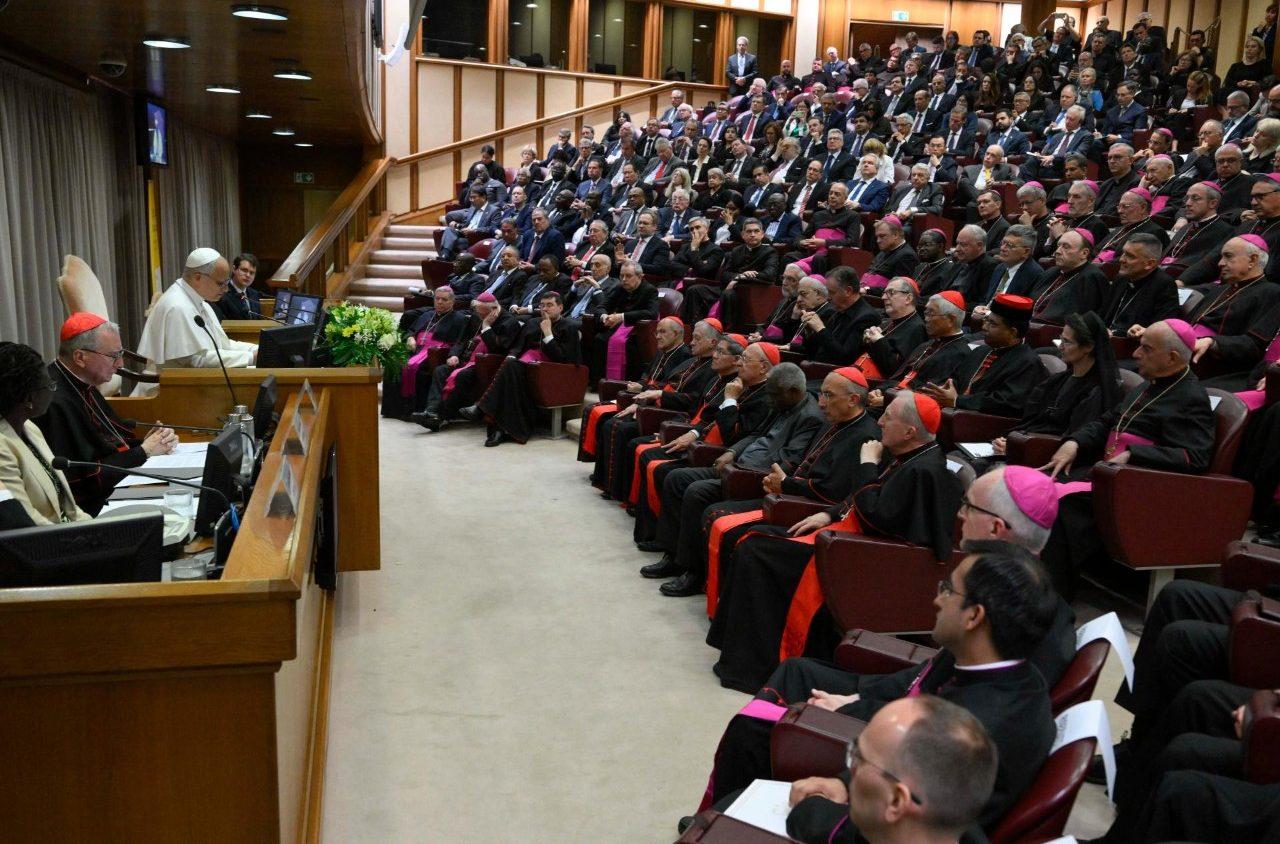
Speaking at the Vatican’s Synod Hall during the encyclical’s presentation, the Pope described the rise of artificial intelligence as an “epochal turning point,” comparable to the upheaval of the Industrial Revolution. Just as Pope Leo XIII responded to that earlier transformation with the landmark 1891 encyclical Rerum Novarum, Pope Leo XIV framed his own document as a contemporary response to the “new things” reshaping society today.
Artificial intelligence, he noted, is no longer a distant innovation but a force already shaping human coexistence—from daily decision-making to the evolving nature of warfare.
A Call for a New “Rerum Novarum”
Drawing a deliberate historical parallel, the Pope emphasized that the Church’s mission remains to interpret social change through the lens of the Gospel and the inherent dignity of the human person. Magnifica Humanitas, he explained, emerged from a wide-ranging process of consultation involving scientists, engineers, educators, political leaders, and families concerned about the future.
That listening process also surfaced what the Pope described as “very troubling voices,” particularly regarding autonomous weapons systems and algorithmic decision-making. He cited concerns that AI could deny individuals access to healthcare, employment, or security based on biased or unjust data.
From this discernment arose a stark conclusion: artificial intelligence must be “disarmed.” Acknowledging the strength of that language, Pope Leo XIV insisted it reflects the seriousness of the moment and the need to “awaken consciences” worldwide.
Technology, Power, and Moral Responsibility
The Pope drew on the Church’s longstanding advocacy for nuclear disarmament to underscore a broader principle: that powerful technologies cannot remain unchecked. Every major technological advancement, he argued, must be accompanied by rigorous moral scrutiny and public accountability.
In this context, “disarming” AI does not imply halting innovation, but rather stripping it of harmful logics—those that turn it into an instrument of domination, exclusion, or even death. The Pope warned that peace itself is jeopardized when technology dulls humanity’s critical thinking and moral vigilance.
Quoting Saint Paul’s exhortation to “keep awake,” he urged global society to remain alert to the ethical implications of technological change, highlighting the dangers of complacency in the face of rapid innovation.
Beyond Risk: Building a Shared Future
While the encyclical delivers a cautionary message, it also offers a constructive vision. Pope Leo XIV stressed that the challenge before humanity is not only to limit the risks of AI, but to harness its potential for the common good.
Reflecting on his own experiences as a missionary in Peru, he recalled the devastation caused by floods in 2017, noting that rebuilding required more than physical reconstruction. True recovery, he said, involves restoring trust, repairing relationships, and renewing hope—efforts that cannot be undertaken alone.
This theme of shared responsibility was reinforced through the biblical example of Nehemiah rebuilding Jerusalem’s walls, which the Pope presented as a model for the ethical development of the digital age. Artificial intelligence, he suggested, can become a “construction site of history,” where technological progress serves human flourishing within a framework of solidarity.
Re-centering the Human Person
At the heart of Magnifica Humanitas lies a firm insistence on the primacy of the human person. Drawing on the teachings of Saint Paul VI, Pope Leo XIV reiterated that authentic development must concern “each man and the whole man.”
He cautioned against reducing individuals to metrics such as productivity or cognitive performance, warning that such reductions risk stripping away the deeper dimensions of human existence. “The person bears within him—or herself—a freedom, an interiority and a vocation to love and worship that no machine can replace or block,” he said.
The Pope called for inclusive digital transformation, urging that no group be excluded from the benefits of technological progress. He also advocated for collaboration among governments, institutions, developers, and affected communities to ensure that AI serves the entire human family rather than a privileged minority.
Toward a “Civilisation of Love”
In closing, Pope Leo XIV reaffirmed the Church’s intention to contribute to global discussions on artificial intelligence—not as a technical authority, but as a moral voice defending human dignity and conscience.
Inviting believers and non-believers alike to become “artisans of hope,” he urged a collective effort to build a more humane and fraternal society. The vision he outlined echoes the “civilisation of love” championed by his predecessors, Saints Paul VI and John Paul II.
Entrusting the initiative to the Virgin Mary, whose Magnificat celebrates the uplifting of the lowly, the Pope expressed hope that this civilisation of love may continue to take shape in a rapidly changing world.
With Magnifica Humanitas, Pope Leo XIV has set a clear ethical agenda for the age of artificial intelligence—one that challenges the global community to ensure that technology remains a tool of humanity, not its master.
- Raju Hasmukh with files from Vatican News
Related Images: