












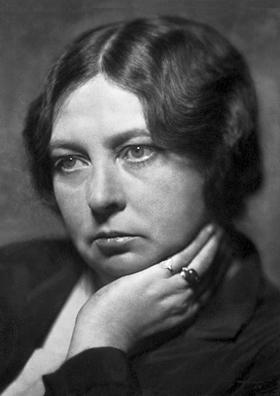
Norway begins the canonization process for Nobel laureate Sigrid Undset, honoring her Catholic faith, literary legacy, and moral courage.
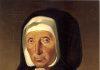
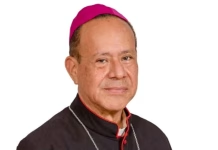
Newsroom (08/07/2026 Gaudium Press ) The Catholic Church in Norway has taken a historic step toward the possible canonization of Nobel Prize-winning author Sigrid Undset, one of the country’s most influential literary and religious figures. Bishop Fredrik Hansen of Oslo announced on July 8 that he has initiated the process that could formally lead to the opening of a cause for beatification and eventual sainthood.
The announcement was made during Mass on the island of Selja, a significant site in Norwegian Christian history and the traditional place of veneration for St. Sunniva, Norway’s first saint. The occasion also marked the 100th anniversary of Undset’s visit to Selja, a location often regarded as the cradle of Christianity in Norway.
In his homily, Bishop Hansen declared that he had begun the necessary work for a formal cause of beatification to commence, potentially as early as the fall. The decision follows a period of study and consultation regarding Undset’s life, writings, and reputation for holiness.
If the process ultimately culminates in canonization, Undset would become Norway’s second female saint after St. Sunniva and the second Nobel Prize recipient to be canonized, following Mother Teresa of Calcutta, who received the Nobel Peace Prize in 1979.
A Life of Faith, Literature, and Public Witness
Before moving forward with the initiative, Bishop Hansen reviewed Undset’s life and concluded that there were clear indications of deep piety and a lasting reputation for holiness. The possibility of opening her cause was subsequently presented to both the Nordic bishops and specialists familiar with her life and work.
In comments explaining his support for the cause, Hansen described Undset as a woman whose faith remained steadfast amid the upheavals of the twentieth century.
“Sigrid Undset lived a faithful Christian life in a world of turmoil. She stood firm in the Catholic faith. She challenged Nazism and strove for Norwegian freedom,” he said.
He further praised her compassion for the poor, her defense of human life, and the enduring impact of her Catholic-inspired writings, which continue to strengthen believers around the world.
Born on May 20, 1882, in Kalundborg, Denmark, Undset grew up in Kristiania, the city now known as Oslo. She achieved international acclaim through her literary achievements, most notably the medieval trilogy “Kristin Lavransdatter,” published between 1920 and 1922. The work established her as one of the leading novelists of her era and remains among the most significant works of historical fiction in the twentieth century.
Her study of medieval Christianity and the Catholic faith profoundly shaped both her personal life and literary vision. On November 1, 1924, she was received into the Catholic Church at St. Torfinn’s Chapel in Hamar. Four years later, she became a lay Dominican and was awarded the Nobel Prize in Literature.
Opposition to Nazism and Service to Norway
Undset’s public witness extended far beyond literature. Following the German invasion of Norway in 1940, she fled into exile in the United States, where she became an outspoken advocate for Norway’s independence and democratic values.
Her opposition to Nazism earned particular recognition among Church leaders assessing her legacy. Bishop Hansen cited her resistance to totalitarianism as a key element of her example, describing her as a courageous defender of freedom during a period of immense global turmoil.
Undset died on June 10, 1949, in Lillehammer, Norway, at the age of 67.
Church Leaders Praise Her Heroic Virtue
Among those welcoming the announcement was Bishop Erik Varden, a Trappist monk, author, and head of Norway’s territorial prelatures of Trondheim and Tromsø.
Varden suggested that Undset herself might have reacted with humor and disbelief to the prospect of sainthood. Yet he argued that a broader view of her life reveals a person who embodied heroic virtue.
“She is no plaster-cast saint,” Varden observed, noting that her Christian journey involved genuine struggles and an intimate understanding of the complexities of human relationships and suffering.
According to Varden, those qualities make her particularly relevant to modern believers. He described Undset as one of the twentieth century’s foremost Catholic intellectuals who used her literary gifts to proclaim Christian truth while remaining deeply engaged with the moral challenges of her time.
He also highlighted her role as a devoted mother, especially in caring for her handicapped daughter, and emphasized her life of prayer. Over the years, he said, he has noticed growing signs of spontaneous devotion to Undset around the world—not only among admirers of her writing, but among those who view her as a genuine witness of holiness.
Varden concluded that her example of “unsentimental devotion and intelligent integrity” speaks powerfully to contemporary society.
What Happens Next?
The canonization process typically begins in the diocese where a candidate died. Since Undset passed away in Lillehammer, her cause falls under the jurisdiction of the Diocese of Oslo.
Once a diocesan bishop officially opens a canonization inquiry, the candidate receives the title “Servant of God.” Church authorities then conduct a detailed investigation of the individual’s life, writings, virtues, and reputation for sanctity.
The findings are forwarded to the Vatican’s Dicastery for the Causes of Saints, where historians, theologians, and other experts carry out further examination.
Should the pope determine that the candidate demonstrated heroic virtue, the individual is declared “Venerable.” To advance to “Blessed,” a verified miracle attributed to the candidate’s intercession is generally required. A second authenticated miracle is typically necessary before canonization and formal recognition as a saint.
With Bishop Hansen’s announcement, the journey toward possible sainthood for Sigrid Undset has entered its first official stage, bringing renewed attention to a figure whose legacy unites literary achievement, intellectual depth, courageous public witness, and enduring Catholic faith.
- Raju Hasmukh with files from The Pillar
Related Images: