



















On May 8, Leo XIV visited Pompeii and Naples, celebrated Our Lady of the Rosary, and venerated San Gennaro’s relics.
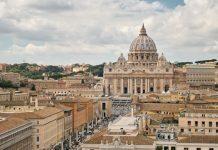
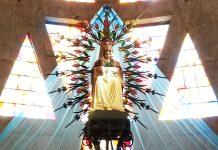
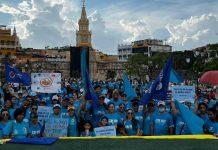
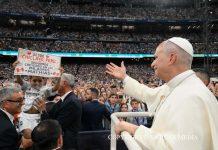
Newsroom (08/05/2026 Gaudium Press ) On the first anniversary of his pontificate, Leo XIV made a pastoral visit to Pompeii and Naples on May 8, arriving amid immense crowds and a deep, widely felt sense of popular emotion. In the streets of Pompeii and throughout the historic center of Naples, thousands of faithful accompanied the Holy Father as he came to celebrate the Prayer to Our Lady of the Rosary and to meet with the Neapolitan Church.
From the outset, the day carried a distinctly communal character: it was not only a religious itinerary but also a shared moment of collective expectation, expressed in faces, chants, and the steady presence of people who saw the Pope’s arrival as something more than a public appearance. For many, it was a return of hope—set against the city’s long memory of sacred signs.
Pompeii and Naples: a day shaped by prayer and symbolism
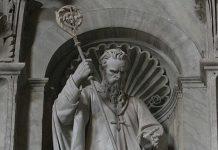
The visit’s most symbolic moment unfolded when Leo XIV entered the Duomo of Naples to venerate the relics of Saint Januarius (San Gennaro). Saint Januarius, a bishop of Benevento and a martyr from the Roman persecutions in the 4th century, has been the most venerated religious figure in Naples for centuries. His blood—preserved in two vials within the cathedral—stands at the center of a devotion described as unique in the world.
In the Duomo, Leo XIV’s presence merged directly with that tradition. In front of Cardinal Domenico Battaglia, Archbishop of Naples since 2020 and often nicknamed “Don Mimmo,” and before the gathered faithful, the Pope lifted the vial containing the already liquefied blood of the patron saint. He kissed it, then showed it to the assembly, as the cathedral filled with long applause.
The “Miracle of San Gennaro” and what it means to the city
The famous “Miracle of San Gennaro” refers to the liquefaction of the blood kept in the reliquaries of the Duomo. Traditionally, it occurs three times a year—in May, September, and December—and when it happens, Neapolitans commonly interpret it as a sign of protection, blessing, and hope for their city.
Conversely, in the longer historical memory of the devotion, the absence of liquefaction has sometimes been read as a troubling omen. This year, the phenomenon occurred in the days preceding Leo XIV’s arrival in Naples, a timing that resonated strongly with the faithful present during the visit.
Many saw the coincidence as meaningful not only for the city, but for the beginning of Leo XIV’s pontificate. Some even compared the atmosphere to Pope Francis’s visit in 2015, when the blood of San Gennaro also liquefied.
🚨A Naples , le miracle de San Gennaro se renouvelle avec le pape Léon XIV
🔴⚡️« Je suis venu à Naples pour trouver cette chaleur que seule Naples sait offrir. »
extrait images ewtn pic.twitter.com/OWFGNS61XU
— Tribune Chrétienne (@tribuchretienne) May 8, 2026
“A city of hope”: reactions among crowds and on social media
Outside the Duomo, the reactions multiplied—on social media and among the gathered crowds. Several people described Naples in language drawn from devotion and collective reassurance. Some spoke of “a blessed city,” while others framed the moment as “a sign for Naples.”
Observers also recalled a popular tradition according to which the blood of Saint Januarius does not liquefy in particular in homage to visiting popes. For those who hold this belief, the episode became even more significant, because it placed the liquefaction in the Pope’s immediate presence—not as a distant religious occurrence, but as a renewed sign observed together by thousands.
When Leo XIV arrived at the Duomo, his words to the crowd distilled that shared sense of warmth. “I came to Naples to find this warmth that only Naples knows how to offer.” he said, welcoming the people as something more than background to a ceremony.
He also explained why he wanted to be there at the center of the city’s devotion: “I want to pay homage to Saint Januarius, so important to your devotion and your faith.”
A message of faith—and an acknowledgement of pain
Leo XIV’s visit did not limit itself to celebration. In addressing the Neapolitan clergy, he offered a frank description of the city’s contradictions: beauty alongside suffering, and life shaped by both hope and hardship.
“Naples is a city of a thousand colors, inhabited by much beauty and at the same time marked by so much suffering, and even bloodied by violence.”
Those words placed the religious moment within the realities faced by Neapolitans today. The Pope called on priests, religious, and lay people to care for the most vulnerable, and urged them never to give in to indifference in the face of social poverty, youth unemployment, and the human wounds that, as he described it, permeate Neapolitan society.
For many gathered in the cathedral and beyond, the appeal offered a bridge between tradition and responsibility—between the symbolic sign of the patron saint and the daily needs of the people who live the city’s difficulties.
Closing in Piazza del Plebiscito: nearly 30,000 faithful await the final stop
The day concluded in the Piazza del Plebiscito in Naples, where nearly 30,000 faithful awaited the Holy Father for the final stop. For many Neapolitans, the visit will remain marked by the sign of San Gennaro and by the Pope’s appeals for peace and hope—a combination that, in the eyes of the faithful, united the cathedral’s ancient ritual with the city’s present call to care, solidarity, and renewal.
- Raju Hasmukh with files from Tribune Chretienne
Related Images: