









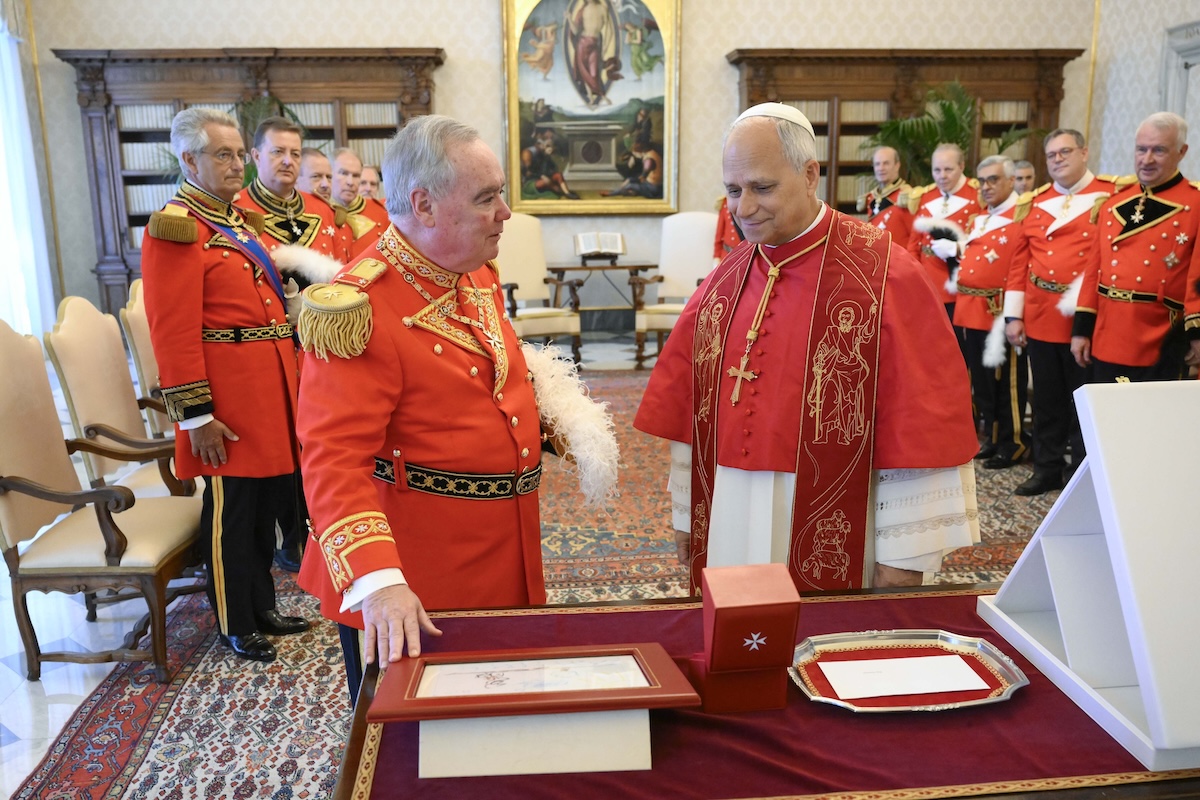
Pope Leo XIV’s first reform of the Order of Malta strengthens internal governance, signaling a return to constitutional balance after years of Vatican oversight.
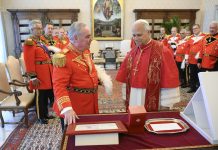
Newsroom (07/07/2026 Gaudium Press ) Pope Leo XIV has made his first legislative intervention concerning the Sovereign Military Order of Malta, introducing a series of constitutional and legal amendments that appear less focused on expanding Vatican oversight and more on strengthening the Order’s internal governance. The move marks a notable change in tone after nearly a decade during which the Holy See exercised extraordinary authority over one of the Catholic Church’s oldest and most distinctive institutions.
According to Zenit, Leo XIV approved a Rescriptum ex Audientia Sanctissimi in April, signed by Cardinal Gianfranco Ghirlanda, revising fourteen provisions contained in the Order’s governing documents. The amendments affect five articles of the Constitutional Charter and nine articles of the Melitense Code, both of which were established under Pope Francis following years of institutional turmoil.
Rather than rewriting the constitutional framework imposed in 2022, the reforms focus on refining specific aspects of governance, accountability, and religious formation. The changes suggest an effort to consolidate stability within the Order while preserving the legal structure that emerged from its recent crisis.
New Limits on Leadership Terms
Among the most significant measures is the introduction of fixed term limits for the highest offices within the Order. Senior leadership positions will now be limited to six-year mandates, with a maximum of two consecutive terms.
The same restrictions apply to representatives of the Second and Third Classes serving on the Order’s governing councils. The objective is to encourage periodic renewal of leadership and prevent the concentration of authority within a small group of officeholders over extended periods.
The reforms also reshape the internal distribution of power. Decisions concerning the creation of Priories, Sub-Priories, and Associations, as well as the approval of their statutes, will no longer rest solely with the Grand Master. Instead, such decisions will require the joint consent of both the Council of Professed and the Sovereign Council.
Under the revised rules, failure of those bodies to reach agreement effectively blocks action, creating a stronger system of checks and balances within the institution.
Changes to Membership and Religious Formation
Additional amendments address the process by which members enter Aspirancy, the initial stage of formation within the Order. Admission decisions will now require the approval of the Grand Master together with the consent of the Council of Professed Members.
The reforms also update regulations governing spiritual retreats and religious exercises. The new framework recognizes the varied vocations and responsibilities of members, establishing retreat requirements ranging from three to eight days depending on individual roles within the Order.
These adjustments reflect an effort to tailor religious formation to the diverse membership of an organization that combines a religious mission with extensive humanitarian activities around the world.
Reforms Shaped by a Decade of Crisis
The significance of Leo XIV’s intervention becomes clearer when viewed against the backdrop of the Order’s most turbulent modern chapter.
The crisis began in late 2016 with the dismissal of Grand Chancellor Albrecht von Boeselager. What initially appeared to be an internal dispute rapidly escalated into a confrontation between the Order’s leadership and Pope Francis.
The conflict reached a turning point in January 2017 when Grand Master Fra’ Matthew Festing resigned at the request of the Pope. Festing had opposed a Vatican investigation into the dispute, maintaining that the Order’s sovereign status should shield it from external interference.
The Holy See responded by appointing a Special Delegate with extraordinary powers. Cardinal Angelo Becciu initially held the role, later succeeded by Cardinal Silvano Maria Tomasi, with Cardinal Gianfranco Ghirlanda playing a key advisory role throughout the reform process.
Over the following years, Vatican oversight reached unprecedented levels. The process culminated in September 2022 when Pope Francis personally promulgated a new Constitutional Charter and Melitense Code. At the same time, he dissolved the Sovereign Council, removed its principal officeholders, and established an interim governing structure.
Balancing Sovereignty and Religious Authority
The 2022 reforms reaffirmed a fundamental principle of canon law: despite its international legal status and diplomatic relations with more than 100 countries, the Order of Malta remains first and foremost a religious order subject to the spiritual authority of the Holy See.
In defending its intervention, the Vatican relied on conclusions reached by the 1953 Cardinalatial Tribunal established under Pope Pius XII. The tribunal determined that the Order’s sovereign attributes are functional in nature and should not be equated with the full sovereignty enjoyed by independent nation-states.
This interpretation has long shaped the delicate relationship between the Order and the Vatican, particularly given the institution’s unique identity. The Order possesses both a religious vocation and an international legal personality, making it one of the most unusual entities within the Catholic world.
Return to Normal Governance
The election of Fra’ John Dunlap as Grand Master in May 2023 marked the beginning of a more stable period. The mandate of the Special Delegate concluded, and governance gradually returned to ordinary constitutional procedures. Cardinal Ghirlanda subsequently assumed the role of Cardinal Patron, replacing the extraordinary structures that had characterized the preceding years.
It is within this environment of renewed stability that Leo XIV’s reforms take on particular significance.
While the Pope fully endorsed the constitutional framework inherited from Francis—approving the amendments in forma specifica and reaffirming that major constitutional changes require papal approval—the content of the reforms is noteworthy for what it does not do.
None of the fourteen amendments expands the authority of the Pope, the Holy See, or the Cardinal Patron over the Order’s day-to-day administration. Instead, the changes redistribute responsibilities among the Order’s own governing institutions, strengthening collective decision-making rather than increasing control from Rome.
Equally significant is the process through which the reforms emerged. Unlike the emergency interventions of the previous decade, the amendments originated from a request by the Grand Master, underwent review by the Cardinal Patron, and were subsequently ratified by the Pope. The sequence suggests a return to regular constitutional governance rather than extraordinary supervision.
A New Tone for the Future
Founded in Jerusalem approximately 900 years ago, the Sovereign Military Order of Malta today operates one of the world’s largest humanitarian networks, serving people in more than 120 countries. Its centuries-long history has been defined by the challenge of balancing institutional autonomy with its religious identity.
Leo XIV’s first legislative act regarding the Order appears to embrace that balance. Rather than reopening debates over sovereignty or extending Vatican control, the reforms focus on improving accountability, encouraging leadership renewal, and strengthening shared governance within the institution.
In doing so, the Pope signals a cautious but meaningful shift: preserving the constitutional settlement forged after years of crisis while entrusting the Order itself with greater responsibility for its internal affairs. The result is a measured return to normality for an institution that has spent much of the past decade under extraordinary scrutiny.
- Raju Hasmukh with files from Infocatholica
Related Images: