









Bishop Erik Varden reframes chastity as integrity and freedom in a London lecture, urging a rediscovery of human nature and spiritual unity.
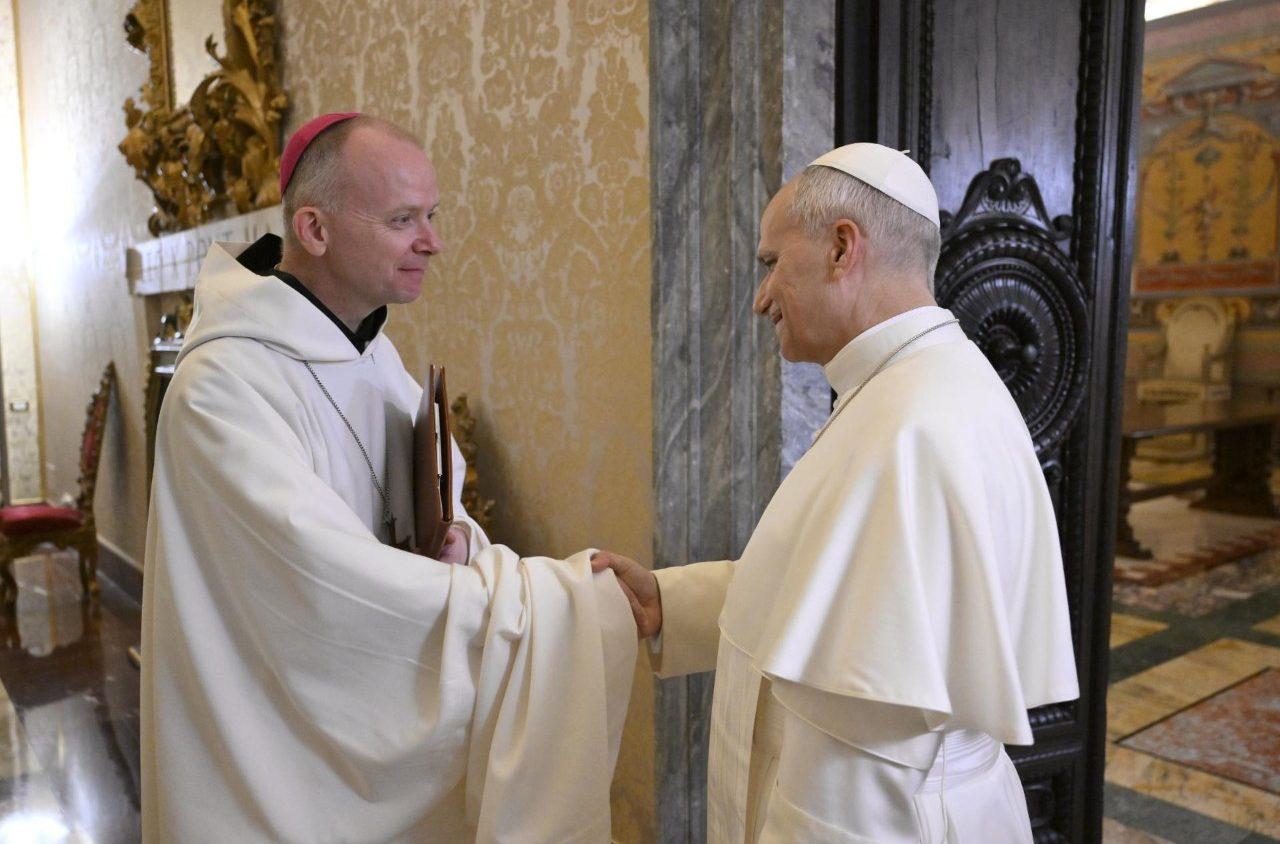
Newsroom (15/06/2026 Gaudium Press ) On May 30, more than 250 young Catholics gathered at St. Patrick’s Church in Soho, London, for Freedom of the Heart, an event aimed at applying monastic wisdom to modern life. At its center was a striking and countercultural message delivered by Bishop Erik Varden of Trondheim: chastity is not repression but liberation—a path toward personal integrity and an integrated human life.
Varden, a former Cistercian monk and a widely read spiritual author, shared the stage with Father Jacques Philippe in a day dedicated to forming Christians who are “confident, wholehearted,” and capable of living a faith that is both active and transformative in the world.
A paradox at the heart of faith
Varden opened his lecture with a paradox drawn from the 33rd chapter of Exodus. On one hand, God declares, “No one may see me and live.” On the other, the same text affirms that the Lord spoke with Moses face to face, as one speaks to a friend. The result of that encounter: Moses’ face shone.
This tension, Varden explained, is not contradiction but revelation. God’s nature exceeds human capacity, yet human beings are created for communion with Him. To grasp this, Scripture must be read as a unified whole rather than in fragments.
The image of God as transcendent fire echoes through both Jewish and Christian tradition—from the Desert Fathers to Blaise Pascal’s famous mystical “fire,” and even to Elizabeth Barrett Browning’s portrayal of angels lowering their gaze before divine radiance. The implication is clear: encountering God requires transformation.
The meaning of a pure heart
Quoting the Beatitude—“Blessed are the pure in heart, for they will see God”—Varden argued that purity is not moral scrupulosity but ontological alignment. Humans are created in the image of God and are called to reflect His being.
Modern debates about what is “natural,” he noted, often devolve into subjective claims—either prohibitive or self-justifying. Varden reframed the question: what matters is not what feels natural, but what corresponds to our deepest identity. According to the biblical vision, the human vocation is nothing less than becoming capable of sharing in God’s nature.
In daily life, bodily needs, emotions, and limitations dominate attention. Yet these are secondary to the deeper truth of human existence: a call to transformation, to see God, and to become like Him.
A monastic awakening
Varden’s own understanding of chastity evolved dramatically when he entered monastic life. As a young man, he saw chastity as restrictive and lifeless—an embodiment of denial, even an unrealistic ideal tied to outdated cultural imagery.
But monastic silence revealed something unexpected. Stripped of distractions, he encountered the internal fragmentation of his own life. “Your inner life is like a suitcase full of unsorted and, for the most part, not very clean clothes,” he said, describing the confrontation with one’s own thoughts and desires.
A nun once described this experience to him as watching an uneditable film of one’s life—forced to examine everything that had shaped one’s vision.
Within that process, Varden encountered a transformative phrase from the Rule of St. Benedict: castitatem amare—to love chastity.
Integrity, not denial
Seeking the meaning of this command, Varden turned to etymology. In Latin, castus was originally synonymous with integer—meaning whole, intact, or integrated. Chastity, in its original sense, referred not primarily to sexual restraint but to personal integrity.
This insight reframed everything. Chastity became not a negation of desire but a harmonization of the human person. It addresses the inner conflict described by St. Paul—the tension between what one wills and what one does—by fostering coherence and unity.
Importantly, Varden distinguished chastity from celibacy. Celibacy is a specific vocation; chastity is universal. It applies to all people, regardless of their state in life, as a call to live with integrity.
Freedom through discipline
To illustrate this vision, Varden contrasted two archetypes. In Roman mythology, the goddess Diana—associated with chastity—was called omnivaga, meaning free to move everywhere. By contrast, St. Benedict criticized the “wanderer,” who drifts aimlessly, governed by whims.
True freedom, Varden argued, is not doing whatever one wants but becoming capable of choosing and pursuing what is good. Like a dancer or an athlete, the human person requires formation to attain freedom.
He invoked the image of a ballerina at Covent Garden: her apparent ease is the result of years of disciplined training. Similarly, the chaste life trains the heart and mind to move with beauty and purpose.
Another image followed: an orchestra tuning before a performance. Initially chaotic, the musicians gradually align themselves to a single note, and harmony emerges. “That is the chaste life,” Varden said—an ordered integration of all parts of the self.
Addressing suspicion and abuse
Varden did not ignore the skepticism surrounding Christian teaching on sexuality. He acknowledged that the Church has often been perceived as offering only prohibitions, a reality that has damaged its credibility.
He also addressed the reality of abuse, describing it as a profound failure of chastity. Abuse reduces others to objects, denying their dignity. Chastity, by contrast, restores the capacity to see—to recognize the other as a person.
A fractured modern landscape
Turning to contemporary culture, Varden observed a growing disconnection between sexuality and procreation, echoing concerns raised in Humanae vitae. He illustrated this fragmentation with a vivid image: an advertisement for in-vitro fertilization beside a woman pushing a stroller filled with kittens.
He also cited a cultural shift identified by writer Miranda France: in an era saturated with sexual imagery, increasing numbers of young people are choosing abstinence. Paradoxically, excess has dulled desire.
The rise of screen-mediated relationships, he warned, further highlights the risk of disconnection from embodied, real human encounters.
Toward a “magnificent humanity”
Varden linked his reflections to the recently published encyclical Magnificent Humanity by Pope Leo XIV, emphasizing that technological progress—especially in artificial intelligence—demands a renewed understanding of what it means to be human.
The Pope’s call to live in a “disarmed” way, Varden suggested, resonates with the logic of chastity: a mode of being marked by openness, humility, and freedom from domination.
Love that sees
In closing, Varden offered two images. The first, from Richard of Saint Victor: ubi amor, ibi oculus—where there is love, there is sight. Love opens the eyes.
The second came from a Zurbarán exhibition in London, where recurring imagery—a cup of water and a rose—symbolized purity and grace grounded in humanity. He quoted a Carthusian monk: “A contemplative is a man intoxicated by pure spring water.”
Chastity, in this vision, is not renunciation but revelation. It is the path to a unified life, rooted in love, capable of seeing clearly. And ultimately, it is the way to become fully human—free, whole, and alive in the presence of God.
- Raju Hasmukh with files from Infocatholica
Related Images: