













As NATO leaders meet in Ankara, a Syriac Christian activist describes growing pressure on Christian communities in southeastern Turkey.
Newsroom (08/07/2026 Gaudium Press ) The 36th NATO Summit is underway in Ankara, bringing together the heads of state and government of the alliance’s 32 member states. Turkey, marking the 74th anniversary of its NATO membership, has positioned itself at the center of the gathering, emphasizing its strategic importance between Europe and the Middle East and its status as the alliance’s second-largest military force after the United States.
The summit reflects Ankara’s continuing geopolitical significance, particularly as President Recep Tayyip Erdoğan has sought to play a mediating role in international crises, most notably between Russia and Ukraine. The U.S. president publicly confirmed his attendance, describing Erdoğan as both “a friend” and “a tough guy,” remarks that have fueled speculation about Turkey’s growing importance in Washington’s regional calculations.
Yet while Ankara hosts world leaders and senior European Union officials, critics argue that the spotlight of international diplomacy risks obscuring ongoing concerns over civil liberties and human rights within Turkey itself. Political opponents, journalists, activists, and religious minorities continue to face mounting pressure, according to activists and community representatives. In the lead-up to the summit, more than one hundred activists and journalists were reportedly arrested while protesting against the NATO gathering.
Among those expressing concern are members of Turkey’s shrinking Christian communities, who say that legal pressures, property disputes, and administrative actions are making daily life increasingly difficult.
To better understand these concerns, La Nuova Bussola Quotidiana spoke with PT, a Syriac Christian from southeastern Turkey and an activist involved in the protection of church property. PT agreed to be interviewed on the condition of anonymity, citing concerns for relatives who share the same family name.
Interview: “Our Community No Longer Has a Place to Remember Its Dead”
PT, can you tell us what happened?
For several years, our community in southeastern Turkey has witnessed repeated attempts to take away the few lands that still belong to Christians. Sometimes these efforts involve exploiting vulnerable individuals or administrative procedures that we believe are unjust.
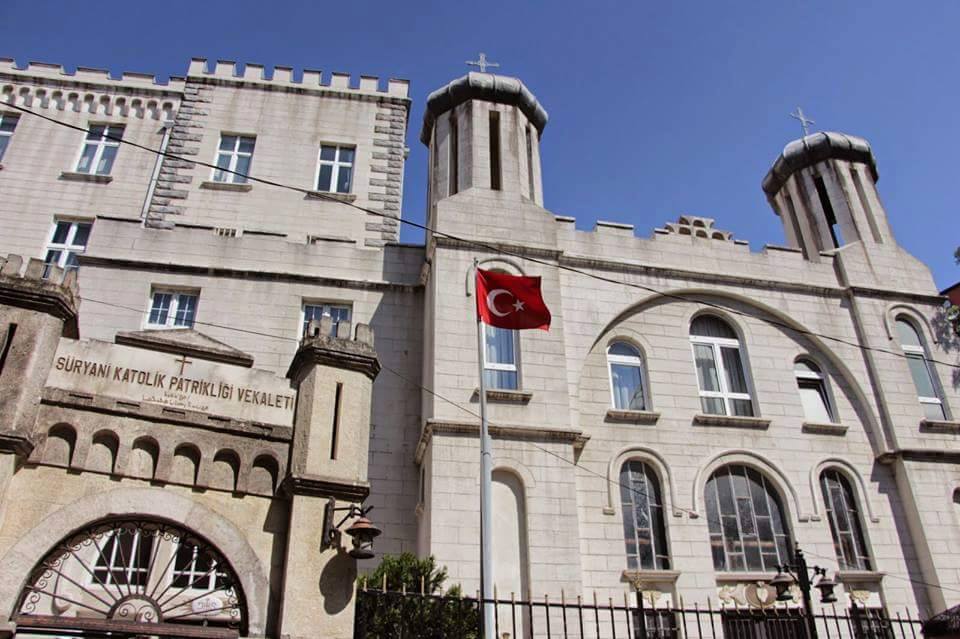
In recent months, our community itself became a direct target. Local authorities shut down our community shelter, sealed the building, and imposed fines amounting to thousands of euros. We believe the accusations used to justify these actions are baseless.
We intend to appeal to the central government, but the consequences are already being felt. The building served many purposes beyond simple community gatherings. After funerals, for example, families would meet there to receive condolences and host relatives and friends. Now, our community has lost a place that was essential for honoring and remembering our dead.
The shelter had been operating for years without any complaints. Then, suddenly, the current mayor decided to close it. In my view, there is little doubt that financial interests played a role in that decision.
In what ways do the central government and local authorities seek to marginalize Christian communities?
One of the most common methods, particularly in regions historically inhabited by Syriac Christians, involves the appropriation of property belonging to Christians who emigrated abroad.
Many Christians left Turkey, especially from the 1980s onward. In numerous cases, agricultural land, homes, and other properties that remained unused have been occupied by private individuals or claimed by public authorities.
A common scenario unfolds when Muslim neighbors argue that a property was sold to them years earlier by a now-deceased owner. In other cases, municipalities or state institutions claim the property was donated to them. False witnesses are often involved in these disputes.
As a result, monasteries and Christian families frequently find themselves trapped in lengthy legal battles to prove ownership of land and buildings that have belonged to them for generations. Unfortunately, these legal proceedings often fail to deliver justice, despite significant efforts and expenses.
In your opinion, is the root of the problem political or religious?
I believe it is both.
The region where we live has become strongly Kurdish, and historically neither local authorities nor the central government have provided meaningful support for Christian communities.
The issue cannot be reduced solely to politics or solely to religion. The two factors are deeply interconnected. Christians often find themselves isolated because they are a religious minority, but also because they lack political influence and representation.
What do you believe Erdoğan’s vision is for Turkey, and how has the country changed during his years in power?
From the perspective of Christians, the situation has never truly been favorable. Even before Erdoğan, many of us felt like second-class citizens.
That said, over the past decade, I believe Erdoğan has pushed the country toward an increasingly centralized and authoritarian style of governance. At the same time, Sunni Islamic identity has gained far greater prominence in public life, even as the Turkish state officially maintains its secular character.
For Christian minorities, these developments have contributed to a growing sense of vulnerability and exclusion.
A Contrasting Reality Behind the Summit
As NATO leaders discuss security, defense, and international stability in Ankara, members of Turkey’s Christian minority say their own security concerns remain unresolved. For communities such as the Syriac Christians of southeastern Turkey, questions of property rights, religious freedom, and equal treatment continue to shape everyday life.
The contrast is striking: while Turkey showcases its role as a key diplomatic and military power on the international stage, some citizens argue that significant challenges remain at home. According to PT, the closure of community facilities, disputes over Christian-owned property, and what many perceive as persistent discrimination are contributing to the continuing decline of one of the region’s oldest Christian populations.
For these communities, the NATO summit is not only a moment of international prestige for Turkey—it is also an opportunity to draw attention to concerns they believe have too often gone unheard.
- Raju Hasmukh with files from La Nuova Bussola Quotidiana
Related Images: