








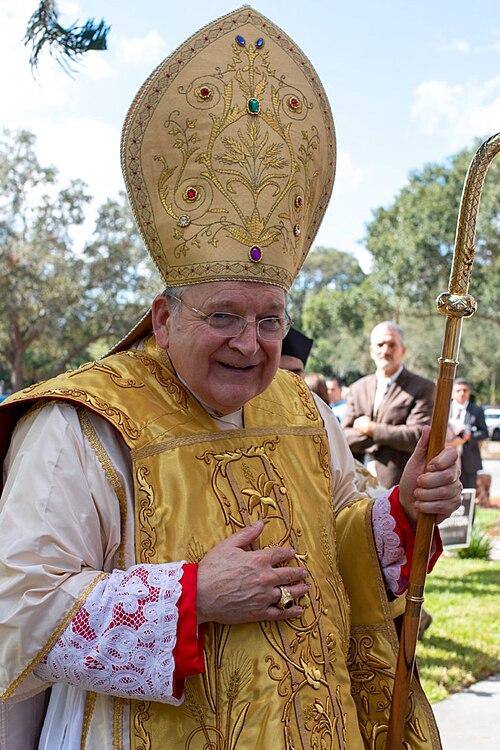
Cardinal Burke praises the return of consistories but questions synodality and warns SSPX episcopal consecrations risk excommunication.
Newsroom (30/06/2026 Gaudium Press ) Cardinal Raymond Burke has offered a measured assessment of the June 2026 Extraordinary Consistory, welcoming Pope Leo XIV’s apparent commitment to restoring consistories as a regular feature of Church governance while voicing significant reservations about the increasingly synodal format adopted during the gatherings.
Speaking to Per Mariam following the second extraordinary consistory of Leo XIV’s pontificate, Burke described the meeting of nearly 180 cardinals as a positive development for the universal Church, emphasizing the importance of bringing the College of Cardinals together for consultation and discussion.
“The cardinals being together gives us an occasion to get to know one another and to discuss important questions with regard to the Church,” Burke said, expressing satisfaction that a second consistory had been convened after what he characterized as a relatively brief initial gathering earlier in the year.
However, the American cardinal signaled continuing unease with the working method that has largely replaced the traditional format of open debate. The modern approach relies heavily on small-group discussions inspired by synodal processes, a development Burke believes warrants further scrutiny.
“The classical format of the consistory was an open debate in which all the cardinals were present and heard whoever was speaking and could respond,” he noted. While acknowledging the Pope’s commitment to the format, Burke admitted he remains “not completely convinced” that the new method serves the Church as effectively as the previous model.
Synodality Remains an Unresolved Question
A major focus of Burke’s critique concerned the broader concept of synodality itself, which was presented to cardinals during the consistory.
According to Burke, the concept continues to lack sufficient clarity and theological definition.
“The whole question of synodality remains unresolved,” he stated. “It’s not clear what it means and it certainly has no history in the life of the Church.”
The cardinal argued that a serious examination is needed to determine both the meaning of synodality and whether it represents an appropriate model for ecclesiastical consultation.
“There really needs to be a critical examination of what is meant by this or whether it is an appropriate way to carry out consultation in the Church,” he said.
Burke also acknowledged that Pope Leo XIV appears committed to maintaining the synodal format for future consistories, but insisted that cardinals who harbor concerns have a responsibility to communicate them openly.
Concerns Over Consistory Priorities
Beyond procedural questions, Burke suggested that the substance of the June consistory focused primarily on societal and global concerns while neglecting some of the Church’s most pressing internal challenges.
According to the cardinal, much of the discussion revolved around issues affecting modern society, including isolation, social fragmentation, and broader cultural concerns.
“The programme was practically—except for the last session on synodality—almost exclusively addressing the world’s concerns,” he observed.
Burke revealed that some cardinals questioned why issues such as the ongoing tensions surrounding the Society of Saint Pius X (SSPX) were absent from the official agenda.
He agreed that broad discussions can sometimes struggle to produce practical pastoral outcomes, arguing that meetings of the College of Cardinals should ultimately lead to concrete actions that improve the care of souls.
“When we cardinals are meeting and talking about something then we should arrive at some pastoral action, some better way of caring for souls, and that isn’t always evident,” he said.
Strong Opposition to Planned SSPX Consecrations
The most urgent issue addressed by Burke was the Society of Saint Pius X’s planned episcopal consecrations scheduled for July 1.
The cardinal expressed deep concern about the move and firmly rejected the Society’s argument that a “state of necessity” exists within the Church that would justify consecrating bishops without papal authorization.
“Certainly the present situation does not constitute a state of emergency,” Burke stated.
He argued that the reasoning behind the SSPX position implies that faithful attached to the Society cannot live their Catholic faith fully within the Church, creating what he described as “a church within the Church.”
Burke grounded his position in what he described as a fundamental doctrinal principle.
“The dogmatic truth is that Our Lord has promised to remain with us in the Church until the last day,” he said. “Even if there are serious difficulties in the Church, and surely there are, we stay by our Lord and we fight and do our part to be faithful.”
He concluded emphatically: “No situation justifies doing something that is intrinsically evil.”
Warning of Canonical Consequences
Addressing the canonical implications of the planned consecrations, Burke maintained that bishops who proceed with episcopal ordinations without a pontifical mandate would incur automatic, or latae sententiae, excommunication.
“Ordaining bishops without a papal mandate will incur a latae sententiae excommunication, and that will have to be published by the Holy See,” he said.
The cardinal clarified that the penalty would apply to those who knowingly and willingly participate in the act.
At the same time, Burke dismissed speculation that the Vatican might attempt to excommunicate all members of the SSPX.
“I don’t think that can be sustained,” he explained, noting that many members of the Society—including priests and lay faithful—are motivated primarily by attachment to the Church’s traditional liturgical heritage rather than any desire for schism.
“I believe there are many faithful who are members of the SSPX, including also priests who don’t have this schismatic spirit: they just love the tradition of the more ancient usage of the Roman Missal.”
Hope for Dialogue Remains
Despite his criticism of the planned consecrations, Burke emphasized that reconciliation remains possible and desirable.
He expressed hope that the Holy See might appoint several cardinals specifically tasked with engaging SSPX leaders and members in direct discussions, suggesting such an initiative could yield more productive results than previous efforts.
“For many of them this is very troubling too because they see it as a schismatic act, but they could be reconciled and that’s what we have to work for,” he said.
Nonetheless, Burke indicated that he sees little evidence of an imminent Vatican intervention before the consecrations take place. Based on public comments from Pope Leo XIV, he said the impression he receives is that the Holy See’s current approach is to allow events to proceed and address the consequences afterward.
As tensions rise ahead of the July 1 consecrations, Burke’s remarks underscore both his concern over a potentially widening rift and his continuing hope that dialogue and reconciliation can ultimately prevail within the Church.
- Raju Hasmukh with files from Infocatholica and Permariam.com
Related Images: