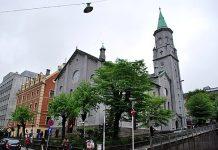













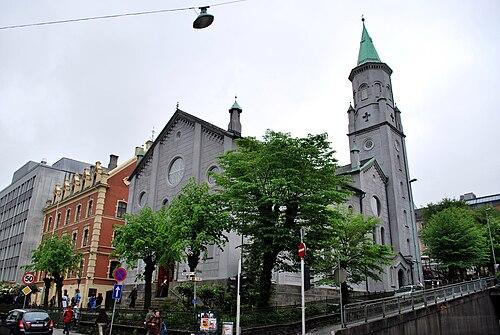
St. Paul’s Church in Bergen, Norway’s largest Catholic church, was formally consecrated 150 years after opening, reflecting Catholic growth.
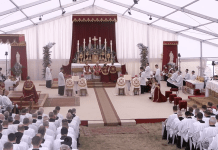
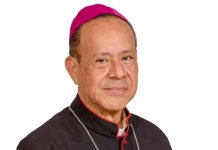
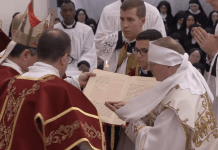
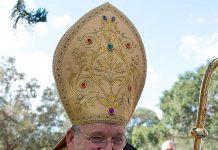
Newsroom (03/07/2026 Gaudium Press ) In a ceremony rich with symbolism and historical significance, the Catholic Bishop of Oslo, Bishop Fredrik Hansen, formally dedicated St. Paul’s Church in Bergen on June 28, marking the first official consecration of the building more than 150 years after it first opened its doors to worshippers.
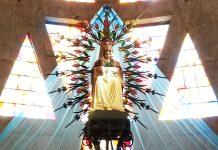
The solemn rite included the traditional anointing of the altar and church walls with holy chrism, the incensing of the altar, and the ceremonial illumination of the church. While such rituals are standard elements of a church dedication, this occasion stood out because St. Paul’s had never been formally consecrated despite having served the faithful since the 1870s.
The church was inaugurated only a few decades after Catholicism was legalized in Norway in 1843. At the time of its construction, Bergen’s Catholic community was remarkably small, numbering only a few dozen believers. Yet the founders of St. Paul’s envisioned a future that extended far beyond the realities of their era. The church was designed to accommodate more than 300 people, a capacity that seemed ambitious given the size of the local Catholic population.
More than a century and a half later, that vision has been realized on a scale few could have imagined.
Today, St. Paul’s Parish is the largest Catholic parish in Norway, serving nearly 20,000 parishioners representing more than 120 nationalities. According to reports cited by the Catholic News Agency (CNA), parish priest Augustinian Canon Alois Brodersen has described the parish as a living expression of the universal Church. Each Mass brings together worshippers from a vast range of cultural and national backgrounds, reflecting the increasingly international character of Catholicism in Norway.
The dramatic growth of the Catholic Church in the country has been driven largely by immigration from Eastern Europe, Asia, Africa, and Latin America. These communities have transformed the demographic landscape of Norwegian Catholicism over recent decades. At the same time, the Church has also welcomed converts from within Norwegian society, including individuals disillusioned with a declining Protestant tradition as well as those coming from agnostic backgrounds.
In a nation historically shaped by Lutheranism, the Catholic Church has emerged as one of the fastest-growing Christian denominations. What was once a small minority community has developed into a visible and expanding presence within Norwegian religious life.
The consecration of St. Paul’s therefore represented more than the formal dedication of a building. During the ceremony, Bishop Hansen emphasized that the event reflected both the history of the local Catholic community and its future mission. The dedication, he noted, serves as a symbol of continued evangelization and the ongoing development of the Church in Norway.
Nationally, Norway’s Catholic population is estimated at approximately 250,000 people, accounting for roughly five percent of the country’s population. Although Catholics remain a minority, this figure makes Norway the Nordic country with the largest Catholic population.
The growth is particularly notable given the country’s religious history. Norway’s transition to Protestantism was not the result of a popular religious movement but was imposed during the Reformation under King Christian III, the ruler who governed both Denmark and Norway at the time. Today’s Catholic resurgence represents a striking development in a country long associated with Lutheran Christianity.
The Church’s infrastructure has expanded alongside its growing membership. Around six religious orders operate in Norway, which is organized into one diocese based in Oslo and two prelatures located in Trondheim and Tromsø. Catholic institutions, including schools and community organizations, have become important pillars of Church life. Among them is a school attached to St. Paul’s Church in Bergen, underscoring the parish’s role as both a spiritual and educational center.
Norwegian Catholicism has also produced notable figures, the most famous of whom is Sigrid Undset, the Nobel Prize-winning author who converted to the Catholic faith and remains one of the country’s most recognized Catholic voices.
For the congregation gathered in Bergen on June 28, however, the focus was not only on the past. The formal consecration of St. Paul’s Church closed a chapter that began in the nineteenth century while opening another centered on the Church’s future. More than 150 years after its construction, the building that once seemed oversized for a tiny community now stands as a powerful testament to the growth, diversity, and enduring confidence of Catholicism in Norway.
- Raju Hasmukh with files form INfocatholica
Related Images: