


















North American bishops urge better formation and clearer communication on synodality as the Church advances implementation worldwide.
Newsroom (06/07/2026 Gaudium Press ) Catholic leaders from North America say that hesitation and resistance toward the Church’s ongoing synodal journey can be overcome through clearer communication, stronger formation, and practical experience of synodality in action.
Speaking after a late-June gathering of continental Church representatives at the Vatican, Archbishop Paul S. Coakley of Oklahoma City underscored what he described as one of the most important lessons emerging from the process.
“A very clear takeaway is the need for more formation in synodality, including its meaning, its methods and its spirituality,” said Archbishop Coakley, who serves as president of the U.S. Conference of Catholic Bishops.
Making Synodality More Accessible
One of the central challenges identified by Church leaders is the complexity of the language surrounding synodality. According to Archbishop Coakley, many Catholics perceive the concept as overly complicated, limiting broader participation.
“Synodality is often presented and perceived by many as a cumbersome and complicated process with language and terminology that is unfamiliar to most Catholics,” he said. “Unless we can simplify how synodality is presented, it risks becoming the exclusive domain of specialists or ‘the initiated’ rather than a way of simply living our faith together.”
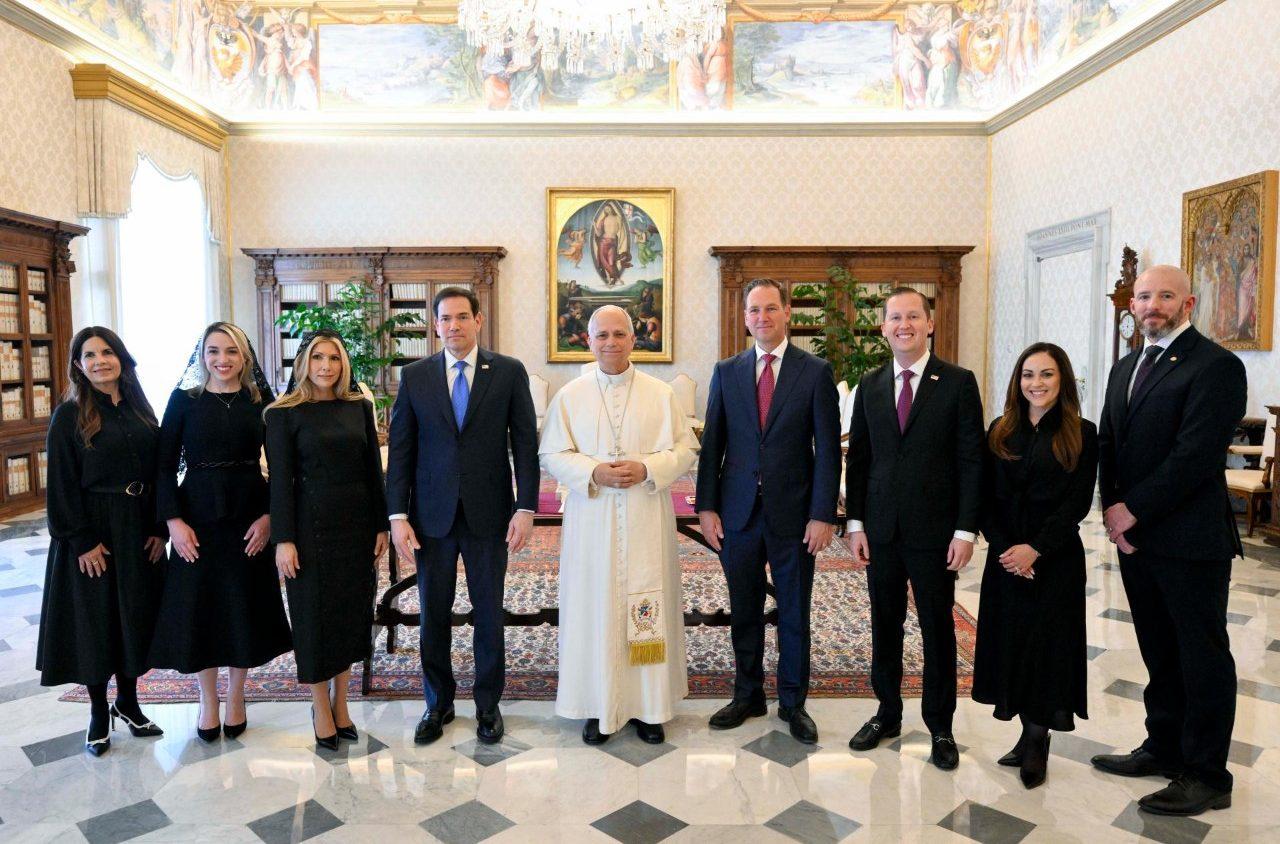
The comments came as representatives from North America joined counterparts from Latin America, Africa, Asia, Europe, Oceania, and the Middle East in meetings at the Vatican from June 23 to 25. The gathering included a private audience with Pope Leo XIV and discussions with members of the General Secretariat of the Synod about implementation of the Synod on Synodality’s final document, released in October 2024.
The North American delegation included Archbishop Coakley; Auxiliary Bishop Juan Miguel Betancourt of Hartford, Connecticut; Bishop Pierre Goudreault of Sainte-Anne-de-la-Pocatière in Québec; and Julia McStravog, senior advisor to the U.S. synod leadership team.
Practical Progress Across the United States
Church leaders point to significant progress in implementing synodal practices across North America, particularly in the United States.
Bishop Betancourt explained that U.S. synod leaders meet monthly to exchange experiences and share insights with diocesan teams nationwide. These regular consultations have strengthened relationships among dioceses and provided opportunities for feedback, discernment, and priority-setting.
Many dioceses have embraced synodality more intentionally through the method known as “conversations in the Spirit,” encouraging participation among clergy, religious, and laity. According to Betancourt, the process has informed pastoral planning efforts, parish consolidations, Mass scheduling decisions, clergy workload assessments, and resource allocation.
Archbishop Coakley noted that the Catholic Church in the United States already has a strong tradition of lay participation through parish councils, diocesan councils, finance councils, school advisory boards, and other consultative structures.
The next step, he said, is strengthening discernment within those bodies and cultivating a spirituality rooted in prayer and attentive listening to the Holy Spirit.
Diversity as a Strength
Bishop Betancourt highlighted the cultural diversity of the Church in the United States as a major asset for synodal life.
“With brothers and sisters from countless nations,” he said, the Church has opportunities to deepen multicultural dialogue, broaden participation, encourage co-responsibility, and strengthen missionary outreach.
At the same time, he acknowledged two persistent obstacles: unfamiliarity with synodal terminology and reluctance among some Catholics to participate in the process.
Church leaders argue that greater involvement from lay faithful—including those who feel marginalized or distant from Church life—is essential to realizing the goals of synodality. Betancourt emphasized that all baptized Catholics share responsibility for the Church’s mission and that wider participation can help overcome clericalism, reduce institutional isolation, and ensure that discernment reflects the gifts of the entire People of God.
He stressed that synodality should not be viewed as a departure from Catholic tradition but rather as a return to it.
“It’s about discerning God’s will, not about personal preferences or agendas,” he said, adding that the ultimate goal is more effective evangelization and renewed outreach to those who have drifted away from the Church.
Canadian Church Pursues Grassroots Initiatives
In Canada, Bishop Goudreault reported similar challenges in engaging Catholics who remain hesitant about synodal participation.
To address this, the Canadian Church is developing online resources and recently launched a network aimed at promoting learning, reception, and conversion to synodality.
“This will take time and patience,” he acknowledged.
For many communities, practical guidance has proven especially valuable. Goudreault said that the “entry points” outlined in the Church’s Pathways document have helped local communities move from discussion to action.
“We learn synodality by living it rather than by talking about it,” he said.
Within his own diocese, Goudreault established a synodal leadership team jointly led by a woman and a priest, symbolizing collaborative leadership. He also convened diocesan synodal assemblies to assist in shaping pastoral priorities.
One notable initiative focused on priest assignments. Rather than relying solely on traditional administrative processes, priests were invited into communal discernment sessions guided by conversations in the Holy Spirit. The meetings examined diocesan needs, priestly charisms, and parish requirements before assignments were finalized.
According to Goudreault, the process fostered greater acceptance because participants had been directly involved in the discernment.
The bishop also embraced accountability by asking his diocesan synodal team to evaluate his own leadership after eight years in office.
“This evaluation process was a genuine opportunity for growth for me,” he said, noting that it helped identify both strengths and areas requiring improvement.
Pope Leo XIV Emphasizes Communion and Mission
Looking ahead, North American bishops see Pope Leo XIV as committed to advancing the synodal vision developed under Pope Francis while emphasizing unity and evangelization.
Archbishop Coakley said the pope clearly intends to build upon the foundations already established, while bringing his own pastoral style to the process.
Bishop Betancourt described Pope Leo’s focus as fundamentally centered on communion within the Church.
The pope, he said, wants every member of the Church to experience unity as part of God’s family while recognizing the responsibility each vocation has in building a missionary Church.
Church leaders emphasized that Pope Leo has repeatedly clarified that synodality does not seek to alter Catholic doctrine or weaken the Church’s hierarchical structure. Rather, it is intended as a framework for listening, discernment, relationship-building, and evangelization.
The Road to 2028
The implementation phase of the Synod on Synodality will continue through a multi-year process outlined in the Vatican document Towards the Assemblies 2027-2028: Stages, Criteria and Tools for Preparation.
The next stages include diocesan and eparchial evaluation assemblies during the first half of 2027, followed by national and regional bishops’ conference assemblies later that year. Continental assemblies will meet in early 2028 to produce future-oriented guidance and reports before an ecclesial assembly of the whole Church gathers with Pope Leo XIV at the Vatican in October 2028.
For North American bishops, the success of that journey will depend largely on helping Catholics understand that synodality is not merely a process but a way of living the faith together—through listening, discernment, shared responsibility, and mission.
- Raju Hasmukh with files from OSV News
Related Images: