



















Two powerful earthquakes strike Venezuela, killing dozens and injuring hundreds as communities mourn and turn to faith amid widespread destruction.
Newsroom (25/06/2026 Gaudium Press )Northern Venezuela was struck by a devastating double earthquake on the evening of June 24, 2026, in one of the most violent seismic events recorded in the country in decades. Within the span of less than a minute, two powerful tremors—measuring 7.2 and 7.5 on the Richter scale—ripped through the region, leaving widespread destruction, mounting casualties, and a population already strained by political uncertainty facing a new humanitarian crisis.
According to the United States Geological Survey (USGS), the first quake, with a magnitude of 7.2, originated near San Felipe in Yaracuy state at a depth of approximately 22 kilometers. Just 39 seconds later, a second and more powerful 7.5 magnitude earthquake struck near Yumare at a shallower depth of about 10 kilometers. The rapid succession magnified the destruction, as buildings weakened by the first shock bore the full force of the second.
The tremors were felt across much of the country—including Yaracuy, Lara, Carabobo, Aragua, Miranda, La Guaira, Trujillo, Falcón, Mérida, and the Capital District—and extended beyond Venezuela’s borders into neighboring Colombia.
Mounting Casualties and Widespread Damage
Initial reports from authorities confirm at least 32 fatalities and more than 700 injured, though officials warn that the death toll may rise as rescue operations continue. Emergency responders are working under challenging conditions to locate survivors in collapsed buildings and provide aid to the wounded.
Eastern Caracas has emerged as one of the hardest-hit areas. Neighborhoods such as Los Palos Grandes and Altamira, located within the Chacao municipality, have suffered extensive structural damage, with residential buildings and homes reduced to rubble. Critical infrastructure has also been impacted: Simón Bolívar International Airport in Maiquetía has been closed due to damage, bringing air traffic to a halt.
Power outages have been reported in multiple regions, compounding the difficulties faced by emergency services. Additionally, tsunami warnings were issued for nearby Caribbean territories—including Aruba, Curaçao, and Bonaire—though some alerts were later lifted after further assessment.
The USGS has warned of the likelihood of strong aftershocks in the coming hours and days, raising concerns about further destruction and complicating already delicate rescue efforts.
Disaster Amid Political Fragility
The catastrophe unfolds at a moment of acute political uncertainty in Venezuela. With an interim government in place and institutional structures under strain, the country now faces the compounded challenge of responding to a large-scale natural disaster while navigating a fragile political landscape.
Authorities have declared a national state of emergency, mobilizing available resources to address immediate needs. However, the scale of destruction highlights existing vulnerabilities, as the nation contends with both humanitarian and governance pressures.
The Church Mobilizes to Aid the Suffering
Amid the devastation, the Venezuelan Church has quickly stepped into a critical role, offering both material and spiritual support. Caritas Venezuela, the social action arm of the Venezuelan Episcopal Conference (CEV), has activated its nationwide network across 42 dioceses.
With experience responding to past disasters—including the deadly floods in Las Tejerías and the Andean rains of 2025—Caritas is coordinating relief efforts, providing food, shelter, and emergency supplies. Parishes across the country are serving as collection centers and temporary shelters, while also offering pastoral care to those grieving and displaced.
The Venezuelan Episcopal Conference, led by Archbishop Jesús González de Zárate of Valencia, has reiterated its commitment to stand alongside the most vulnerable. In recent months, Church leaders have emphasized prayer as a “noble imperative” during times of crisis—an appeal that now resonates with renewed urgency.
Global Attention and Spiritual Solidarity
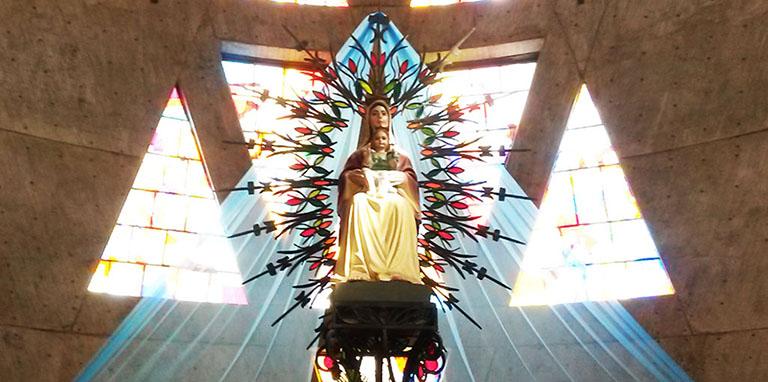
The crisis has drawn sustained attention from the Vatican. Pope Leo XIV has previously expressed deep concern for Venezuela’s situation, entrusting the nation to the intercession of Our Lady of Coromoto, the country’s patron saint, as well as Saints José Gregorio Hernández and Carmen Rendiles.
During a private audience with the Venezuelan episcopate on May 4, the Pope reaffirmed his “spiritual closeness” and “constant prayers” for the nation. According to Archbishop González de Zárate, the Holy See remains closely informed through Cardinal Pietro Parolin and the Apostolic Nunciature in Caracas.
For many Venezuelans, faith has become a source of resilience in the face of overwhelming loss. As communities mourn, churches have filled with believers seeking comfort, unity, and hope.
Echoes of a Historic Tragedy
The 2026 earthquakes have revived memories of one of Venezuela’s darkest moments: the catastrophic Caracas earthquake of March 26, 1812. Occurring on Holy Thursday during Holy Week, that disaster—estimated at magnitude 7.7—leveled large parts of the capital, La Guaira, and Mérida, killing tens of thousands.
More than two centuries later, the parallels have not gone unnoticed. Once again, the ground has shifted beneath the nation, underscoring the fragility of human structures and the enduring role of faith in confronting tragedy.
A Nation in Prayer
As Venezuela grapples with loss and uncertainty, a unified call has emerged among the faithful: to persevere in prayer. Invocations to Our Lady of Coromoto echo across the country, as families mourn the dead, care for the injured, and support those still trapped beneath debris.
For rescue workers and volunteers laboring tirelessly amid the rubble, and for a nation wounded yet resilient, the path forward remains uncertain. Yet in the midst of devastation, Venezuela turns—once more—to solidarity, compassion, and faith.
- Raju Hasmukh with files from Infovaticana
Related Images: