


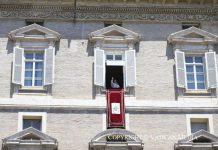














Pope Leo XIV marks the 250th anniversary of U.S. independence, urging unity, protection of human dignity, religious freedom, and care for migrants.
Newsroom (06/07/2026 Gaudium Press ) Pope Leo XIV has marked the 250th anniversary of the founding of the United States with a message of congratulations and reflection, urging Americans to renew their commitment to the principles of freedom, justice, democracy, and human dignity that have shaped the nation since its independence.
In a letter dated June 25 and sent from the Vatican, the Chicago-born pontiff extended his “heartfelt congratulations to all Americans” on the semiquincentennial of the signing of the Declaration of Independence on July 4, 1776. The pope described the anniversary as both a celebration of the nation’s achievements and an opportunity to consider the responsibilities Americans bear toward one another and future generations.
Calling the anniversary a defining milestone in U.S. history, Leo XIV praised the enduring influence of the ideals of liberty, equality, the pursuit of happiness, justice, and democratic self-government. He noted that generations of Americans have advanced these principles through sacrifice, service, innovation, and civic engagement over the past two and a half centuries.
Religious Freedom at the Heart of the American Promise
A central theme of the pope’s message was the importance of religious liberty. He identified freedom of religion as one of the United States’ most cherished principles, emphasizing its role in protecting individual dignity and fostering peaceful coexistence among a diverse population.
“Freedom of religion has long been central to the American promise,” Leo wrote, describing it as a safeguard for both personal conscience and social harmony.
The pontiff also highlighted the significance of religious freedom in the growth of the Catholic Church in the United States. According to the letter, this liberty has enabled the Church not only to flourish among its members but also to contribute broadly to American society.
Leo pointed to the Church’s longstanding service in education, healthcare, social services, and care for the poor, presenting these efforts as examples of faith in action and as contributions that have benefited the nation as a whole.
Faith and Citizenship
Drawing on the teachings of Pope Leo XIII, the pontiff underscored the relationship between faith and civic responsibility. He rejected the notion that religious belief and citizenship are in conflict, arguing instead that faith strengthens commitments to justice, peace, and the common good.
The pope called on Catholics to continue serving their communities and country through faithful fulfillment of their duties to both God and nation. He described Christians as a positive force in society, helping promote what he termed a “civilization of love.”
The message encourages Catholics to bring the principles of the Gospel into every aspect of daily life, emphasizing that faith should inspire active participation in the pursuit of a more just and compassionate society.
A Strong Defense of Human Dignity
Among the most significant elements of the letter is a broad appeal for the protection of human dignity. Leo XIV stated that the development of the United States has been guided by the recognition of the God-given worth of every person.
He argued that respect for human dignity requires safeguarding human life “from its beginning at conception until natural death.” At the same time, he urged Americans to build a society that shows compassion, solidarity, and love toward those who are vulnerable, suffering, or forgotten.
The pope’s message framed care for the marginalized as an essential expression of the nation’s founding values, suggesting that freedom and justice must be accompanied by a commitment to protect those most in need.
Special Appeal for Migrants
Leo XIV devoted particular attention to immigrants, describing their hopes, sacrifices, and contributions as integral to the American story.
“Defending human life also includes welcoming, protecting and assisting immigrants,” he wrote, emphasizing that people who arrived in search of freedom, opportunity, and belonging have helped shape the character of the United States from its earliest days.
The pope said that receiving migrants with compassion and generosity is both an act of charity and a recognition of the inherent dignity shared by every human person. His remarks place immigration within the broader framework of human dignity and social responsibility, themes that recur throughout the letter.
Working Together for the Common Good
Referencing his recent encyclical Magnifica Humanitas, Leo stressed the importance of collective responsibility in addressing contemporary challenges. He argued that no individual or group can solve society’s problems alone and that cooperation is essential for building a world where everyone can flourish.
The pope urged Americans to work together despite their differences, emphasizing unity as a necessary condition for confronting the challenges of the modern era. His appeal echoed one of the most memorable lines of the letter, encouraging citizens to “work together toward a more perfect union.”
Blessing for the Nation’s Future
Concluding his message, Leo XIV expressed hope that the 250th anniversary would renew the nation’s dedication to freedom, justice, opportunity, and democracy. He encouraged Americans to honor the courage and vision of earlier generations by strengthening their communities and fostering mutual respect.
The pontiff also invoked the protection of Our Lady of the Immaculate Conception, patroness of the United States, entrusting the nation and its people to her intercession.
As the United States commemorates a quarter millennium since its founding, Pope Leo XIV’s message offers both congratulations and challenge: a call to preserve the nation’s founding ideals while extending compassion, protecting human dignity, defending religious freedom, and pursuing unity in an increasingly complex world.
- Raju Hasmukh with files from Crux Now
Related Images: