













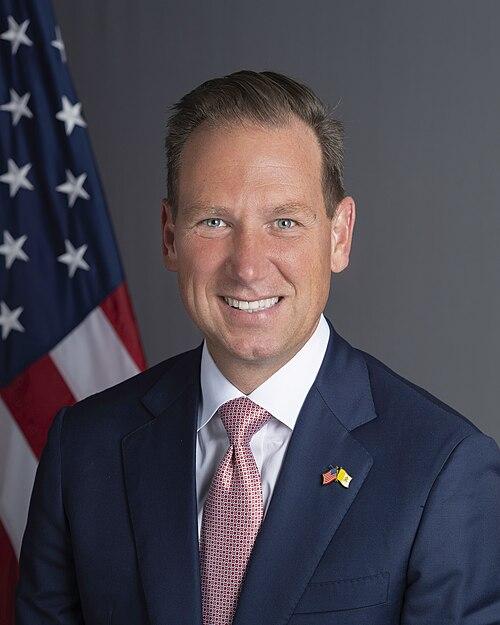
US Ambassador Brian Burch discusses Pope Leo XIV’s ties to America, migration, Trump relations, and a historic July 4 dinner in Rome.
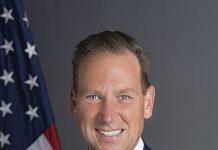
Newsroom (08/07/2026 Gaudium Press ) United States Ambassador to the Holy See Brian Burch has acknowledged clear differences between Pope Leo XIV and President Donald Trump, particularly on questions surrounding immigration and the relationship between public policy and Catholic social teaching. Yet the ambassador insists that the divide is not as wide as many observers assume, arguing that both leaders share broader goals that could ultimately bring them closer together.
Speaking to Italian journalists following a historic July 4 gathering at his residence in Rome, Burch described the first American pope as deeply connected to his homeland while rejecting suggestions that Leo XIV’s recent gestures and statements constitute criticism of the United States.
“There are differences,” Burch said, referring to disagreements over “how to reconcile U.S. policy with the social doctrine of the Church.” But he added that the more important question is whether the objectives pursued by Trump and the hopes Leo XIV has for the world can converge. “My answer is yes,” he said.
A Pope With Deep American Roots
Burch emphasized that Leo XIV, born Robert Prevost, remains profoundly shaped by his American background despite spending many years overseas.
According to the ambassador, the pontiff possesses “a deep affection and absolute respect” for the United States, understands the country intimately, and continues to love it sincerely. Where differences exist, Burch suggested, the Pope seeks collaboration rather than confrontation.
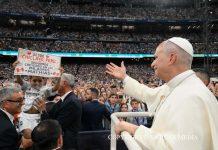
That assessment gained particular significance during an unprecedented event on July 4, when Leo XIV accepted an invitation to spend part of America’s Independence Day celebrations at the ambassador’s residence on Rome’s Janiculum Hill.
The invitation had originally been encouraged by Vice President J.D. Vance during the inaugural Mass of Leo XIV’s pontificate. Burch later extended a personal invitation for the Pope to spend the national holiday with his family. The acceptance remained confidential until the final hours before the visit.
According to Burch, the Pope arrived at approximately 7:30 p.m. accompanied only by Vatican security personnel, underscoring the private nature of the gathering.
“It was not a bilateral meeting but a personal visit,” the ambassador said.
The visit marked a rare moment in Vatican diplomatic history. Burch noted that no pope had visited an ambassador’s residence for dinner in the past century, calling the event “a gesture of sincere closeness to the United States.”
Pope Leo XIV celebrated America’s 250th birthday with Ambassador Burch, Mrs. Burch, and family.” I am deeply honored to celebrate this special day with a fellow American and the Bishop of Rome,” Ambassador Burch said. pic.twitter.com/1utYQhn4mH
— U.S. in Holy See (@USinHolySee) July 4, 2026
An Informal Fourth of July Celebration
The evening offered a glimpse into a more personal side of the pontiff.
Leo XIV spent time with Burch’s wife, Sara, and their nine children before sharing stories about Chicago, the city that both the Pope and the ambassador call home. The conversation touched on sports, including the Pope’s support for the Chicago White Sox, and his path to the priesthood and missionary life.
Burch recounted an anecdote illustrating the pontiff’s everyday interests. The Pope reportedly told the family that he had awakened during the night to check the score of a World Cup match between Argentina and Cape Verde and stayed awake until learning the final result.
The ambassador described Leo XIV as a man who uses a smartphone, follows soccer, retains a Peruvian credit card, and remains exceptionally informed about world affairs.
Dinner reflected traditional American themes, featuring watermelon and feta salad, steak, and Chicago-style hot dogs. Dessert included apple pie, ice cream, and angel food cake decorated in national colors.
Before the meal, the Pope blessed the food and offered prayers for the United States.
The evening concluded in the garden, where the family celebrated with sparklers, sang “God Bless America,” and watched as Leo XIV signed baseballs commemorated with the date July 4, 2026.
Lampedusa Visit Not Directed at the United States
One of the most politically sensitive subjects discussed during the evening was migration.
Burch said the Pope expressed concern that many people interpret his actions or statements as criticism of the United States. As an example, he cited Leo XIV’s visit to Lampedusa, the Italian island that has become a symbol of Europe’s migration challenges.
According to the ambassador, the Pope insisted the visit “was not against the U.S.” but was instead intended as a pastoral gesture emphasizing the global nature of migration and the responsibility of nations to care for the dignity of migrants.
Questions remain, however, because Leo XIV has repeatedly highlighted America’s immigrant heritage and has argued that defending human life includes welcoming, protecting, and assisting migrants.
Burch responded by stressing the distinction between humanitarian concern and public policy.
The United States, he noted, has always maintained immigration laws, with varying degrees of strictness depending on the administration. Trump’s focus, he argued, has been addressing large-scale migration that occurred outside legal channels.
“The Pope is not suggesting that welcoming migrants means abdicating one’s laws,” Burch said. In his view, Leo XIV is emphasizing moral principles rather than commenting directly on specific American immigration policies.
Trump and the Pope: No Call Yet, But Dialogue Continues
Despite Leo XIV holding conversations with several world leaders, including Russian President Vladimir Putin and Israeli Prime Minister Benjamin Netanyahu, no direct conversation with President Trump has taken place since the beginning of the pontificate.
Burch dismissed speculation that the absence of contact reflects poor relations.
“The president has not had conversations with many leaders,” he said, attributing the lack of communication to scheduling demands rather than political tensions.
The ambassador also rejected claims that dialogue between Washington and the Holy See is limited, pointing to ongoing diplomatic cooperation and significant American investment in maintaining relations with the Vatican.
Addressing criticism that Trump has directed toward the Pope, Burch noted that Leo XIV occupies both a spiritual role and the position of a head of state.
“He has a thick skin,” the ambassador said.
Areas of Potential Cooperation
While acknowledging stylistic and political differences, Burch identified several issues where he believes both leaders share common objectives.
These include preventing Iran from acquiring nuclear weapons, supporting peace efforts in Ukraine, addressing political repression in Venezuela, encouraging stability in Cuba, and promoting greater peace in the Middle East.
Burch argued that both the Pope and Trump were chosen to confront difficult global challenges, even if they approach those challenges differently.
The ambassador also pointed to substantial participation by Catholics within the Trump administration and ongoing U.S. funding for humanitarian and charitable initiatives, including support for Catholic relief organizations.
No Immediate Papal Visit to the United States
Although speculation has emerged about a papal visit to the United States, Burch said no such trip is currently planned.
According to the ambassador, Leo XIV deliberately chose not to prioritize a visit to his home country early in his pontificate because he wished to emphasize the universal character of his ministry.
“The Pope doesn’t want to appear excessively pro-American,” Burch explained.
Still, Burch remains convinced that the relationship between the first American pope and the American administration is stronger than it may appear publicly.
Behind disagreements over migration and political rhetoric, he suggested, lies substantial common ground on global stability, humanitarian concerns, religious freedom, and peace—areas where both Washington and the Vatican may find opportunities for increasing cooperation in the years ahead.
- Raju Hasmukh with files from Avvenire
Related Images: