








After Venezuela’s earthquake damaged San José Hospital, Catholic sisters established a field hospital to treat survivors amid a worsening crisis.
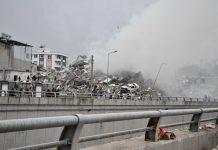
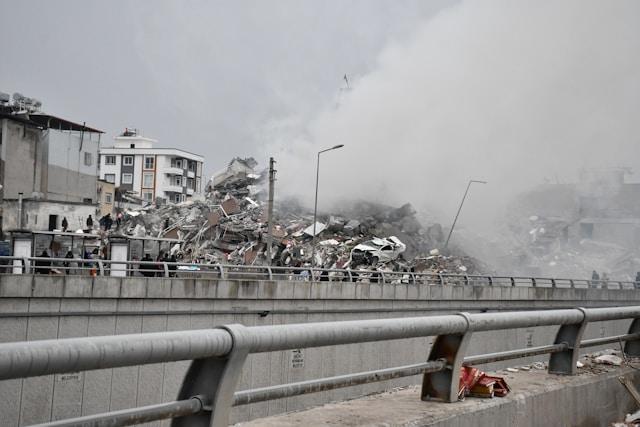
Newsroom (08/07/2026 Gaudium Press ) In the aftermath of a catastrophic earthquake that has left more than 3,500 people dead in La Guaira, the Little Sisters of the Poor of Maiquetía have transformed a public square into a field hospital after their historic San José Hospital suffered severe structural damage and became unsafe for use.
The emergency medical facility, established directly across the street from the damaged hospital, now serves as a frontline healthcare center for injured survivors and vulnerable residents struggling through one of the region’s most difficult humanitarian emergencies.
“San José Hospital sustained structural damage in the earthquake and is no longer safe to occupy. That is why we have set up a field hospital directly across the street,” said Sister María Yraida Mora Sánchez, Vicar General of the Congregation of the Little Sisters of the Poor of Maiquetía.
The congregation has long provided healthcare services to communities across La Guaira and Caracas. Now, amid widespread destruction, its mission has expanded beyond traditional medical care to include emergency relief, shelter support, and humanitarian assistance.
Hope Amid Grief and Loss
As rescue teams continue searching through collapsed buildings, hope remains alive among residents following reports that survivors have been found beneath the rubble in recent days.
For Sister Mora, these rescues offer a rare source of encouragement in a community overwhelmed by tragedy.
“Whenever you speak with someone, they tell you they have lost a friend, a relative, or a child,” she said. “Others have lost their homes or their livelihoods because the areas where they worked were also destroyed.”
The earthquake’s impact extends far beyond physical injuries. Families have been displaced, businesses have been wiped out, and entire neighborhoods are struggling to cope with profound emotional and economic losses.
Extending Care Beyond the Hospital
The congregation’s response reaches well beyond emergency medical treatment.
In addition to operating the field hospital, the sisters regularly visit three emergency shelters housing displaced residents. According to Sister Mora, conditions are especially challenging because the disaster struck a country already facing serious economic and humanitarian difficulties.
“We are also making regular visits to three emergency shelters, and the situation is extremely difficult,” she explained.
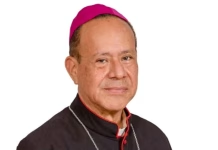
Despite the suffering, faith continues to play a central role in the community’s resilience. Sister Mora recalled a recent Eucharistic celebration held in Padre Machado Square and presided over by Bishop Pablo Modesto of La Guaira.
“The people’s faith and trust in God remain strong, even in the midst of so much suffering,” she said.
Healthcare Under Tents and Temporary Shelters
Before the earthquake, San José Hospital operated as a Level II healthcare facility offering a broad range of medical services. The congregation also manages Madre Emilia School in Maiquetía, healthcare centers in Caracas, and a home for older adults.
With the hospital building rendered unusable, medical teams have adapted quickly. Working under tents and makeshift canopies, healthcare workers continue treating patients despite the difficult conditions.
Support has come from the Italian Red Cross, the Venezuelan Association of Christian-Oriented Health Services (AVESSOC), and physicians affiliated with both San José Hospital and the Padre Machado Clinic.
“We are working under tents and temporary shelters, doing everything we can to make the space functional,” Sister Mora said.
The effort carries an added burden: many staff members and volunteers have also been personally affected by the disaster. Nevertheless, they continue providing medical care while delivering water, food, medicines, and essential supplies to displaced families living in tent settlements throughout the region.
Particular attention is being given to patients with chronic illnesses. Those suffering from hypertension, diabetes, epilepsy, and other long-term medical conditions face heightened risks if access to treatment is interrupted.
“In the midst of this tragedy, we cannot forget patients with chronic illnesses,” Sister Mora emphasized.
Growing Risk of a Public Health Crisis
Healthcare workers are increasingly concerned that the earthquake’s aftermath could trigger a broader public health emergency.
According to Sister Mora, Venezuela’s healthcare system was already under significant strain before the disaster. Now, shortages of essential medicines and basic resources threaten to worsen conditions further.
Among the most urgently needed supplies are antihistamines, blood pressure medications, and antifungal creams. The challenges are compounded by the hot climate of Vargas State and the absence of running water in many affected areas.
“Right now there is an urgent need for antihistamines, blood pressure medication, and antifungal creams,” she said. “The shortages are endless.”
Clean drinking water has become particularly critical, both for displaced residents and for those continuing rescue and recovery operations among the ruins.
Meanwhile, healthcare professionals are attempting to maintain medication access by organizing and tracking patients, as many pharmacies in Vargas State were either destroyed by the earthquake or remain closed.
Patients with severe injuries have been transferred to hospitals in Caracas. At the field hospital in La Guaira, medical teams are concentrating on primary healthcare services, including wound treatment and the growing number of diarrhea and viral illness cases already emerging in temporary settlements.
A Symbol of Service for 138 Years
The devastation of San José Hospital represents more than the loss of a healthcare facility. For the Little Sisters of the Poor of Maiquetía, it strikes at the heart of their history and mission.
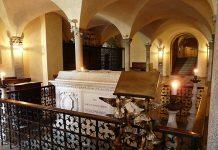
The hospital is the birthplace of the congregation and houses the chapel where the remains of its founders, Father Machado and Mother Emilia, are buried. For generations, it has served as a pillar of healthcare and community life in Vargas State.
“This hospital is a symbol not only for us, but for the entire state of Vargas,” Sister Mora said. “It has served the community for 138 years.”
Yet even as the building stands damaged, the congregation remains committed to its mission.
Reflecting on the future, Sister Mora offered a message of determination and hope that has come to define the sisters’ response to the disaster.
“The hospital is not simply a building of walls and concrete,” she said. “The hospital is each one of us—every nurse, every doctor, and every sister who strives each day to give the very best of themselves.”
As La Guaira confronts the long road to recovery, that spirit of service continues to provide a lifeline for thousands affected by the earthquake.
- Raju Hasmukh with files from Vatican News
Related Images: