
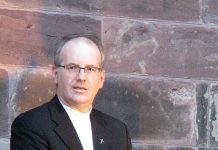















Father Abdo Raad says the Lebanon-Israel agreement is a first step toward peace but fails to address Palestinians and Lebanon’s deep crisis.
Newsroom (08/07/2026 Gaudium Press ) Ten days after the signing of the tripartite framework agreement between Lebanon, Israel, and the United States in Washington, tensions on the ground remain high. Israeli troops continue to maintain positions in southern Lebanon, while the Israeli Defense Forces (IDF) persist with military operations inside what Israel has designated as a “forward defense zone.” Bombing raids, demolitions, and search operations targeting suspected Hezbollah members have continued despite the agreement’s ceasefire provisions.
Meanwhile, the human toll continues to rise. According to figures cited by the Lebanese Ministry of Public Health, 4,303 Lebanese have been killed by Israeli fire since March 2, including 73 deaths recorded after the ceasefire entered into force. Against this backdrop of fragile diplomacy and ongoing violence, questions remain about whether the agreement can provide a sustainable path toward peace.
La Nuova Bussola Quotidianaspoke with Father Abdo Raad, a Lebanese Greek-Catholic Melkite priest from the Diocese of Sidon and founder of the charitable association Annas Linnas (“People for the People”). Currently serving in Italy as a fidei donum priest in the Diocese of Campobasso-Bojano, Father Raad offered a candid assessment of the agreement, Lebanon’s divisions, and the country’s uncertain future.
“A Beginning of Beginnings, Not a Solution”
Asked whether he had read the text of the framework agreement, Father Raad said he had carefully examined all 14 articles but warned that public interpretations often fail to reflect the full reality.
“What is said and published is not always the whole truth,” he said. “An even bigger problem is how the agreement is interpreted.”
From the perspective of a man committed to peace, Father Raad sees potential in the accord. He noted that it contains provisions for a ceasefire, mutual recognition of sovereignty, commitments to resolve disputes through negotiations, the gradual withdrawal of Israeli forces from southern Lebanon, and recognition of the Lebanese army as the country’s sole legitimate armed force.
“We have been at war with Israel for almost a century, and the war has solved nothing; on the contrary, it has made everything worse,” he said. “It is time to say enough.”
However, he emphasized that the agreement remains fundamentally incomplete.
“As a beginning, it is not bad,” he explained. “But I do not find it realistic because it does not resolve the issue that lies at the root of the conflict: the Palestinian question.”
For Father Raad, the continued presence of more than 400,000 Palestinians living in difficult conditions in Lebanon represents a central issue that cannot be ignored if genuine peace is to be achieved.
Sectarian Divisions Shape Public Opinion
Lebanon’s complex political and religious landscape continues to shape reactions to the agreement.
According to Father Raad, opinions are largely influenced by sectarian affiliations and political loyalties. Many Sunnis, represented politically by Prime Minister Nawaf Salam, and many Christians, represented by President Joseph Aoun, view negotiations with Israel as a positive development and see the agreement as a useful first step toward reducing conflict.
The position of Parliament Speaker Nabih Berri and his Amal Movement remains more ambiguous. While participating in a government engaged in dialogue with Israel, Berri also maintains a strategic alliance with Hezbollah.
Hezbollah, meanwhile, has unequivocally rejected the agreement.
“Hezbollah considers the agreement humiliating and shameful, a surrender, and therefore rejects it completely,” Father Raad said, noting that the group refuses to relinquish its weapons to the Lebanese state.
Among the broader public, he identified three distinct camps: those who support continued resistance against Israel, those who favor a definitive peace settlement and exclusive state control over weapons, and a third group seeking stability and security but uncertain about the best path forward.
Opposition to Israel Remains Widespread
While political divisions are significant, Father Raad acknowledged that skepticism toward Israel remains widespread across Lebanese society.
The agreement, he argued, has triggered what he described as an “intellectual shock,” forcing many citizens to rethink longstanding assumptions about Israel, state sovereignty, military authority, and national identity.
“Not everyone who opposes Israel is opposed to the agreement,” he explained. “Many object only to certain parts of it.”
Political parties that traditionally support strengthening state institutions and limiting independent armed groups do not necessarily share identical views regarding normalization or peace with Israel. This has produced a nuanced political landscape in which support and opposition often vary according to specific provisions rather than reflecting a simple binary choice.
Broadly speaking, supporters of the Lebanese Forces, Kataeb Party, the Future Movement, and many Sunni political groups tend to support the agreement. Opponents include Hezbollah, Amal, the Marada Movement, communist groups, the Syrian Social Nationalist Party, and the Islamist Jamaa al-Islamiya.
A Country ‘Without a Future’
Perhaps Father Raad’s most striking comments concerned Lebanon’s future.
He described the country as trapped between two competing visions: one centered on resistance, deterrence, and confrontation with Israel; the other focused on stability, security, and reconciliation.
“Lebanon is a country without a future, with a perpetually confused present, gripped by constant political paralysis and obstructionism,” he said.
The priest pointed to a devastating economic crisis, widespread corruption, and the destruction caused by years of conflict as major barriers to recovery.
“What future can there be in a country led by corrupt individuals who continue to abuse power without anyone judging them?” he asked.
Yet despite his criticism, Father Raad stopped short of despair. He believes the future remains possible if Lebanese society can reach a new social contract capable of overcoming sectarian divisions and restoring trust in institutions.
“When the Lebanese agree to conclude a new social contract, then the future will begin,” he said.
As a priest, he maintains that hope remains essential even amid profound disappointment.
“Only by thinking of ourselves as brothers of one Creator and children of the same earth can we overcome conflicts and enmities,” he added.
The Immediate Needs: Return, Reconstruction, and Hope
For Father Raad, the immediate priorities facing Lebanon are clear.
The first is helping displaced people return to their homes. Drawing on personal experience, he recalled how his own family was forced from the Chouf region for more than a decade during Lebanon’s civil conflict.
“My father asked every day when we would return home,” he remembered. “Sadly, he died without ever seeing it again.”
Beyond the refugee question, he stressed the need for a government capable of combating corruption, delivering justice, and restoring stability. Economic recovery remains critical, including job creation, access to healthcare, functioning schools, food security, and national reconstruction.
Ultimately, however, Father Raad believes Lebanon’s deepest need goes beyond economics or politics.
“The most fundamental need is to renew hope,” he said. “To rediscover the human and divine values of peace, forgiveness, reconciliation, and cooperation.”
As Lebanon navigates the uncertain aftermath of the framework agreement, Father Raad’s message is both cautionary and hopeful: peace may have a starting point, but without justice, reform, and reconciliation, the journey remains far from complete.
- Raju Hasmukh with files from La Nuova Bussola Quotidiana
Related Images: