






















Pakistan court halts Islamabad slum evictions, offering relief to Christian communities and urging policy reforms for informal settlements.
Newsroom (17/04/2026 Gaudium Press ) Pakistan’s Federal Constitutional Court has ordered an immediate halt to the demolition of informal settlements in Islamabad, delivering a critical reprieve to thousands of vulnerable residents, including large numbers of Christians, who faced imminent displacement.
In a ruling issued on April 16, the court upheld a prior suspension of the Capital Development Authority’s (CDA) eviction campaign and directed officials to finalize long-delayed regulations governing informal settlements within one month. The decision comes amid mounting unrest, protests, and growing scrutiny from religious leaders and rights groups.
A two-member bench comprising Chief Justice Aminuddin Khan and Justice Arshad Shah expressed concern over the prolonged delay in establishing a legal framework for such settlements. The judges instructed civic authorities to engage all relevant stakeholders before finalizing the policy, signaling a more inclusive approach to urban governance.
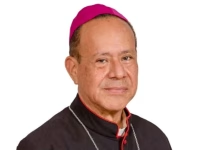
The ruling has been widely welcomed by Christian leaders, who represent a significant portion of Islamabad’s slum population. Archbishop Joseph Arshad of Islamabad-Rawalpindi described the decision as a “significant step” toward protecting underprivileged communities.
“The decision reflects a positive move toward addressing the long-standing concerns of marginalized segments of society,” Archbishop Arshad said in a statement. He emphasized that residents of informal settlements are equal citizens entitled to basic amenities, legal protection, and dignified housing.
The court’s intervention follows weeks of escalating tensions triggered by the CDA’s eviction drive, which began last month. Thousands of slum residents, including many Christians, staged protests opposing the demolitions.
On April 14, demonstrations in Noorpur Shahan, a village near Islamabad’s Diplomatic Enclave, turned violent. Clashes between residents and police left at least eight officers and dozens of civilians injured. According to media reports citing police sources, around 500 villagers participated in the protest, during which two government vehicles were set ablaze.
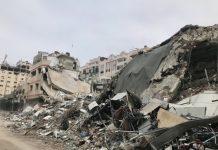
Video footage circulating on social media showed police opening fire to regain control of the area. The following day, authorities demolished approximately 200 homes in the village under heavy police presence. In the aftermath, police reportedly charged 350 residents under stringent anti-terrorism laws.
Rights groups swiftly condemned the eviction drive, calling it a violation of fundamental human rights. They argue that the lack of legal recognition for informal settlements leaves residents exposed to forced evictions and homelessness.
An estimated 450,000 people live in Islamabad’s informal settlements, most of them from poor and marginalized backgrounds. Christians constitute a substantial portion of this population. A 2025 study by the Awami Workers Party Rawalpindi-Islamabad (AWPRI), titled “Permanent Impermanence,” found that nearly half of the city’s slums have a significant Christian presence, with four out of ten recognized settlements being majority Christian.
Civil society organizations, including AWPRI and the Catholic Bishops’ National Commission for Justice and Peace, welcomed the court’s latest ruling and called for an immediate cessation of all demolition activities.
Activists have also demanded accountability, urging authorities to take action against officials responsible for what they describe as unlawful and summary evictions.
The legal battle over informal settlements in Islamabad dates back more than a decade. In 2015, civil society groups petitioned the Federal Constitutional Court to grant legal recognition to slums. The court ruled in their favor in 2016, directing the CDA to develop a low-income housing plan. However, that order was never implemented.
For many residents, the latest ruling rekindles hope for long-overdue justice.
“We will continue our peaceful movement for compensation for displaced families and to restrain authorities from further evictions,” said Zeeshan Ahmad, general secretary of AWPRI.
Christian leaders echoed similar sentiments, noting that the court’s intervention has eased widespread anxiety within their communities.
“We are maintaining unity while continuing negotiations with CDA officials and will follow court orders,” Pastor Basharat Sharif Ghouri of the United Church told UCA News. Ghouri is from Allama Iqbal Colony, one of four Christian-majority settlements previously slated for eviction.
Archbishop Arshad stressed that the government must now act decisively. He called for the swift implementation of the court’s directives through a “transparent and practical policy” that ensures legal protection for informal settlements.
As Islamabad grapples with rapid urbanization and deep social inequalities, the court’s decision may mark a turning point—if authorities follow through on long-promised reforms.
- Raju Hasmukh with files from UCA News
Related Images: