



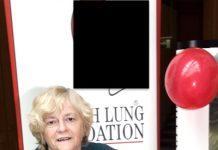












Counter-terror police have taken over the investigation into the murder of Ann Widdecombe as a suspect remains in custody and new evidence emerges.
Newsroom (17/07/2026 Gaudium Press ) The investigation into the murder of veteran British politician and prominent Catholic convert Ann Widdecombe has entered a new phase, with counter-terrorism officers now leading the case after investigators uncovered new evidence regarding the circumstances surrounding her death.
Widdecombe, 78, was found dead at her home in Haytor, Devon, shortly before noon on Thursday. Police believe she was attacked the previous day and estimate that her death occurred at approximately 12:30 p.m. on Wednesday, nearly 24 hours before her body was discovered.
The latest developments come after the arrest of a 28-year-old man from Rotherham, South Yorkshire, who was initially detained on suspicion of murder. Authorities later announced that the same individual had been rearrested on suspicion of the commission, preparation, or instigation of acts of terrorism.
Counter Terrorism Policing South East (CTPSE) assumed control of the investigation after what officials described as the emergence of new information during what has been characterized as a complex and rapidly evolving inquiry.
Laurence Taylor, head of national counter-terrorism policing, said the decision followed significant developments uncovered by investigators.
“Building on the progress made by our colleagues in Devon and Cornwall police, we now have new information and evidence that means counter-terrorism policing is now leading the investigation,” Taylor said.
He added that detectives are pursuing multiple lines of inquiry in an effort to determine the motive behind the attack.
Despite the involvement of specialist counter-terror officers, police had initially sought to calm speculation about possible political or ideological motivations. Earlier statements from Devon and Cornwall Police stressed that there was no evidence suggesting the incident was terrorism-related and indicated that investigators were not seeking additional suspects.
The suspect was arrested in South Yorkshire, more than 200 miles from Widdecombe’s home in southwest England. Police confirmed he remains in custody and continues to be questioned.
British Home Secretary Shabana Mahmood said on Monday that the suspect was not previously known to Prevent, the United Kingdom’s anti-terrorism intervention program.
“Following new information and evidence, they are now leading on the investigation into the horrific murder of Ann Widdecombe,” Mahmood said.
“The police are pursuing multiple lines of inquiry to establish the motivation for this attack. My thoughts today remain with Ann’s family and friends, and all those who loved her.”
According to reports, CCTV footage obtained by The Sun allegedly shows the suspect leaving Rotherham early on the day of Widdecombe’s death carrying what appeared to be a wooden stick in his pocket. Investigators suspect he traveled approximately 267 miles to Dartmoor, where Widdecombe lived.
The case has reignited concerns over the safety of public figures in Britain. Mahmood confirmed that she had offered to facilitate discussions between Reform UK leader Nigel Farage and the government body responsible for overseeing security arrangements for people in public life.
Widdecombe’s death marks the third killing of a British politician in recent years. Labour MP Jo Cox was murdered in 2016, while Conservative MP Sir David Amess, a fellow Catholic, was killed in 2021.
A Distinctive Political Career
One of the most recognizable figures in modern British politics, Widdecombe served as Conservative Member of Parliament for Maidstone in Kent from 1987 until 2010. Known for her direct style and uncompromising opinions, she remained a prominent public figure long after leaving Westminster.
Following her parliamentary career, she became familiar to television audiences through appearances on Strictly Come Dancing in 2010 and Celebrity Big Brother in 2018. She also built a successful career as a novelist and columnist for the Daily Express.
A strong supporter of Britain’s withdrawal from the European Union, Widdecombe later left the Conservative Party and joined the Brexit Party, eventually serving as a Member of the European Parliament. The party later evolved into Reform UK, where she became a spokesperson on immigration and justice issues.
Faith, Conviction, and Public Advocacy
Born in Bath in 1947, Widdecombe was raised in an evangelical family and educated at the Catholic La Sainte Union Convent School. She earned undergraduate degrees from both the University of Birmingham and Lady Margaret Hall, Oxford.
Her spiritual journey led her into the Catholic Church in 1993 after the Church of England decided to ordain women as priests. While her brother, Canon Malcolm Widdecombe, remained an Anglican clergyman, Widdecombe became one of Britain’s most prominent Catholic public figures.
She was widely known for her defense of Catholic teaching, particularly on pro-life issues. Her public interventions often reflected a belief that clarity and consistency were essential elements of faith.
Speaking about her conversion, Widdecombe once contrasted Catholicism with Anglicanism, saying that Catholic teaching offered certainty rather than ambiguity.
“The great thing about Catholicism is it doesn’t compromise – something is either true or it’s false. It’s right or it’s wrong. It’s a sin or it’s not,” she said in an interview last year.
Her willingness to defend her beliefs made her both a respected and controversial figure throughout her career. Reflecting on her forthright approach, she remarked: “If you believe something, say it. I mean, what is the point of believing it if you won’t say it.”
Tributes from Across the Political Spectrum
Political leaders from differing ideological backgrounds have paid tribute to Widdecombe’s influence on British public life.
Health Secretary James Murray acknowledged that while he often disagreed with her views, her impact on the national political conversation was undeniable.
“I can’t say I always agreed with her views, but she was such a part of our politics,” Murray said.
“Everyone can recognise the contribution that she made to politics.”
As investigators continue to examine the motive behind the killing, Widdecombe’s death has prompted both mourning and reflection across Britain, highlighting the enduring influence of a politician whose convictions, faith, and public presence left a lasting mark on national life.
- Raju Hasmukh with files from Crux Now
Related Images: