












Despite a ceasefire, Gaza faces devastation, displacement and hardship as Church leaders seek to reopen schools for children.
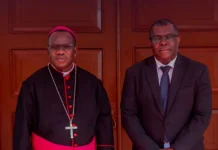
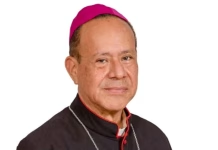
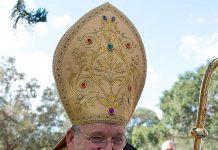
Newsroom (17/07/2026 Gaudium Press ) Nearly nine months after a ceasefire officially came into effect on 10 October 2025, Gaza remains trapped in a humanitarian catastrophe marked by widespread destruction, displacement, and uncertainty. According to Bishop William Shomali, Vicar General of the Latin Patriarchate of Jerusalem, the territory’s residents continue to endure conditions that have changed little despite the agreement intended to halt hostilities.
In an interview with Vatican News, Bishop Shomali described a reality in which much of Gaza’s population is concentrated into a shrinking area of habitable land while essential infrastructure remains in ruins. Far from the attention of international headlines, he said, the daily struggles facing Palestinians have persisted throughout the months following the ceasefire.
The human toll has continued to mount. Figures compiled by Gaza’s Ministry of Health indicate that more than 1,000 people, including 265 children, have been killed since the ceasefire took effect. A further 3,400 people have reportedly been injured. The United Nations has regarded the figures as reliable enough to include in a report published in early July.
Living Among the Ruins
According to Bishop Shomali, Gaza’s residents are now confined to just 47 percent of the territory, with Israeli forces controlling the remaining 53 percent. The result, he said, is severe overcrowding and intense pressure on already fragile living conditions.
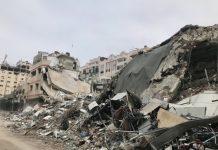
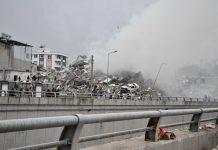
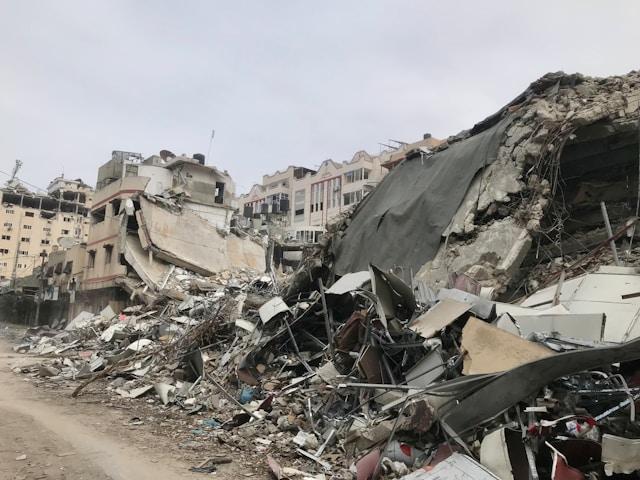
The destruction extends far beyond residential buildings. Roughly 80 percent of Gaza’s infrastructure remains damaged or destroyed, including critical water and electricity networks. Educational institutions have also suffered heavily, with many schools and universities no longer standing.
For thousands of families, tents have become permanent shelters amid the devastation. What was once an urban landscape now consists in many areas of makeshift encampments where residents attempt to rebuild daily life despite the lack of basic services.
Limited Aid and a Fragile Food Supply
Humanitarian aid continues to reach Gaza, but Bishop Shomali said supplies remain insufficient and unevenly distributed. While some medicines are entering the territory, many essential treatments remain unavailable or arrive only in limited quantities.
Food supplies, meanwhile, have shown some improvement compared with conditions seen earlier in the conflict. According to the bishop, much of the food currently entering Gaza is imported from Israel by merchants and then sold inside the territory.
He recalled accompanying Latin Patriarch Pierbattista Pizzaballa during a visit to Gaza shortly before Christmas, when food availability was extremely limited. During a subsequent visit in June, the Patriarch found local markets better supplied. Yet Bishop Shomali emphasized that these markets bear little resemblance to conventional commercial centers.
“When I say shops,” he explained, they are often little more than one or two tents placed side by side, operated by merchants selling basic food products. The modest improvement in supply has not erased the broader challenges facing residents struggling to secure daily necessities.
Economic Hardship and Cash Assistance
The question of purchasing food remains difficult in a territory where large portions of the population have lost their livelihoods.
Bishop Shomali noted that some workers, particularly those employed by the Palestinian government, continue to receive salaries. Teachers and public-sector employees are still being paid, including educators employed by the Church.
For many others, however, regular income has disappeared. In response, aid efforts have shifted from direct food distribution to cash assistance. Rather than providing food parcels, the Latin Patriarchate has increasingly offered financial support so families can purchase food themselves from local vendors.
This approach is currently being used to assist parishioners residing within the compound of Gaza’s Latin parish, allowing them greater flexibility in meeting their immediate needs while supporting the small-scale markets that continue to function.
Reconstruction Remains Out of Reach
Despite expectations that the post-ceasefire period would advance toward reconstruction, progress has stalled.
Bishop Shomali pointed to the framework of the U.S. peace plan, which envisioned a second phase centered on Hamas’s demilitarization, the launch of reconstruction projects, and the release of funding for rebuilding efforts.
According to the bishop, that transition has not occurred because the prerequisite condition of demilitarization has not been met. He stated that Hamas remains present in Gaza and continues to oversee security in areas inhabited by residents. As a result, reconstruction efforts have yet to begin.
The continued absence of rebuilding has left vast areas devastated, with damaged infrastructure and destroyed public facilities still awaiting repair. For residents living amid the rubble, prospects for recovery remain uncertain.
Church Focuses on Children’s Recovery Through Education
Amid the hardships, Church leaders are seeking to create opportunities for children whose education has been severely disrupted by the conflict.
Bishop Shomali expressed particular concern about the growing number of young people who are no longer attending school. Without classes or structured activities, many spend their days collecting wood, nails, and other materials that can be reused or sold.
The Latin Patriarchate hopes to change that situation with the reopening of its school at Holy Family Parish in September. Church officials expect approximately 1,000 children to enroll.
For Bishop Shomali, the initiative is about more than academic education. Returning children to classrooms represents a step toward restoring normality and helping them recover from the psychological impact of war.
By providing education, routine, and social support, the Church hopes students can gradually overcome the trauma they have experienced and begin rebuilding their futures even as Gaza’s wider reconstruction remains on hold.
As the humanitarian crisis continues, the planned reopening of the school stands as one of the few concrete signs of hope for families struggling to navigate daily life amid destruction, displacement, and uncertainty.
- Raju Hasmukh with files from Vatican News
Related Images: