













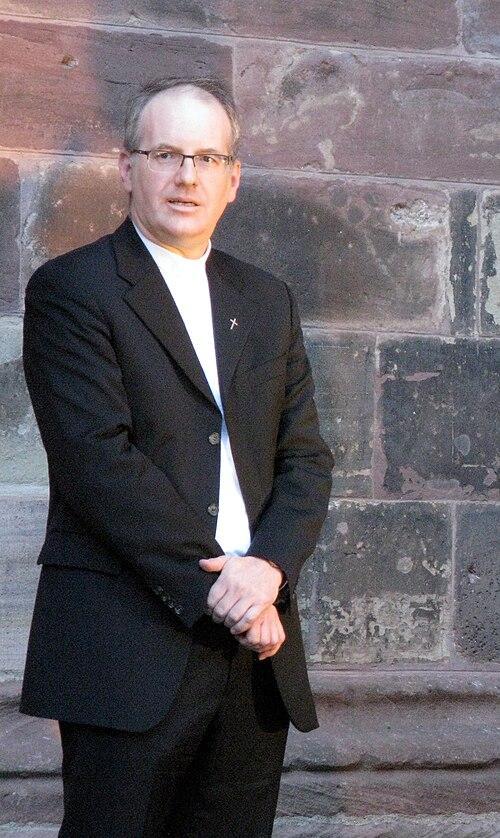
Pope Leo XIV names Bishop Christian Würtz as Bishop of Eichstätt, succeeding Gregor Maria Hanke amid ongoing debates from Germany’s Synodal Way.
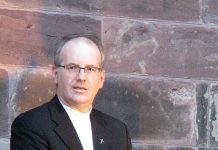
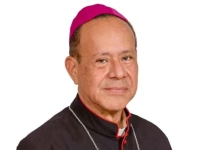
Newsroom (08/07/2026 Gaudium Press ) Pope Leo XIV has appointed Auxiliary Bishop Christian Würtz of Freiburg im Breisgau as the new Bishop of Eichstätt, placing a prominent supporter of several Synodal Way reform proposals at the helm of one of Germany’s most closely watched dioceses.
Although the Diocese of Eichstätt counts nearly 400,000 Catholics and is relatively modest in size compared with some of Germany’s larger dioceses, it has long carried outsized significance within the German Church. Unlike a number of German dioceses where cathedral chapters play a decisive role in selecting bishops, the Pope enjoys greater freedom in appointing the bishop of Eichstätt, making the appointment a closely observed indicator of Vatican priorities.
The 55-year-old Würtz succeeds Bishop Gregor Maria Hanke, O.S.B., who resigned last year at the age of 70. Ordained to the priesthood in 2006, Würtz was appointed auxiliary bishop of Freiburg in 2019 and has since emerged as a notable voice within Germany’s ongoing ecclesial debates.
His appointment is particularly significant because of the contrasting positions held by Würtz and Hanke on several of the most controversial questions addressed during the German Synodal Way, the reform process established to discuss the future direction of the Church in Germany.
Among the issues dividing the two bishops was the question of blessings for same-sex couples and Catholics who have remarried outside the Church. Würtz supported a Synodal Way resolution arguing that such couples have often experienced exclusion within the Church and that public blessings could serve as a gesture of recognition and reconciliation. The text maintained that while blessings would not erase past experiences of marginalization, they would offer an opportunity for the Church to acknowledge the love and values present within those relationships.
Hanke, by contrast, opposed the resolution, highlighting a significant theological and pastoral disagreement that became emblematic of broader divisions within the German episcopate.
Würtz also supported the Synodal Way’s call for a reassessment of Catholic teaching on homosexuality. The approved text argued that homosexual orientation should be viewed ethically in the same way as heterosexual orientation, describing it as part of the human person as created by God. It further stated that same-sex sexual relationships should not be considered intrinsically evil or inherently separating individuals from God, but rather evaluated according to the values expressed within such relationships.
This position represented a substantial departure from long-standing Catholic teaching and became one of the most debated outcomes of the Synodal Way process. Hanke was among the bishops who opposed the proposal.
Another major point of difference concerned the role of women in the Church. Würtz voted in favor of Synodal Way resolutions advocating expanded opportunities for women in ecclesial ministry and leadership, including renewed discussion regarding women’s ordination. One of the documents he supported emphasized that many Catholics associate the admission of women to the diaconate with strengthening the Church’s charitable mission, which the Second Vatican Council identified as a fundamental aspect of the Church’s life alongside evangelization and sacramental worship.
The same text called for higher Church authorities, including the Pope and an ecumenical council, to examine whether the teaching of Ordinatio Sacerdotalis—Pope St. John Paul II’s 1994 apostolic letter affirming that priestly ordination is reserved to men—requires re-examination. It argued that the question should be considered in the context of evangelization and the participation of women in proclamation, sacramental representation, and the building up of the Church.
During the Synodal Way, Würtz also supported the document Women in Ministries and Offices in the Church, which stated that “in the service of evangelisation, it is a matter of allowing women to participate appropriately in the proclamation, in the sacramental representation of Christ and in the building up of the Church.”
His backing of these measures placed him among the bishops advocating significant reforms within the German Church, while Hanke emerged as one of the more prominent episcopal critics of several Synodal Way initiatives.
The appointment of Würtz therefore marks more than a routine diocesan transition. It places a bishop associated with reform-oriented positions in a diocese whose episcopal selection process allows for a more direct papal choice than in many other German jurisdictions. As a result, the decision is likely to attract attention both within Germany and across the wider Catholic Church.
With leadership of Eichstätt now passing from a bishop who opposed many Synodal Way resolutions to one who supported them, observers will closely watch how Bishop Würtz shapes the future direction of the diocese and how his tenure contributes to ongoing discussions about doctrine, pastoral practice, and ecclesial reform within the Church in Germany.
- Raju Hasmukh with files from Catholic Herald and CWN
Related Images: