










Turkish Catholic bishops and President Erdoğan discussed legal recognition, religious freedom, Church assets, and NATO summit prayers.
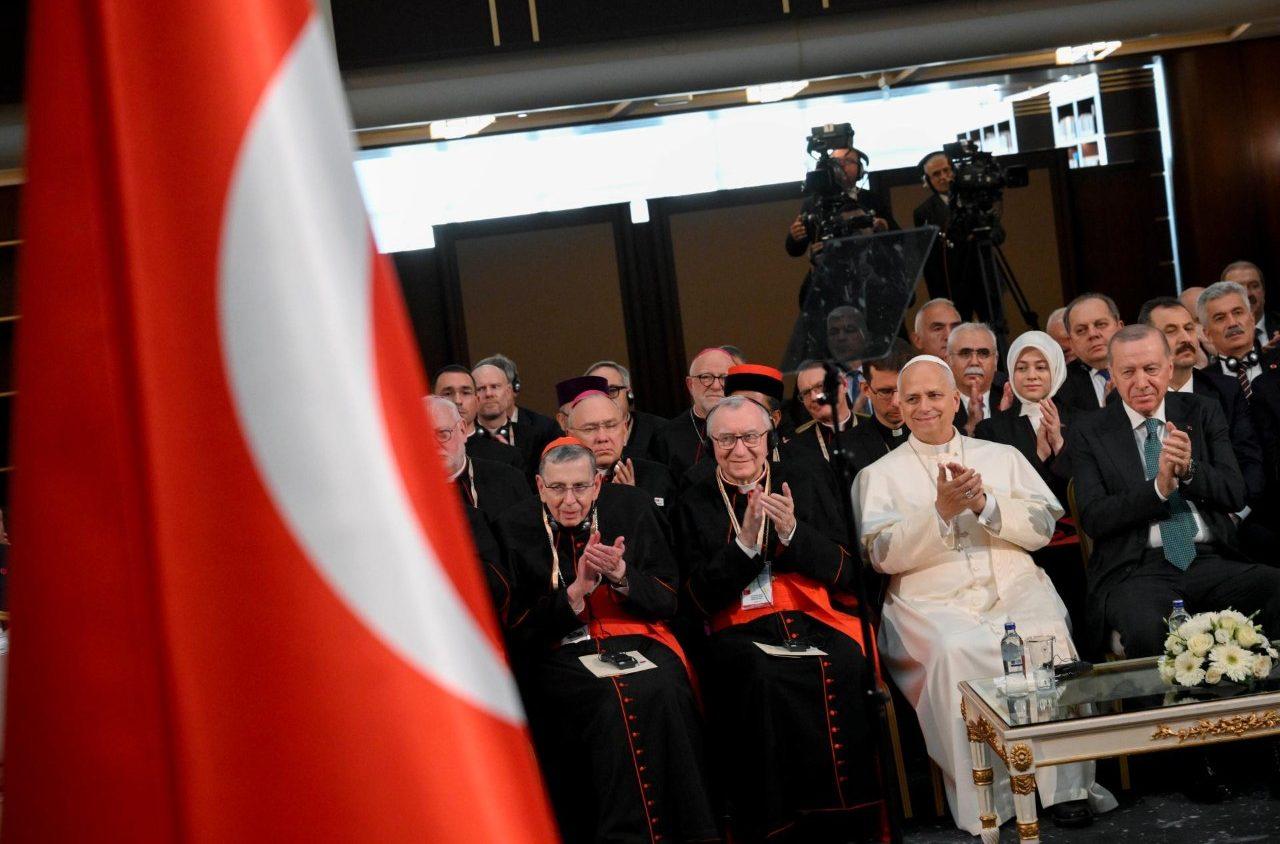
Newsroom (06/07/2026 Gaudium Press ) A delegation of senior Catholic leaders from Turkey met with President Recep Tayyip Erdoğan on Monday at the presidential complex in Ankara in what Church representatives described as a highly constructive and significant encounter, raising hopes for a new era in relations between the Turkish state and the country’s Catholic community.
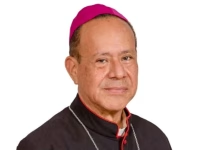
The closed-door meeting, which lasted more than 45 minutes, brought together several leading figures of the Catholic Church in Turkey, including Apostolic Vicar of Istanbul Bishop Massimiliano Palinuro and Vicar of Anatolia Bishop Antuan Ilgıt, alongside senior presidential aides.
Although no official statement was released after the discussions, both sides reportedly expressed satisfaction with the outcome and reaffirmed their commitment to continued dialogue on issues that have shaped Church-state relations for decades.
Speaking to AsiaNews, Bishop Palinuro described the meeting as “very positive,” emphasizing the president’s attentiveness to the concerns and aspirations of the Catholic community.
“The president showed particular interest in the needs of the local Church,” Palinuro said, noting that each of the six ordinaries who comprise the Catholic Bishops’ Conference of Turkey was given an opportunity to present hopes and concerns regarding the future of the Church in the country.
Legal Recognition Remains the Central Issue
At the heart of the discussions was the long-standing issue of legal recognition for the Catholic Church in Turkey, a matter that Church leaders regard as fundamental to the full exercise of religious freedom and institutional stability.
According to Bishop Palinuro, a joint Turkish-Vatican commission has already been established to examine challenges arising from the Church’s lack of legal recognition.
While the issue may appear administrative on the surface, Church officials stress that it carries far-reaching implications. Legal recognition would provide a clearer framework governing relations between the state and religious communities and strengthen protections for Catholic organizations involved in education, welfare, social services, and charitable activities.
The absence of a secure legal status has also complicated the management and preservation of Church-owned properties and institutions, leaving some historic assets vulnerable.
“The Catholic delegation expressed hope that the positive era now beginning will lead to a solution to the lack of legal recognition of the Catholic Church,” Palinuro said.
President Erdoğan and his advisers reportedly indicated their willingness to continue discussions on the issue in accordance with Turkish law.
Building on the Legacy of Pope Leo XIV’s Visit
The meeting also revisited Pope Leo XIV’s apostolic visit to Turkey late last year, an event that remains fresh in the memory of both the Catholic community and Turkish political leaders.
Church representatives used the opportunity to express gratitude for the Turkish government’s support and cooperation during the papal visit. According to Palinuro, the respect shown toward the pope and the Catholic community was evident throughout the visit and helped foster a more positive atmosphere in bilateral relations.
The discussion reflected a broader effort by both sides to build on recent goodwill and translate symbolic gestures into concrete progress on unresolved issues.
Protecting Religious and Cultural Heritage
Another major concern raised during the talks involved the preservation of Church properties and historical assets.
Palinuro highlighted the risks faced by churches, monasteries, educational institutions, and other buildings that form part of Turkey’s religious and cultural heritage. He argued that the fragility of the Church’s legal position has contributed to difficulties in safeguarding these properties.
“Hopefully, we shall be able to recover many assets that have been lost in recent years or are at risk of being lost,” he said.
Recent examples cited include the Halki Seminary and the library temporarily housed in the historic Agios Nikolaos Church in Adana. Beyond individual cases, Church leaders view the protection of such sites as essential to ensuring the long-term future of the Catholic community and preserving an important part of the nation’s historical legacy.
Moving Beyond a Difficult Past
Relations between the Catholic Church and Turkish authorities have historically been marked by periods of tension and uncertainty. Christian communities in the country have often faced legal and administrative challenges, particularly concerning property rights and institutional recognition.
However, Church officials believe recent discussions indicate a willingness on both sides to move beyond historical difficulties.
“It was truly a delightful conversation,” Palinuro said, emphasizing that the meeting addressed sensitive and unresolved issues in a practical and constructive manner rather than serving as a ceremonial engagement.
Both the government and the Catholic delegation expressed a desire to continue discussions and deepen cooperation in the hope of “overcoming a difficult past and opening a new era of relations.”
NATO Summit Adds Broader Diplomatic Dimension
The meeting also touched on international affairs, particularly the NATO summit scheduled to begin in Ankara on 7 July.
According to Bishop Palinuro, President Erdoğan personally asked the Catholic delegation to pray for the success of the gathering, a gesture the bishop viewed as symbolic of the growing spirit of dialogue between the government and the Church.
The summit carries significant geopolitical weight as NATO confronts regional conflicts, shifting security dynamics, and internal challenges within the alliance. Leaders from all 32 NATO member states are expected to attend, joined by representatives from Gulf and Asia-Pacific countries.
Issues on the agenda include defence spending commitments, strategic partnerships, alliance cohesion, and the ongoing crisis surrounding the Strait of Hormuz.
For the Catholic Church, Erdoğan’s request underscored the potential role that spiritual support and Vatican diplomacy can play during a period of international uncertainty.
While major challenges remain unresolved, Church leaders left Ankara encouraged by what they viewed as a genuine willingness to engage. The meeting may not have produced immediate agreements, but it appears to have strengthened a process that both sides hope will eventually deliver lasting solutions and a more stable foundation for relations between Turkey and its Catholic minority.
- Raju Hasmukh with files from Asianews.it
Related Images: