




















Escalating conflict across the Middle East is placing Christian communities under pressure, raising concerns over religious freedom and survival.
Newsroom (03/06/2026 Gaudium Press ) As violence continues to reshape the Middle East, Christian communities in the Holy Land and Lebanon are increasingly caught at the crossroads of armed conflict, humanitarian collapse, and mounting concerns over religious freedom. Recent developments—from military disruptions in the West Bank to a deepening humanitarian catastrophe in Gaza and renewed escalation in Lebanon—have underscored the precarious position of these communities in a region already under severe strain.
Taybeh Incident Signals Growing Vulnerability
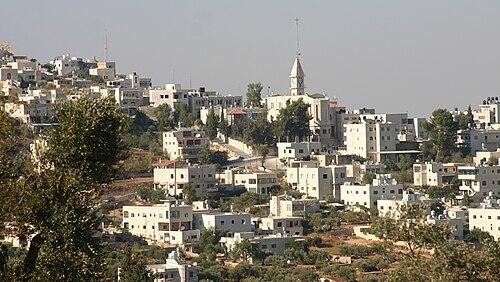
One of the most troubling recent incidents unfolded in Taybeh, the last entirely Christian Palestinian town in the West Bank. On May 29, preparations for the village’s annual Marian festival were abruptly interrupted when Israeli military vehicles entered the area and ordered organizers to halt activities, despite prior authorization from local authorities.
Witnesses reported the deployment of a stun grenade, and the subsequent presence of surveillance drones and a military helicopter heightened tensions among residents. Many feared that the celebration—an important expression of religious and communal identity—would be forcibly cancelled.
Only after direct intervention from the Latin Patriarch of Jerusalem, Pierbattista Pizzaballa, were preparations allowed to resume and the event ultimately proceed. Christian organizations monitoring the situation described the episode as emblematic of the growing insecurity faced by Christian populations in the land where Christianity began.
Land Disputes and Sacred Sites Fuel Tensions
The Taybeh episode is part of a broader pattern of rising tension across the West Bank. Israel has recently advanced new administrative measures related to land registration in Area C, which comprises roughly 35 percent of the territory. Critics argue that these procedures could disadvantage Palestinian families who rely on customary land ownership systems rather than formal documentation.
Simultaneously, controversy has emerged over the expropriation of approximately 28 acres surrounding a shrine traditionally associated with the Prophet Samuel, a site revered by Jews, Christians, and Muslims. Israeli authorities describe the move as an archaeological preservation effort, but Palestinian groups and Israeli activists contend it represents a broader attempt to consolidate control over culturally and religiously significant sites.
The dispute has intensified fears over the future of Jerusalem’s holy places. Palestinian officials have warned that altering longstanding arrangements—particularly at the Al-Aqsa Mosque compound—could destabilize the region. Jordan continues to maintain its historic custodial role over Muslim and Christian sacred sites in Jerusalem, a responsibility reaffirmed by its 1994 peace treaty with Israel.
Humanitarian Collapse in Gaza
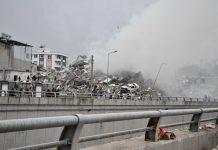
While political and territorial disputes dominate headlines, conditions in Gaza have reached catastrophic levels despite a ceasefire that took effect in October 2025. Church-based organizations describe a humanitarian disaster extending far beyond the battlefield.
According to Caritas Jerusalem, Gaza’s essential infrastructure has been devastated. Water systems have been severely damaged, sewage networks are largely nonfunctional, and cases of acute diarrheal illness have surged dramatically. Environmental destruction has also been widespread, with the near-total loss of tree crops, shrubland, and agricultural cultivation.
More than half a million people are now believed to be living under famine conditions. Children have been especially affected: over 10,000 minors have reportedly suffered severe disabilities linked to the conflict, and Gaza is said to have one of the highest concentrations of child amputees in modern history.
Father Gabriel Romanelli, parish priest of Gaza’s only Catholic parish, has echoed repeated appeals from Pope Leo XIV for sustained humanitarian support. Although major bombardments have subsided since the ceasefire, local sources report that more than 900 people have died in the months that followed. Food shortages, lack of medicine, and scarce clean water continue to define daily life, with many families facing a third consecutive summer in makeshift shelters.
Speaking on May 26 before returning to the Vatican, Pope Leo XIV called for the urgent delivery of aid and emphasized the need for reconstruction. He also renewed appeals for dialogue, warning that violence perpetuates hatred and insisting on the fundamental dignity of every human being.
Conflict Expands into Lebanon
Beyond Gaza, the conflict has increasingly spilled into Lebanon, where hostilities between Israel and Hezbollah have escalated despite attempts to maintain ceasefire arrangements. Lebanese authorities report that more than 3,300 people have been killed and over 10,000 wounded since renewed fighting began.
Israeli military forces have expanded their presence in southern Lebanon, including strategic areas near Beaufort Castle overlooking the Litani Valley. Lebanese officials have accused Israel of imposing collective punishment, while Israeli authorities maintain their actions are necessary to counter Hezbollah operations.
Churches as Bridges Amid Division
Against this backdrop of violence, Christian leaders in Lebanon have highlighted a contrasting narrative—one defined by humanitarian outreach and interfaith solidarity. Archbishop Hanna Rahme has described how churches are opening their doors to displaced families of all backgrounds, including Shiite Muslims fleeing the conflict.
While initial tensions existed due to Hezbollah’s involvement, acts of hospitality have gradually fostered mutual understanding. Clergy and religious communities have provided shelter, while displaced families have encountered a Church committed to coexistence rather than division.
This response underscores a broader reality often overlooked amid geopolitical analysis: Christian communities in the Middle East frequently serve as bridges between different religious and ethnic groups. Their focus on humanitarian assistance and human dignity transcends political lines, offering a model of coexistence in a deeply fractured region.
An Uncertain Future
From Taybeh to Gaza, from Jerusalem to southern Lebanon, the challenges confronting Christian communities are inseparable from the wider crises affecting the Middle East. Yet their experiences also illuminate a deeper truth—that religious freedom, humanitarian protection, and peaceful coexistence are not separate concerns, but interdependent foundations for any lasting peace.
As conflicts persist and conditions deteriorate, the resilience of these communities—and their commitment to serving others regardless of faith—may prove to be one of the region’s most vital, if fragile, sources of hope.
- Raju Hasmukh with files from Zenit News
Related Images: