








Cardinal Pierbattista Pizzaballa’s pastoral letter calls the war in the Holy Land a turning point, urging Christians to resist fear, violence, and toxic memory through prayer, dialogue, and open doors.
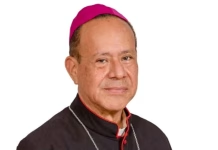
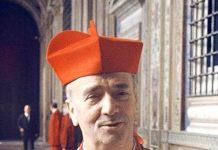
Newsroom (27/04/2026 Gaudium Press ) Cardinal Pierbattista Pizzaballa, the Latin Patriarch of Jerusalem, has issued a sweeping pastoral letter that reads less like a routine church statement than a moral diagnosis of the Holy Land’s unraveling under war. Framed as a call to discernment for Christian communities, the document argues that the conflict after October 7, 2023, has become a defining reality for the Church and the wider region.
A letter for discernment
The letter, titled They Returned to Jerusalem with Great Joy, is explicitly not presented as political analysis or a quick response to events. Instead, Pizzaballa says it should be read slowly, as a tool for reflection within parishes, monasteries, families, and communities. He argues that repeated condemnations and familiar talking points, while still necessary, are no longer enough to guide believers through what he describes as a tragic and prolonged war.
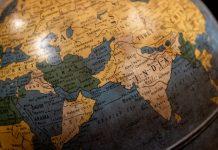
At the heart of the text is a single question: how can Christians live faithfully in a land shaped by conflict, mistrust, and grief? Pizzaballa answers by treating the Holy Land not as a problem to escape, but as the very place where Christian witness must take shape. In his telling, the conflict is not a temporary interruption to ecclesial life; it is the setting in which the Church must rediscover its mission.
A crisis of bonds
Much of the letter is devoted to the social and spiritual damage caused by war. Pizzaballa describes the dissolution of human bonds, the growth of hatred, and the hardening of identities into opposing camps. He says pain has become widespread and real, but that suffering cannot be flattened into a single, equal category because responsibility differs between occupier and occupied, ruler and ruled, armed and unarmed.
He also warns that the war has deepened economic collapse, sharpened emigration, and widened despair, especially among young people. In his account, the absence of pilgrims has left families without work, closures have paralyzed communities, and the future has begun to look unreachable for many. Yet he also insists that local associations, movements, and grassroots initiatives still preserve fragments of human solidarity that may become the seed of reconstruction.
Jerusalem as symbol
A major thread in the letter is theological: Jerusalem is presented not simply as a city, but as a symbol of God’s dream for humanity. Pizzaballa turns repeatedly to Scripture, especially the Book of Revelation, where the new Jerusalem descends from heaven as a sign of communion, welcome, and healing. He contrasts this with a “city without heaven,” a place sealed inside earthly logic, possession, and power.
From that vision, he draws a practical conclusion: the Church must resist closure and exclusivity. In his reading, the holy city’s defining features are open gates, shared space, and a spirituality rooted in God’s presence rather than territorial control. He says Jerusalem’s deepest identity is religious and universal at once, and that any durable coexistence in the Holy Land must respect that vertical dimension of faith.
Church under pressure
Pizzaballa offers a detailed picture of the Catholic community’s different realities across Gaza, Palestine, Israel, Jordan, Cyprus, and among migrants and asylum seekers. In Gaza, he praises the parish of the Holy Family and Caritas for remaining “the Face of Christ” amid devastation, while noting the deaths, displacement, and destruction endured by local Christians. In Israel, he points to discrimination, insecurity, and trauma after October 7, 2023, as well as the particular solitude felt by Hebrew-speaking Catholics.
He also highlights schools, hospitals, social-welfare institutions, and parish life as places where coexistence is already being practiced. These institutions, he suggests, are not secondary works of charity but concrete expressions of the Church’s mission. In them, he says, dialogue becomes flesh through shared care, education, and service to the poor and sick.
A call to action
The letter’s final movement shifts from diagnosis to practice. Pizzaballa calls for stronger prayer, deeper liturgical life, and a renewed pastoral focus on families, youth, priests, religious life, and the elderly. He wants schools to become workshops of a new humanity, families to become “domestic churches,” and priests to serve as stable points of reference in a fractured landscape.
He also insists on the rejection of violence in speech and action, warning against hatred, fake news, and language that turns others into enemies. His closing appeal is for trust, forgiveness, and the courage to keep the doors open even when the political horizon appears closed. The letter ends with a return to Luke’s image of the disciples going back to Jerusalem with joy, which Pizzaballa presents as an Easter hope that refuses to surrender to darkness
- Raju Hasmukh with files from https://lpj.org/