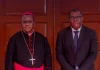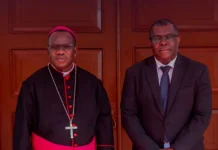

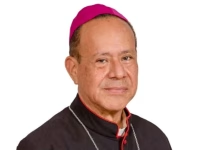

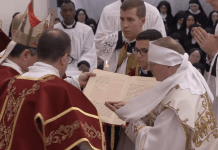
Bosnian refugee Senad Mrkaljevic, born into a Muslim family, has been ordained a Catholic priest in Berlin after a remarkable faith journey.
Newsroom (16/07/2026 Gaudium Press ) A man who fled the war in Bosnia and Herzegovina as a child and sought refuge in Germany has been ordained a Catholic priest in an extraordinary story of faith, perseverance, and personal transformation.
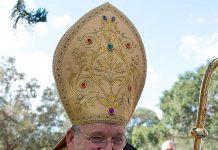
Senad Mrkaljevic, 41, was ordained a priest by Archbishop Heiner Koch of Berlin at St. Hedwig’s Cathedral, according to the Catholic Church’s news site in Germany. His path to the priesthood is unusual because he was born into a Muslim family and converted to Christianity as an adult.
The newly ordained priest says his experience of faith has been one of enrichment rather than sacrifice, a message he hopes to share throughout his ministry.
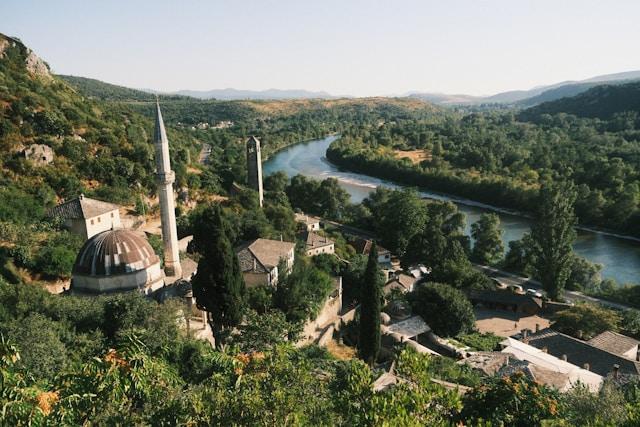
Born in 1984 in Brčko, in what was then Yugoslavia, Mrkaljevic grew up in a Muslim household where religion was not a dominant part of everyday life. He recalls a childhood in which Catholics, Orthodox Christians, and Muslims lived peacefully alongside one another.
That life was disrupted by the outbreak of the Bosnian War in 1992. Like many families affected by the conflict, the Mrkaljevic family was forced to flee. They first found refuge in Austria before eventually settling in Germany.
Adapting to life in a new country proved difficult. As a child, Mrkaljevic struggled to understand the realities of displacement and quickly felt like an outsider in his new environment. The challenges of integration were further complicated by a congenital visual impairment that made school life more difficult.
His spiritual journey began years later, around the age of 23. Drawn by a growing interest in Christianity, he started reading the Bible and quietly attending Sunday church services. Entering a church for the first time was not easy, and he wrestled with questions about whether he was making the right decision.
Over time, however, his conviction deepened. What began as a private exploration of faith gradually became a commitment he no longer wished to keep hidden. Determined not to live what he described as a “double life,” he chose to make his beliefs public.
In 2009, Mrkaljevic was baptized during the Easter Vigil and officially entered the Catholic Church. The decision was not immediately accepted within his family. His mother, in particular, struggled with his conversion and tried to persuade him to change his mind.
Despite the opposition, he remained committed to his faith and continued along the path that would eventually lead him to the priesthood.
Years later, attitudes within his family evolved. Mrkaljevic says his conversion and his decision to become a priest were ultimately met with respect by both his relatives in Bosnia and his siblings. A powerful symbol of that acceptance came when his mother attended his priestly ordination.
His preparation for ministry included theological studies at the Lantershofen seminary for adult vocations, where he completed his education in 2023. Following his studies, he served first as a deacon and later as a chaplain at St. Edith Stein Parish in Berlin’s Neukölln district.
The parish is located in an area with a significant Muslim population, a setting that Mrkaljevic believes aligns closely with his own life experience. Drawing on his background, he hopes to contribute to greater understanding between Christians and Muslims and sees himself as someone capable of building bridges between the two communities.
As he begins his priestly ministry, Mrkaljevic says his focus will be on accompanying people in their spiritual lives and sharing the Christian message. His own journey, shaped by war, migration, disability, religious exploration, and eventual vocation, has convinced him of the profound impact faith can have on a person’s life.
Now serving as a Catholic priest in Berlin, he hopes to use that experience to encourage and guide others, believing that even a small faith community can make a meaningful difference. His story stands as a rare example of personal transformation across cultural, religious, and national boundaries, culminating in a vocation he says has brought deep meaning and purpose to his life.
- Raju Hasmukh with files from EWTN News
Related Images: