










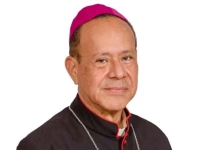



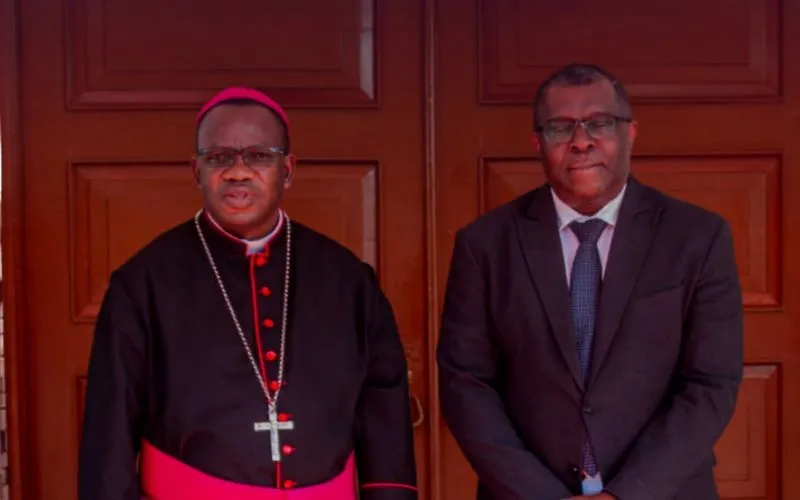
Pemba Bishop António Juliasse urges Church, State, and society to work together through dialogue, reconciliation, and development for peace.
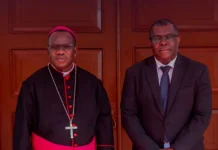
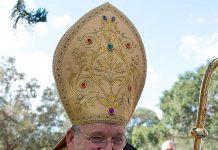
Newsroom (16/07/2026 Gaudium Press) The Catholic Bishop of Pemba has called for stronger collaboration between government institutions, religious communities, and civil society to address the persistent insecurity in Cabo Delgado Province, arguing that sustainable peace can only be achieved through a comprehensive approach that extends beyond military measures.
Speaking to journalists following a meeting with the newly appointed Secretary of State for Cabo Delgado Province, Plácido Pereira, on July 15, Bishop António Juliasse Sandramo emphasized the need for collective responsibility in responding to a conflict that has affected the northern Mozambican province for years.
According to the bishop, the audience reflected a shared commitment between the Catholic Church and the State to work together for the well-being of communities that continue to face the consequences of instability and violence.
“The visit is a positive sign of institutional openness and a willingness to strengthen collaboration between the Catholic Church and the State for the benefit of the population,” Bishop Juliasse said.
The bishop described insecurity as an ongoing concern that demands the involvement of all sectors of society. While acknowledging efforts already underway, he stressed that peace cannot be secured by a single institution acting alone.
“The issue of security remains a concern for all of us. Peace will only be possible when there is a serious commitment from all the living forces of society to confront this challenge,” he said.
A central theme of the bishop’s remarks was the importance of dialogue. He described dialogue as an indispensable tool for creating the conditions necessary to end the violence that has disrupted communities across Cabo Delgado.
Bishop Juliasse welcomed dialogue initiatives promoted by the Mozambican government and expressed hope that they could contribute to a durable resolution of the conflict. He pointed in particular to the openness demonstrated by national leadership as an encouraging sign for future peace efforts.
“The openness shown by the President of the Republic to engage in dialogue gives us hope that paths toward lasting peace can be found. But this objective requires the responsible involvement of everyone,” said Bishop Juliasse, who also serves as President of the Justice and Peace Commission of the Episcopal Conference of Mozambique (CEM).
The Catholic prelate reaffirmed the Church’s commitment to supporting those affected by the insurgency. He said the Church would continue its pastoral and humanitarian work among displaced families and vulnerable populations while promoting reconciliation in communities divided by conflict.
“The Catholic Church will continue carrying out its mission of closeness to the people affected by the conflict, promoting pastoral and humanitarian initiatives that foster reconciliation, human dignity, and greater trust among communities,” he said.
Beyond providing assistance, Bishop Juliasse argued that cooperation between the Church and public institutions must produce practical results that improve the lives of local residents. He said joint efforts should focus on rebuilding public confidence and ensuring conditions that allow displaced families to return safely to their places of origin.
“Cooperation between the Church and the State must be translated into concrete initiatives that strengthen public confidence and create conditions for the safe return of displaced families to their communities of origin,” he said.
The bishop’s comments are consistent with his longstanding advocacy for a multidimensional response to the insurgency, one that combines security measures with humanitarian assistance, reconciliation efforts, justice, and sustainable development initiatives.
The meeting also served as the formal introduction of Plácido Pereira as the new Secretary of State for Cabo Delgado Province. Pereira said the visit underscored the government’s commitment to maintaining close institutional relations with the Catholic Church, recognizing its role in human development and peacebuilding across the province.
Pereira further highlighted the importance of interreligious cooperation in addressing terrorism and insecurity. He revealed that authorities have already initiated a dialogue process involving different religious denominations in an effort to better understand the factors driving the conflict.
“We have already begun a dialogue process involving different religious denominations to better understand the causes and motivations behind terrorism. By understanding these realities, we believe it will be possible to find more effective solutions to end the conflict,” Pereira said.
The Secretary of State also emphasized the value of information-sharing between government institutions and faith-based organizations. Such cooperation, he said, can help authorities better understand and respond to the concerns of local communities, particularly in areas most affected by insecurity.
“The sharing of information between public institutions and religious organizations is an important element in responding to the concerns of local communities, especially in the areas most affected by insecurity,” Pereira said.
The meeting between the Diocese of Pemba and the provincial leadership highlighted a growing consensus that lasting peace in Cabo Delgado will require coordinated action from government authorities, religious organizations, and local communities. Both leaders stressed that dialogue, cooperation, humanitarian support, and reconciliation remain essential elements in building a stable future for a province that continues to seek an end to years of conflict.
- Raju Hasmukh with files from ACI Africa
Related Images: