



















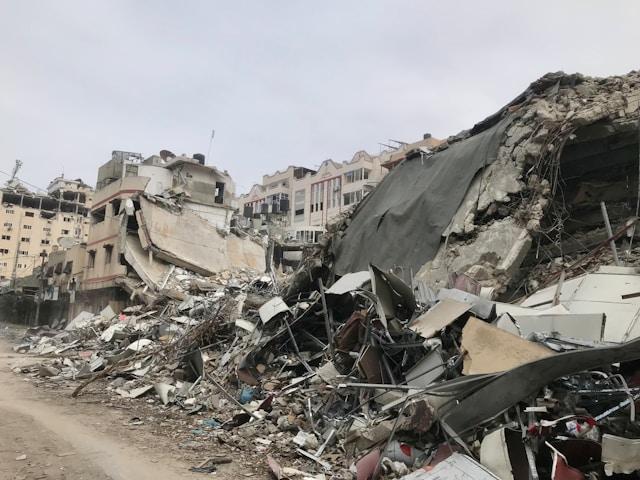
Hamas says it will transfer Gaza governance, but experts question whether it will surrender real authority, security control, and arms.
Newsroom (09/07/2026 Gaudium Press ) Hamas has announced its intention to hand over governing authority in the Gaza Strip after more than two decades in power, offering to transfer administrative control to a US-backed transitional body created as part of the ceasefire framework. The move has been presented as a significant political development that could help advance discussions about Gaza’s future governance, reconstruction, and security.
Yet observers remain cautious. Among them is Khalil Sayegh, a Gaza-born analyst and expert on the Israeli-Palestinian conflict who now lives in the United States and serves as president and co-founder of the Agora Initiative for Dialogue and Encounter. Sayegh argues that Hamas has made similar promises before without implementing meaningful changes.
According to him, the real measure of Hamas’s intentions will not be the dissolution of governing institutions but whether the movement relinquishes control of its weapons and security apparatus. At present, he says, there is no concrete evidence that such a transfer is taking place.
A Potentially Important but Uncertain Development
On July 6, Hamas announced the dissolution of the governing body through which it has administered Gaza continuously since 2007. Authority was officially offered to the National Committee for the Administration of Gaza (NCAG), a technocratic transitional body established in January under the terms of a ceasefire agreement and linked to a broader peace initiative supported by the United States.
Analysts view the announcement as potentially important because it could help remove one of the obstacles that has complicated negotiations over Gaza’s future. However, there is little expectation that the decision will immediately alter realities on the ground.
Large sections of Gaza remain under Israeli military control, while other areas continue to be influenced by Hamas. The political declaration therefore raises questions about how much actual authority can be transferred and whether the proposed transition can be implemented in practice.
Disarmament Remains the Key Issue
The central question surrounding Hamas’s announcement concerns security and disarmament. While reports indicate that the movement has expressed willingness to transfer some security responsibilities as part of the transition process, there is no certainty that it is prepared to surrender its military capabilities.
Israel and the United States have consistently insisted that any long-term settlement requires Hamas to disarm. Critics of the movement argue that transferring administrative responsibilities without relinquishing military power would leave the group’s influence largely intact.
For many observers, this distinction is what separates a genuine political transition from a symbolic gesture. A handover of government structures alone would not necessarily change the balance of power if Hamas continues to control armed forces and security networks operating within the territory.
A Transitional Authority Facing Obstacles
The NCAG was established under UN Security Council Resolution 2803 and forms part of a broader 20-point peace plan. Temporarily based in Cairo, Egypt, the committee is composed of nonpartisan Palestinian technocrats and is led by interim commissioner Ali Abdel Hamid Shaath.
The body was designed to oversee governance during a transitional phase and facilitate reconstruction, humanitarian assistance, and administrative reform. However, its ability to operate effectively has so far been limited, with Israel blocking its deployment inside Gaza.
The uncertainty surrounding the committee’s role has raised further doubts about the timing and feasibility of any handover. As a result, the prospect of a smooth transfer of authority remains distant despite Hamas’s public commitment.
Humanitarian Crisis Continues
While political negotiations remain stalled, conditions for Gaza’s civilian population continue to deteriorate. Critics argue that the lack of progress in the peace process has delayed reconstruction efforts and obstructed the large-scale delivery of humanitarian aid to the territory’s estimated 2.1 million surviving residents.
According to figures cited during the current negotiations, more than 73,000 people have been killed since the war began in October 2023 following the Hamas attack on Israel. More than 1,000 additional deaths have reportedly occurred since a ceasefire agreement was reached in October 2025.
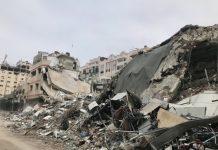
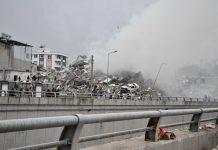
Israel continues to control approximately 70 percent of the Gaza Strip, leaving many Palestinians confined to densely populated and overcrowded areas. Humanitarian organizations and observers have repeatedly warned about worsening living conditions, inadequate services, and the ongoing impact of prolonged conflict.
Sayegh argues that international diplomatic efforts have produced few tangible benefits for Gaza’s population. He also contends that the enclave has received diminishing global attention as international focus has shifted toward other regional crises, particularly tensions involving Iran.
According to his assessment, daily violations and killings continue, while Hamas itself remains an authoritarian force that suppresses political freedoms among Palestinians.
Christian Leaders Bring a Message of Solidarity
Amid the broader crisis, the recent visit of senior Christian leaders to Gaza carried particular symbolic importance, especially for the territory’s small Christian community.
On June 22, Cardinal Pierbattista Pizzaballa, the Latin Patriarch of Jerusalem, and Greek Orthodox Patriarch Theophilos III entered Gaza and met with clergy, religious communities, Christian families, and civilians affected by the ongoing humanitarian emergency.
For many local residents, the visit represented a rare demonstration of international concern and solidarity during a period marked by hardship and isolation.
Sayegh views the gesture as significant because it highlighted not only the importance of Gaza’s Christian community but also the wider concern for the Palestinian population as a whole. In his view, the presence of the Church’s leaders sent a message that those suffering in Gaza have not been entirely forgotten.
An Unclear Future
Despite Hamas’s announcement, the future of Gaza remains deeply uncertain. The movement appears eager to present itself as willing to relinquish governance, but questions persist about whether it is prepared to surrender the instruments of power that ultimately matter most.
Sayegh believes Hamas recognizes that its political identity remains closely linked to the concept of armed resistance. As a result, he argues, the movement is attempting to separate governance from military control, creating the appearance of political compromise without addressing the issue of disarmament.
For the analyst, any lasting solution must ultimately rest on legitimate Palestinian representation. He argues that whoever is entrusted with leading the Palestinian people should derive that authority from elections involving Palestinians broadly or, at minimum, from a leadership structure enjoying widespread public support.
Until then, Hamas’s latest announcement is likely to be viewed with caution. Whether it marks the beginning of a genuine political transformation or simply another symbolic step will depend on actions that have yet to materialize, particularly regarding security control, disarmament, and the practical transfer of authority.
- Raju Hasmukh with files from Asianews.it
Related Images: