

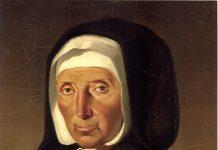




Ten years after her death, Sister Clare Crockett’s life, faith, and path toward sainthood continue to inspire Catholics worldwide.
Newsroom (17/04/2026 Gaudium Press ) Ten years after her death in a devastating earthquake in Ecuador, Sister Clare Crockett is remembered not simply for the tragedy that ended her life, but for the vibrant faith and unmistakable joy that defined it.
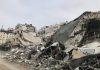
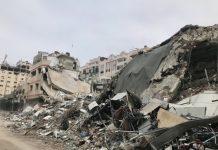
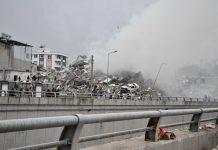
The 33-year-old Irish nun died on April 16, 2016, when a powerful earthquake struck Ecuador’s coastal region, collapsing the school where she was teaching music. What might have remained a story of sudden loss has instead become, for many Catholics around the world, a testimony of enduring spiritual influence.
Born in Derry, Northern Ireland, Clare Crockett once envisioned a very different future. As a teenager, she showed clear promise as an actress and television presenter, with ambitions that pointed toward Hollywood rather than religious life. That trajectory changed dramatically at age 17 during a Holy Week retreat in Spain—a moment those close to her describe as a profound conversion experience.
From that point forward, she redirected the same intensity she had once devoted to entertainment toward her faith. She entered the Servant Sisters of the Home of the Mother, embracing a life centered on Christ. According to Sister Kristen Gardner, postulator of her cause for sainthood, that transformation was total.
“The Lord transformed her soul and she no longer longed for anything other than to have Christ as her only love,” Sister Kristen said in January 2025. She emphasized that the cause for sainthood “is not moved by human reason” but by “a desire to give glory to God.”
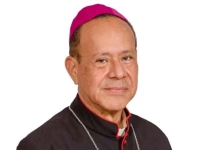
That process formally began in January 2025, when the Diocese of Alcalá de Henares near Madrid opened the diocesan phase of Sister Clare’s beatification, appointing a tribunal to examine her life and virtues.
As the 10th anniversary of her death approached, renewed attention to her story emerged through a YouTube project launched by her congregation. The series highlights not only her deep faith but also her distinctive personality—marked by humor, energy, and an ability to connect.
Jacob Wagner, who met Sister Clare while preparing for his first Communion in 2006, recalled her unusual balance of playfulness and reverence.
“She would have like this switch,” he said. “She would be having fun throwing the ball, and then she would flip that switch when we would get into an area like the church or the adoration chapel. As a child, looking at her and seeing that, you’re like, OK, you know there’s a time for play and there’s a time for prayer.”
That impression endured. Years later, shortly before her death, Sister Clare sent Wagner a video message encouraging him to live out his Christian calling—words that arrived at a critical moment in his life.
“At the time when I received it, I honestly needed it,” he said. “I wasn’t necessarily putting the right things first. So to hear somebody that taught you about Jesus still cared after all those years, it helps.”
Others remember her for small but powerful habits that made faith tangible. Gracie, who knew Sister Clare as a child in Florida, recalled her insistence on participation.
“My main memory of Sister Clare would be at the end of her sentences,” she said. “She always said: ‘OK,’ or she said: ‘Amen.’ And if we wouldn’t respond ‘Amen,’ she would say it louder … and we would have to respond with ‘Amen.’”
For Sister Clare, “Amen” was not a formality but a way of life. “Amen is: ‘So be it,’” Gracie explained. “So that I think in itself perfectly describes Sister Clare. She was just the prime example of so be it.”
In a striking detail often noted by those who recount her final moments, the last song she was playing before the earthquake struck was “Let all the people say Amen.”
Her ability to communicate faith extended beyond gestures into complex moral discussions. Father Fred Parke, who served as pastor of the Church of the Assumption in Jacksonville, Florida—where Sister Clare lived for a time—said she had a rare gift for engaging young people on difficult topics.
“She talked about respect for life and abortion and morality,” he said. “But she did it in such a way that they didn’t dismiss her … they wanted to hear more from her.”
Friends and fellow religious say this balance—joy paired with seriousness, clarity with compassion—was central to her ministry. It is also what continues to draw attention to her life as the Church examines her cause for sainthood.
According to her congregation, her death in the earthquake was not an end but a passage, leading her to “the long-awaited final encounter with the Lord.”
A decade later, that perspective shapes how Sister Clare Crockett is remembered: not only as a life cut short, but as one fully lived in conviction—an example, for many, of what it means to say “Amen” and mean it.
- Raju Hasmukh with files from OSV News
Related Images: