


























Vatican engages tech giants on AI ethics as Silicon Valley pastor highlights dialogue, safety concerns, and global stakes for humanity’s future.
Newsroom (28/05/2026 Gaudium Press ) In the heart of Silicon Valley, a Catholic pastor has emerged as a key witness to a largely unseen effort by the Vatican to shape the future of artificial intelligence through dialogue rather than confrontation.
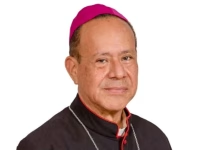
Father Brendan McGuire, pastor of St. Simon Parish in Los Altos, California, says years of ongoing conversations between Church leaders and technology companies—while often slow and conducted behind closed doors—are beginning to bear fruit. According to McGuire, major artificial intelligence firms are not only listening to the Vatican’s concerns but increasingly sharing them.
Speaking after the May 25 presentation of Pope Leo’s encyclical Magnifica Humanitas, which addresses humanity in the age of artificial intelligence, McGuire described the moment as a turning point. The presence of both religious leaders and AI developers at the event signaled an emerging partnership aimed at navigating one of the most consequential technological transformations in human history.
“Genuine Goodwill” Among Tech Leaders
McGuire, who has participated in exchanges between the Vatican and technology companies for nearly a decade, emphasized that many within the AI industry are motivated by sincere ethical concerns.
“I have seen men and women…of genuine goodwill who are trying to do the right thing,” he said, referencing not only the San Francisco-based AI company Anthropic but other firms across the industry.
This goodwill, however, does not eliminate the challenges posed by competing pressures within the tech sector. According to Christopher Olah, co-founder of Anthropic, even organizations committed to safety and ethics face strong incentives—commercial, geopolitical, and competitive—that can influence their decisions.
For Olah, this reality underscores the necessity of external voices. “If we want this technology to go well,” he said, “it is enormously important that there be people outside those incentives…who are willing to be thoughtful critics.”
A Historic Encyclical and an Unprecedented Invitation
The Vatican’s push for engagement reached a symbolic milestone during the presentation of Magnifica Humanitas. For the first time, a sitting pope participated directly in the unveiling of an encyclical, an event attended by AI leaders including Anthropic.
The invitation extended to Anthropic—making it the only AI company formally represented—drew both attention and criticism. Some observers questioned whether offering such a platform risked elevating a single company above others.
Vatican officials defended the decision as practical rather than preferential. “You can’t invite everyone,” one official explained. “You’re not rejecting others; you are choosing one.”
McGuire suggested that Anthropic’s prominence stemmed from its emphasis on safety and interpretability in AI systems. He noted that the company employs a significant portion of the world’s engineers focused on understanding how AI models function internally—a critical factor in addressing risks.
The Moral Imperative of Engagement
Central to McGuire’s argument is the belief that dialogue between the Church and the tech industry is not optional—it is essential. He pushed back against narratives that frame large technology firms as adversaries.
“There is often a tendency to see big tech as ‘the enemy,’” he said, drawing on his experience growing up in Ireland during the conflict in Northern Ireland. “That mindset is wrong…if you want peace, you have to talk.”
The same logic, he argued, applies to artificial intelligence. Regardless of public skepticism or distrust, these companies are shaping the future. Engaging with them offers the only realistic path to influencing outcomes.
“They are building our future with or without us,” McGuire said.
Ethical Fault Lines: Labor, Power, and Global Inequality
During his remarks, Olah highlighted several moral challenges tied to the rapid development of AI—many of which echo concerns raised in the pope’s encyclical.
One of the most urgent, he said, is the potential displacement of human labor. As automation accelerates, large-scale job loss could become a defining social issue, demanding a coordinated ethical response.
“If that happens,” Olah warned, “supporting those displaced will be a moral imperative of historic proportions.”
He also pointed to the concentration of AI development within a handful of wealthy nations, raising questions about global equity. Without mechanisms to distribute the benefits of AI broadly, the technology risks deepening existing inequalities.
“How can we ensure the gains of AI are shared globally?” he asked. “We do not have a mechanism for this.”
A Technology That Challenges Its Own Creators
Beyond economic and political concerns, AI is also presenting deeper philosophical questions—some of which remain unresolved even by those building the systems.
Olah described the discovery of internal AI processes that appear to mirror aspects of human cognition and emotion, including patterns resembling joy, fear, and introspection. These findings, he said, are both fascinating and unsettling.
“I don’t know what that means,” he admitted, “but I think it warrants ongoing discernment.”
Such uncertainties have reinforced the need for interdisciplinary collaboration, bringing together engineers, ethicists, religious leaders, and policymakers.
A Window of Opportunity
For McGuire, the urgency of this moment cannot be overstated. Artificial intelligence, he said, remains in a formative stage where meaningful influence is still possible.
“This technology is still malleable,” he explained. “You can make changes to it now…if we can get in now to make changes for the good, then we will all benefit.”
He also expressed cautious optimism about the willingness of some tech companies to prioritize ethical considerations—even at financial cost. Anthropic, for instance, has pledged to donate a significant portion of its wealth, an indication, McGuire suggested, of an emerging ethical framework within parts of the industry.
Toward a Shared Future
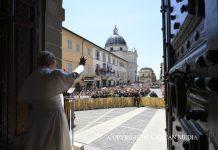
Pope Leo, in his remarks, framed the collaboration between the Vatican and tech leaders as a sign of hope. Despite differences in perspective, he emphasized the importance of shared responsibility.
“Only together…will we be able to build a future, not for a privileged few, but for the entire human family,” he said.
As artificial intelligence continues to evolve, the stakes extend far beyond technical innovation. The conversations now unfolding—between code and conscience, data and dignity—may ultimately determine not just how AI develops, but whom it serves.
In Silicon Valley and beyond, those conversations are just beginning.
- Raju Hasmukh with files from Crux Now
Related Images: