























African Catholic leaders praise Pope Leo XIV’s first encyclical on AI as a timely call to protect human dignity, ethics, and justice.
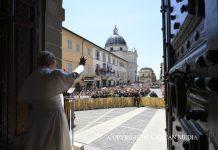
Newsroom (27/05/2026 Gaudium Press ) The unveiling of Magnifica Humanitas, the first Encyclical of Pope Leo XIV, on Monday, May 25, has sparked widespread reflection and strong reactions among Catholic leaders and theologians across Africa. The five-chapter document, published by the Vatican Dicastery for Communication’s Libreria Editrice Vaticana and presented personally by the Pontiff, is widely regarded as a decisive and prophetic intervention addressing the ethical, spiritual, and social implications of artificial intelligence and emerging technologies.
At its core, the Encyclical confronts what Pope Leo XIV describes as an urgent global task: “preserving the human person in the age of artificial intelligence.” For many Church leaders across the African continent, the document goes beyond technological discourse, offering a framework rooted in Catholic Social Teaching to address widening inequality, digital dependency, and growing moral uncertainty.
A Moral Turning Point for Humanity
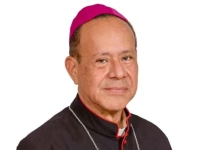
Among the first to respond was Bishop Emmanuel Adetoyese Badejo of Nigeria’s Catholic Diocese of Oyo, who described the Encyclical as “light at first sight.” He emphasized continuity with the Church’s longstanding tradition of engaging real-world challenges, tracing the document’s lineage back to Rerum Novarum by Pope Leo XIII.
According to Bishop Badejo, the Encyclical situates humanity at a critical crossroads. He framed the current technological era as a moral choice between two symbolic paths: constructing a “Tower of Babel,” where human ambition displaces God and fosters exploitation, or rebuilding a “City of God” grounded in relationships, diversity, and the common good.
He underscored the transformative power of artificial intelligence, robotics, and digitalization, while warning against allowing these tools to reshape human identity negatively. Instead, he called for collective vigilance to ensure that technology remains a servant to humanity rather than its master. “All have a responsibility,” he said, “to ensure artificial intelligence enhances human relationships and our relationship with God.”
Bishop Badejo also highlighted the Pope’s early outreach to media professionals shortly after his election on May 8, 2025, viewing it as a strategic effort to align communication platforms with ethical truth. Echoing Pope Francis’ message, he reiterated the call to “disarm words” as a step toward fostering peace in an increasingly polarized digital environment.
Bridging the ‘Culture Gap’ in the Digital Age
Fr. Stan Chu Ilo, a Nigerian theologian and Senior Research Professor at DePaul University, described his reaction to the Encyclical as one of “tremendous joy and gratitude.” He praised Pope Leo XIV for accurately interpreting “the signs of the times,” particularly the unprecedented influence of artificial intelligence.
Fr. Ilo connected the Encyclical’s message to the sociological concept of the “culture gap,” first articulated by Wilfred Fielding Ogburn. This theory suggests that technological advancements often outpace society’s moral and ethical frameworks. Drawing historical parallels, Fr. Ilo cited the development of nuclear weapons as an example of innovation preceding ethical guardrails, resulting in devastating human consequences.
He argued that Pope Leo XIV identifies a similar imbalance in today’s AI-driven world. The Encyclical, he noted, is “pastoral, prophetic, theological, and deeply social,” presenting humanity with a stark choice: pursue technological power devoid of moral depth, or rebuild a just and humane world grounded in solidarity and the common good.
Importantly, Fr. Ilo emphasized the document’s relevance for Africa and the Global South, where the digital divide continues to exacerbate inequality. He warned that issues such as surveillance capitalism, human trafficking, mental health crises, and systemic exploitation highlight the urgent need for ethical AI governance. The Encyclical, he said, challenges Africa not only to adopt technology but to actively shape global ethical discussions.
Africa’s Unique Vulnerabilities and Responsibilities
Leaders from across the continent also pointed to Africa’s particular exposure to the risks of technological dependency. Bishop Diego Sarrió Cucarella of Algeria noted that Pope Leo XIV’s personal presentation of the document underscores its universal significance, extending beyond technical experts to all humanity.
While acknowledging AI’s potential benefits in sectors like agriculture, education, and healthcare, Bishop Diego warned against Africa becoming merely a consumer of externally developed technologies or a “reservoir of data governed by external interests.” His concerns were echoed by Jesuit priest Fr. Russell Pollitt in South Africa, who described the global control of AI systems as a potential new form of colonialism driven by profit-focused external powers.
According to Fr. Pollitt, the Encyclical speaks directly to African realities, particularly the risks of economic exclusion. Automation, he warned, could displace entry-level jobs and deepen poverty if left unchecked. “If we put technology and profit before people,” he said, “we risk creating a world where human beings are treated as commodities.”
Education, Discernment, and the Future
In South Sudan, Bishop Christian Carlassare emphasized the Encyclical’s call to prioritize human intelligence and moral reasoning over blind reliance on automated systems. He warned that excessive dependence on AI could erode critical thinking and lead to societies rich in data but poor in wisdom.
“The greatest poverty,” he said, “is the lack of education. How can we talk about AI when we do not care for human intelligence?” His call to “put human intelligence first” highlights a central theme of the Encyclical: the necessity of education and ethical formation, particularly among young people.
Similarly, Bishop Eduardo Hiiboro Kussala stressed the primacy of human dignity, describing the document as “timely” and even “overdue.” He urged Catholic institutions, universities, and policymakers to engage deeply with the Encyclical as a resource for ethical reflection, academic research, and public policy.
A Pro-Human Vision for the Digital Era
Across all responses, a consistent theme emerges: Magnifica Humanitas is not an anti-technology manifesto but a profoundly pro-human document. It calls for discernment, accountability, and a renewed commitment to human dignity in an age defined by technological acceleration.
As Bishop Diego succinctly put it, the Encyclical “calls believers and all people of goodwill to ensure that the digital age remains worthy of humanity’s God-given vocation.”
In an era increasingly shaped by artificial intelligence and digital power, Pope Leo XIV’s first Encyclical has positioned the Catholic Church firmly within one of the most pressing global debates—not as a critic of progress, but as a guardian of humanity.
- Raju Hasmukh with files from ACI Africa
Related Images: