





Venezuela’s regime escalates threats against Catholic Church after first saints’ canonization, risking Nicaragua-style crackdown amid U.S. tensions.
Newsroom (31/10/2025, Gaudium Press ) Relations between Venezuela’s socialist government and the Catholic Church have deteriorated sharply following the canonization of the country’s first saints earlier this month, with priests reporting a surge in threats and government interference in religious events. Analysts warn the standoff could mirror Nicaragua’s crackdown on clergy, though the Church’s potential role as a mediator in U.S.-Venezuela tensions may deter a full rupture.
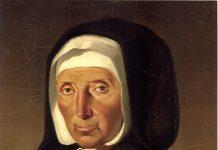
The Oct. 19 canonization in Rome of José Gregorio Hernández, a revered physician known as “the doctor of the poor,” and Carmen Rendiles, a foundress of a religious congregation, marked a milestone for Venezuelan Catholicism. Yet the event, intended as a moment of national unity, has instead fueled confrontation.
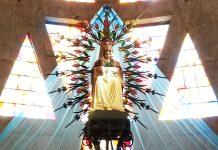
President Nicolás Maduro’s administration initially sought to capitalize on the occasion for propaganda gains, claiming credit for promoting Hernández’s cause and asserting Vatican backing, including from Pope Francis. Maduro publicly stated that the pontiff was unfamiliar with Hernández until he personally intervened. Efforts to leverage the unveiling of a mosaic of Our Lady of Coromoto—Venezuela’s patroness—in the Vatican gardens also fell flat, with only one Venezuelan bishop in attendance and no high-ranking Holy See officials beyond Archbishop Emilio Nappa, secretary general of the Vatican governorate.
When these bids failed to yield favorable optics, the regime pivoted to hostility. A planned Mass of thanksgiving in Caracas, anticipated to attract over 50,000 faithful, was abruptly canceled last week. The Archdiocese of Caracas cited insufficient space and security concerns in an official statement. However, sources familiar with the matter informed The Pillar that authorities intended to flood the event with thousands of pro-government supporters, transforming it into a rally for Maduro.
On Oct. 26, Cardinal Baltazar Porras, Archbishop Emeritus of Caracas, detailed his own obstruction in a social media post. Scheduled to preside at a Mass in Isnotú—Hernández’s hometown—for the saint’s feast day, Porras was barred from boarding a commercial flight from Caracas to nearby Valera. Attempting a private charter, he said the pilot was diverted to another city under orders citing inclement weather at Valera’s airport. Proceeding by road, Porras encountered armed forces blocking his path, compelling his return to the capital.
Threats against clergy have intensified in the canonizations’ wake. On Oct. 24, Fr. Juan Manuel León of the Archdiocese of Calabozo discovered his parish vandalized with graffiti reading “damned priest, we’ll kill you” and “terrorist, fascist, thief.” Multiple sources in Venezuela have reported to The Pillar that dozens of priests and bishops received death or imprisonment threats from regime officials or affiliates over the past week.
The escalation unfolds amid Venezuela’s dire crises: hyperinflation exceeding triple digits, widespread poverty, and the specter of U.S. military action, with American warships patrolling nearby waters. International observers accuse the government of electoral fraud in the 2024 presidential vote, prompting intensified repression—including social media blocks, forced exiles, and arrests for WhatsApp criticism.
Church leaders, long respected for human rights advocacy, had largely maintained silence post-election. But the canonizations appear to have galvanized bolder critiques. At an Oct. 17 Rome event, Cardinal Porras decried Venezuela’s “morally unacceptable” conditions, including poverty’s rise and “militarization as a form of government to incite violence.” He echoed the Venezuelan bishops’ demand to free over 800 political prisoners.
In a Oct. 20 thanksgiving Mass with Maduro’s delegation in the front row, Vatican Secretary of State Cardinal Pietro Parolin delivered a pointed rebuke, urging authorities to “listen to the words of the Lord, who calls you to open unjust prisons, to break the chains of oppression, to set the oppressed free, to break all chains.” Parolin’s remarks stand out, given his prior reputation for favoring diplomatic restraint on Venezuela—a stance aligned with Pope Francis’s approach.
Risks accompany this confrontation. The regime moderated responses to Church-backed protests in 2014 and 2017 to preserve ties with the Vatican. Now, spurned in its canonization gambit, it may escalate to intimidate critics.
Observers draw parallels to Nicaragua, where President Daniel Ortega’s government has exiled numerous bishops and priests amid ideological alignment with Maduro. A similar purge in Venezuela remains possible but uncertain.
Countervailing factors may restrain the regime. The Catholic Church commands broad respect, rendering clergy persecution politically costly. Moreover, in gang- or guerrilla-controlled regions, Church officials already mediate informally.
With U.S. naval presence heightening instability—and potential strikes on drug or military sites looming—the Church could emerge as indispensable. In a negotiated exit for Maduro under domestic and foreign pressure, it stands as the sole credible local guarantor among opposition, U.S., neighbors, government, and military factions. Precedent exists: In 2002, two bishops escorted then-President Hugo Chávez to exile during a brief coup, ensuring his safety; he returned days later when the plot collapsed.
As U.S.-Venezuela frictions intensify, an all-out assault on the Church could prove strategically shortsighted for Maduro. The institution’s future—and Venezuela’s—hangs in the geopolitical balance.
- Raju Hasmukh with files from The Pillar
Related Images: