


Archdiocese of Caracas cancels Mass for Venezuela’s first saints amid claims Maduro regime planned to turn it into a political rally. Tensions rise with Church.
Newsroom (23/10/2025, Gaudium Press ) On October 22, the Archdiocese of Caracas made a stunning announcement: the highly anticipated Mass of Thanksgiving for the canonizations of Saint José Gregorio Hernández and Saint Carmen Rendiles, Venezuela’s first saints, was cancelled. The decision, framed as a matter of logistics and safety, masked a deeper conflict—one that lays bare the escalating tensions between the Catholic Church and the regime of President Nicolás Maduro. What was meant to be a historic celebration of faith has instead become a flashpoint in the struggle for Venezuela’s soul, revealing the government’s efforts to co-opt a sacred moment and the Church’s resolve to protect its spiritual mission.
The “Feast of Holiness,” as the event was dubbed, was set to take place on October 25 at the Monumental Simón Bolívar Stadium, Venezuela’s largest baseball venue, with a capacity of nearly 40,000. The Mass was expected to draw close to 50,000 Catholics from across the country, joined by Venezuela’s bishops and prelates from neighboring nations. The canonizations of José Gregorio Hernández, the beloved “doctor of the poor,” and Carmen Rendiles, a revered nun, on October 19 marked a historic milestone for Venezuelan Catholics. For a nation battered by economic collapse, political repression, and mass emigration, the elevation of these two figures to sainthood offered a rare moment of unity and hope.
Yet, the archdiocese’s official statement cited overwhelming demand as the reason for the cancellation. More than 80,000 people had registered to attend, with many more expected to show up unannounced. “After a rigorous technical and pastoral analysis,” the statement read, “we’ve concluded that it is not viable to conduct the celebration in the Estadio Monumental under the necessary security and capacity requirements.” Instead, the archdiocese announced that the Feast of Holiness would be decentralized, with celebrations held in parishes and communities across Caracas. Father Armelim De Sousa, a spokesperson for the archdiocese, emphasized the decision’s pastoral intent, stating, “It’s a question of security. We would need three stadiums to accommodate everyone.”
On the surface, the explanation seemed plausible. But sources close to the Archdiocese of Caracas, speaking to The Pillar, revealed a more troubling reality. The cancellation, they say, was driven not solely by logistical concerns but by the Maduro regime’s brazen attempt to hijack the Mass for political gain. According to multiple sources, the government planned to bus in thousands of regime loyalists from across Venezuela, effectively crowding out Catholic faithful and transforming the sacred event into a pro-Maduro rally. “Once the bishops found out,” one source told The Pillar, “they decided to cancel the Mass.” The decision was a calculated move to protect the integrity of the celebration and prevent the regime from exploiting the canonizations for propaganda.
A Regime’s Overreach
The Venezuelan government’s involvement in the event was contentious from the start. President Maduro and top officials were expected to attend the Mass, and the regime had contributed funding and logistical support for the celebration. For many Catholics, this collaboration was a bitter pill to swallow, given Venezuela’s dire human rights record. The country, under Maduro’s rule, has been plagued by widespread poverty, rampant corruption, and the detention of over 800 political prisoners, according to estimates from human rights groups. The regime’s attempt to align itself with the canonizations—particularly that of José Gregorio Hernández, a figure of immense popular devotion—drew sharp criticism from those who saw it as a cynical ploy to shore up political legitimacy.
Tensions between the Church and the government have simmered for years, rooted in the chavista policies of Maduro’s predecessor, Hugo Chávez, and exacerbated by the current regime’s authoritarian grip. The canonization events, however, brought these tensions to a boiling point. Sources told The Pillar that the government’s efforts extended beyond the planned Mass in Caracas. During the canonization ceremonies in Rome, the regime sent hundreds of supporters to the Vatican, attempting to stage a photo opportunity with Pope Francis to suggest papal endorsement. “They tried to trick the pope into a photo op,” one source said, “and make people think they had an audience with him and support in the Vatican.” The maneuver backfired, alienating both Vatican officials and Venezuela’s bishops.
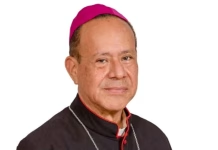
The regime’s rhetoric only deepened the rift. On October 21, Maduro accused Cardinal Baltazar Porras, the retired Archbishop of Caracas and a vocal critic of the government, of “conspiring” to undermine Hernández’s canonization. In a televised speech, Maduro claimed that Pope Francis was unaware of Hernández until he personally introduced the saint’s story—a claim widely dismissed as absurd by Church officials and observers. Cardinal Porras, a towering figure in Venezuelan Catholicism, has long been a thorn in the regime’s side, denouncing its abuses and advocating for the poor. Maduro’s attack was seen as an attempt to discredit the cardinal and assert control over the narrative surrounding the canonizations.
A Church Under Pressure
The cancellation of the Mass is only the latest chapter in the Catholic Church’s fraught relationship with the Maduro regime. In a country where the Church remains one of the few institutions capable of challenging the government’s authority, its leaders have faced increasing harassment. Bishops and priests operate under constant surveillance, and the regime has not hesitated to brand critics as enemies of the state. The recent death of Bishop Emeritus Jesús Alfonso Guerrero Moronta of San Cristóbal, a staunch defender of the marginalized, was described by some as a “moment of truth” for Maduro, underscoring the regime’s fear of the Church’s moral authority.
Despite the risks, the Venezuelan bishops have grown bolder in their denunciations. Days before the canonizations, the Episcopal Conference of Venezuela issued a pastoral letter demanding the release of political prisoners and condemning the “morally unacceptable” state of the country. At an October 17 event in Rome, Cardinal Porras delivered a searing critique, decrying “the growth of poverty, militarization as a form of government, corruption, and the disrespect of the people’s will.” His words echoed the sentiments of many Venezuelans who see the Church as a last bastion of resistance against a regime that has eroded democratic institutions and plunged the nation into crisis.
The Vatican, too, has signaled a shift from cautious diplomacy to open criticism. During an October 20 thanksgiving Mass in Rome for the canonizations, Cardinal Pietro Parolin, the Vatican Secretary of State, delivered a pointed homily with Maduro’s delegation seated in the front row. Quoting the prophet Isaiah, Parolin called on the government to “open unjust prisons, break the chains of oppression, set the oppressed free, and break all chains.” The remarks, among the strongest from a senior Vatican official in recent years, underscored the Church’s refusal to remain silent in the face of injustice.
A Saint for a Suffering Nation
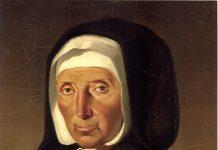
At the heart of this drama is José Gregorio Hernández, a figure whose life and legacy resonate deeply with Venezuelans. Born in 1864, Hernández was a physician who dedicated his life to serving the poor, earning the moniker “the doctor of the poor.” His canonization, alongside that of Carmen Rendiles, a nun who founded a religious congregation, was a moment of immense pride for a country desperate for hope. For many, Hernández embodies not only charity but also moral resistance to the corruption and suffering that define contemporary Venezuela.
The regime’s attempt to co-opt Hernández’s canonization reflects its recognition of his symbolic power. Yet, the Church’s decision to cancel the Mass signals its determination to safeguard his legacy from political manipulation. By moving the celebrations to local parishes, the archdiocese ensured that the faithful could honor their saints free from the specter of government interference. “The faith of the Venezuelan people,” one source told The Pillar, “is a force the regime cannot control.”
This sentiment is echoed in the broader struggle for Venezuela’s future. María Corina Machado, the opposition leader and recipient of the 2025 Nobel Peace Prize, has emerged as a powerful symbol of resistance, her Catholic faith deeply intertwined with her political mission. At a recent public appearance in Caracas, Machado was blessed by a priest and a nun, a moment that drew cheers from the crowd. “This is not just a political crisis,” she declared, “but a confrontation between good and evil.” Her words, rooted in a profound Christian conviction, reflect the same spirit that animates the Church’s defiance of the regime.
A Path of the Cross
For Venezuela’s Catholics, the cancellation of the Mass is a painful reminder of the challenges they face in practicing their faith. The Church, once a quiet critic of the government, has become a vocal advocate for justice, even at great risk. The regime’s efforts to silence or co-opt it have only strengthened its resolve. As one priest put it, “The Church is walking a path of the cross, but it is a living Church, shining the light of Christ in the darkness.”
In the parishes of Caracas and beyond, the faithful will gather to celebrate their new saints, undeterred by the government’s machinations. José Gregorio Hernández and Carmen Rendiles, through their lives of service and sacrifice, offer a powerful reminder that charity, dignity, and freedom are non-negotiable. For a people enduring hardship, their canonizations are more than a religious milestone—they are a call to hope, a beacon of light in a nation yearning for redemption.
- Raju Hasmukh with files from Tribune Chretienne and The Pillar
Related Images: