










Vatican Museums begin a €5.5 million restoration of Raphael’s Loggia, using laser technology to preserve Renaissance frescoes by 2031.
Newsroom (03/07/2026 Gaudium Press ) The Vatican Museums have embarked on a major restoration project to preserve one of the most celebrated achievements of the Italian Renaissance: the frescoes of Raphael’s Loggia in the Apostolic Palace. The ambitious undertaking, valued at €5.5 million (approximately $6.3 million), is expected to span five years and conclude in 2031, marking the first major restoration of the historic artworks since their creation in the early 16th century.
A specialized team of more than 20 restorers began work on April 15, employing advanced laser technology to clean and conserve the delicate frescoes. According to the Vatican Museums, the paintings—largely untouched for centuries—require urgent intervention due to deterioration caused by long-term exposure to environmental conditions.
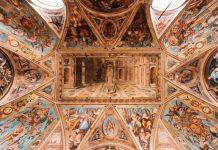
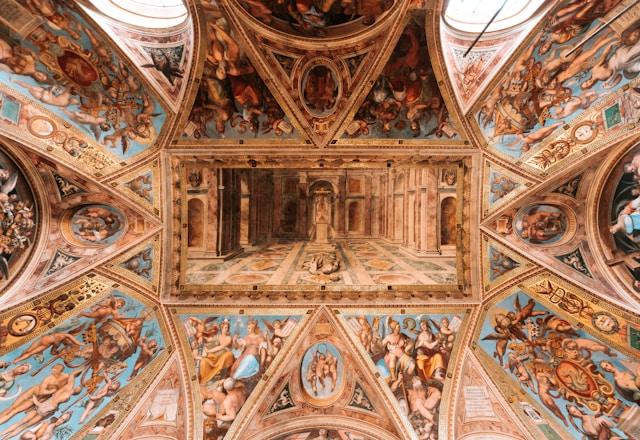
Raphael’s Loggia, a corridor measuring 64 meters in length and four meters in width, contains nearly 1,300 square meters of frescoes and stucco decorations. Designed by Raphael and executed between 1517 and 1519 by his assistants Giulio Romano, Giovanni da Udine, and Perin del Vaga, the decorative program features scenes from the Old Testament, botanical motifs, and elaborate grotesque figures.
Raphael, one of the most influential artists and architects of the High Renaissance, was originally commissioned by Pope Julius II to decorate the papal apartments within the Vatican’s Apostolic Palace. Later, Pope Leo X entrusted the artist with the decoration of a loggia overlooking the Courtyard of San Damaso, further expanding Raphael’s artistic presence within the Vatican complex.
Vatican officials have described the conservation effort as a significant milestone for both restoration science and Renaissance art scholarship. The project aims not only to stabilize and preserve the frescoes but also to deepen understanding of Raphael’s artistic techniques and the contributions of his workshop.
A Delicate Conservation Challenge
Angela Cerreta, the project’s restoration director, has emphasized the fragile condition of the paintings. Speaking to the Spanish newspaper ABC in June, she described the surfaces as highly vulnerable after centuries of exposure to the elements.
“It is a very delicate surface and has been exposed to the elements for centuries,” Cerreta said, noting that the loggia was copied extensively over the years because of concerns that the original works might eventually be lost.
The restoration team is conducting detailed analysis of historic engravings and earlier records to better understand the frescoes before addressing damaged areas. Cerreta also recalled an earlier restoration attempt carried out in the 1970s using inorganic products, an approach that failed to achieve satisfactory results.
According to Cerreta, those unsuccessful efforts contributed to a long-standing reluctance to undertake further intervention. However, between 2019 and 2023, Vatican conservators conducted extensive testing to identify appropriate restoration techniques capable of preserving the artwork without causing additional harm.
Laser Technology at the Forefront
Central to the project is the use of laser-based cleaning methods, selected after years of experimentation and evaluation. Paolo Violini, chief restorer of paintings and wood at the Vatican Museums, explained that examinations of the fresco surface demonstrated the necessity of a dry-cleaning approach.
“The examination of the surface revealed the need to adopt a dry cleaning method to preserve the delicate original layers and their fragile remnants, which are highly sensitive to the action of chemical processes,” Violini said.
After testing various systems and operating methods, conservators selected an active fiber laser model because of its precision and adaptability. The technology allows restorers to carefully control cleaning levels, enabling highly targeted treatment of fragile painted surfaces while minimizing risks to the original material.
In addition to cleaning and conservation work, the project includes significant environmental upgrades. New lighting systems and specially designed windows equipped with ultraviolet filters will be installed to protect the frescoes from harmful radiation and reduce solar heat exposure. Funding for these improvements is being provided by the Vatican Museums’ Patrons of the Arts.
International Support and Future Access
Financial support for the restoration is being provided by the World Monuments Fund and the Stephen A. Schwarzman Foundation, reflecting the international importance of the project.
Once conservation efforts are completed, the Stephen A. Schwarzman Foundation will also finance the digitization of the frescoes, ensuring long-term documentation and accessibility for scholars and future generations. The Vatican Museums are further considering opening the corridor to the public on designated dates, potentially allowing visitors greater access to a space traditionally reserved for official Vatican passage.
According to a June 24 statement from the Vatican Museums, Raphael’s Loggia was immediately recognized as one of the finest examples of Renaissance art integrated into architecture. The institution described it as “one of the most refined examples of the figurative language of the early 16th century.”
Barbara Jatta, director of the Vatican Museums, highlighted the historical significance of the corridor, noting that it has long been traversed by cardinals, senior church officials, and ambassadors visiting the Pope. Over the centuries, it has been admired and copied by leading artists from Italy and abroad and became an essential destination for travelers undertaking the historic Grand Tour.
As restoration work proceeds toward its anticipated completion in 2031, the project represents a rare opportunity to preserve and study a masterpiece that has shaped artistic appreciation for more than five centuries, ensuring that Raphael’s vision continues to endure for generations to come.
- Raju Hasmukh with files from ACI Prensa
Related Images: