



















Kerala nun Sister Ligy Payyappilly recounts her journey to Ukraine’s front line, revealing war’s toll and hope for affected children.
Newsroom (06/07/2026 Gaudium Press ) As the war in Ukraine enters a new phase of escalation, firsthand accounts from the country’s conflict zones continue to reveal the immense human cost of a war that has reshaped countless lives. Among those bearing witness is Sister Ligy Payyappilly, a nun from Kerala and a member of the Sisters of St Joseph of St Mark, who serves in western Ukraine.
Recently, Sister Ligy undertook a journey that would leave a lasting impression on her and her fellow sister, Laura. Travelling through Kyiv, Kharkiv, Sumy, Dnipro, Zaporizhzhia and Kherson, they ventured into what are known as the “zero positions” — areas closest to the front line, where the line between life and death can be measured in mere seconds.
Their mission was not one of observation from a distance. Instead, they travelled to listen, accompany and stand alongside people for whom war is no longer a headline but a relentless reality.
Life Under Constant Threat
In the regions closest to the fighting, air-raid sirens and bombardments have become a constant feature of daily life. According to Sister Ligy, attacks occurred hourly, creating an environment where rest was impossible and anxiety became a permanent companion.
The experience went beyond physical danger. Living in a place where every hour may bring another attack imposes a profound psychological and spiritual burden. For those residing near the front line, survival requires enduring a level of uncertainty that is difficult to comprehend from afar.
Kherson: A City Scarred by War
Among all the places visited, Kherson left the deepest mark on the sisters.
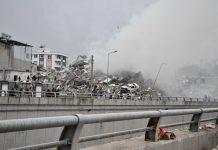
The city bears visible evidence of prolonged conflict. Buildings have been damaged or destroyed, and entire streets show the scars of war. While part of Kherson has been liberated, normal life remains elusive.
One of the city’s gravest challenges is the lack of safe water. Following the destruction of the dam on the Dnipro River, the local water system became unusable. What was once a source of life has turned into a source of danger. The consequences continue to affect residents, highlighting a bitter reality of conflict: liberation does not automatically restore normality.
People may regain freedom of movement, yet still struggle without clean water, secure housing or confidence in the future.
The Forgotten Suffering of Occupied Areas
The occupied sections of Kherson face even harsher conditions.
According to accounts shared with the sisters, humanitarian assistance is not reaching many residents, while basic services such as electricity and water have been absent for years. Faced with extreme deprivation, some people have been forced to survive by eating whatever they can find, including rats, pigeons and crows.
These conditions paint a stark picture of a humanitarian crisis that remains largely hidden behind military developments and geopolitical debates.
Survivors of Captivity Speak Out
One of the most powerful aspects of the journey involved meeting survivors of captivity.
The sisters listened to women and men who had endured imprisonment and emerged carrying deep emotional and physical scars. Sharing such experiences required extraordinary courage, as trauma often remains long after captivity ends.
Among the testimonies was that of a man who described how Russian soldiers stopped a bus and forced all passengers to speak only Russian. The passengers were then ordered to strip naked by the roadside. For the survivor, the incident was not only an act of cruelty but an attempt to strip individuals of their identity, language and dignity.
Such stories reveal how warfare affects more than territory. It can also become a struggle over personal rights, culture and human worth.
A Remarkable Story of Survival
One account, in particular, left a lasting impact on Sister Ligy.
She met a 56-year-old woman whose appearance reflected years of suffering beyond her age. The woman had been severely injured during a missile explosion. Despite catastrophic wounds, she managed to make her way to a doctor on her own while holding her abdominal organs in her hands.
The story stands as a powerful example of human resilience in the face of unimaginable hardship. It is a reminder that survival in war often depends on an extraordinary determination to live when circumstances suggest otherwise.
Giving Children a Future
Amid the devastation, the sisters also encountered stories that inspired action.
One family they met had two children, aged 11 and 13, both seriously injured. Living conditions in their area made attending school impossible. Safety concerns and the absence of proper facilities had effectively cut them off from education.
Moved by their situation, the sisters invited the family to live with them. The decision reflected more than compassion. It was an acknowledgment that every child deserves access to education and the possibility of a future, regardless of where military front lines happen to be drawn.
For Sister Ligy, ensuring that children continue learning is one of the most important forms of support that can be offered in a conflict zone.
A Landscape of Hidden Danger
Even routine activities have become hazardous in many parts of Ukraine.
The sisters received repeated warnings about hidden landmines scattered throughout urban areas. Paths, courtyards and public spaces that once symbolized everyday life now require constant vigilance.
A simple walk through the city can no longer be taken for granted. Each step carries a potential risk, illustrating how deeply war has transformed the physical environment.
From Witnessing to Action
For Sister Ligy, returning home did not bring closure. Instead, it strengthened a commitment to help those still trapped near the front line.
Together with members of her congregation, she has resolved to focus efforts on assisting families who remain in dangerous areas and lack the means to relocate. Many cannot leave because they have nowhere to go, lack financial resources or are simply exhausted by years of displacement and uncertainty.
The sisters believe that remaining silent is not an option. Their goal is to seek support, build homes and provide families with opportunities to begin again in safer communities.
Each new house represents more than shelter. It means a child can return to school, parents can stop measuring time between air-raid sirens and families can move beyond mere survival toward rebuilding their lives.
Sister Ligy’s journey offers a rare glimpse into the human realities behind the conflict. Her testimony underscores not only the immense suffering endured by those living closest to the front line but also the resilience, dignity and hope that continue to endure amid the destruction.
- Raju Hasmukh with files from Asianews.it
Related Images: