








Scottish Parliament rejects assisted suicide bill in 69–57 vote, backed by bishops and doctors citing protection for the most vulnerable.
Newsroom (18/03/2026 Gaudium Press ) In a closely watched and emotionally charged vote, the Scottish Parliament has rejected a bill that would have legalized assisted suicide, a decision church leaders and advocacy groups describe as a significant affirmation of human dignity and protection for the vulnerable. Members of the Scottish Parliament (MSPs) voted 69 to 57 against the proposal on Tuesday, halting a legislative effort that divided lawmakers, medical professionals, and faith leaders across Scotland.
The decision came after weeks of debate and amid continuing discussions in Westminster, where the UK Parliament is considering similar measures that would apply only to England and Wales. Unlike typical votes along party lines, this one was a “free vote,” allowing MSPs to cast ballots according to conscience and moral conviction.
Bishops Welcome Vote as “A Step Toward Compassion Through Care”
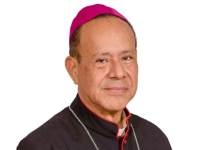
The Bishops’ Conference of Scotland praised the outcome, saying the defeat of the bill “serves to protect some of Scotland’s most vulnerable.” In a statement signed by Bishop John Keenan of Paisley, the conference reaffirmed its belief in the inherent dignity of every person.
“Every human life possesses inherent value,” the bishops wrote. “Genuine compassion is not expressed through ending a life, but through accompanying those who suffer and ensuring they receive medical, emotional, and spiritual support that recognizes their dignity.”
Keenan said Scotland must now redouble its efforts to expand and improve palliative care, calling on the government to ensure that it is properly funded and accessible. “As a society, our responsibility is not to address suffering by eliminating the sufferer, but to surround each person with care, respect, and dignity until their natural end,” he said. The bishop expressed gratitude to MSPs “for their serious engagement with this issue” and especially to those “who upheld the principle of human dignity and advocated on behalf of the vulnerable.”
Government Figures and Medical Voices Oppose the Measure
Deputy First Minister Kate Forbes, a senior member of the Scottish National Party, was among those who voted against the bill. She cited concerns voiced by leading medical organizations, including the Royal College of Psychiatrists and the Royal Pharmaceutical Society.
“Doctors, psychiatrists, pharmacists, and palliative care specialists — the people who would be tasked with implementing this — are asking us not to do it,” Forbes said during debate. “They think this bill is unsafe.”
Disabled Lawmakers Warn of “False Notion of Choice”
Some of the strongest opposition came from MSPs with disabilities, who warned that the legislation could disproportionately endanger people with chronic illness or physical impairments. Labour MSP Pam Duncan-Glancy, the first permanent wheelchair-user elected to Holyrood, argued that “disabled people don’t have real choices in life,” calling it “inconceivable to suggest the introduction of assisted dying is about choice.”
Conservative MSP Jeremy Balfour, who was born without a left arm and with a partially formed right arm, said that many disabled Scots were “terrified” by the bill. He cautioned that the measure would “open a Pandora’s box” and create conditions where “no meaningful protection” against coercion could be guaranteed.
Wider UK Context
The Scottish vote stands in contrast to developments in London, where the House of Commons previously passed a similar assisted dying bill. That measure, however, remains stalled in the House of Lords, and analysts suggest it may fail to clear all necessary stages before a May parliamentary deadline.
For now, the outcome in Holyrood underscores the ongoing division in British politics and society over end-of-life legislation — a debate balancing principles of autonomy, medical ethics, and the duty to protect life’s inherent worth.
- Raju Hasmukh with files from Crux Now
Related Images: