




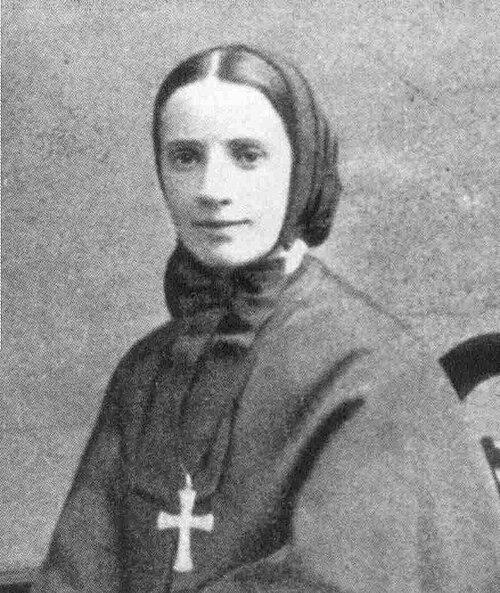
Pope Leo XIV’s visit to Pavia honors St. Augustine and reflects a shared mission with Mother Cabrini in serving migrants and the poor.
Newsroom (02/06/2026 Gaudium Press ) When Pope Leo XIV travels to Pavia, Italy, on June 20 to venerate the remains of St. Augustine, the visit will include a brief yet symbolically rich detour. During a scheduled half-hour stop, the first American pope will also venerate a relic of St. Frances Xavier Cabrini, the patron saint of immigrants, whose legacy continues to resonate in the Church’s global mission.
The detour takes the pope to Sant’Angelo Lodigiano, a town near Pavia and the birthplace of Mother Cabrini. A piece of her heart will be temporarily housed there for the occasion, an unusual gesture that underscores the significance of the visit. While those close to Pope Leo have said there is no known personal devotion to Cabrini, they identify a deeper connection—one rooted in shared values rather than formal veneration.
That connection, according to longtime friend and fellow Augustinian Father John Lydon, lies in a common commitment to the poor and marginalized, especially migrants and refugees. “There’s a devotion to the cause of Mother Cabrini … the cause of migrants,” Father Lydon explained. “She represents, for the Church, the Church’s embrace of immigrants.”
Father Lydon’s insight draws on decades of personal and ministerial experience alongside Pope Leo. The two men lived and worked together for ten years in Peru during the 1990s, serving at an Augustinian seminary in the country’s impoverished northwest. Their shared mission in a region marked by poverty and migration challenges shaped their pastoral outlook.
Although Father Lydon admitted he did not initially know much about Cabrini’s life, he said recent exposure to a 2024 film depicting her missionary work deepened his appreciation of her legacy. The film portrays Cabrini’s tireless efforts on behalf of immigrants in the United States during the late 19th and early 20th centuries—a mission that mirrors the priorities Pope Leo has demonstrated throughout his ministry.
Family members echo this assessment. John Prevost, the pope’s brother, noted that while there is no explicit personal devotion, Pope Leo appreciated the Cabrini film and its portrayal of the saint’s advocacy for immigrants. The shared emphasis on migration and human dignity appears to be the stronger link.
Geography also bridges their stories. Pope Leo, a native of Chicago, grew up in the city’s southern suburbs before entering the Augustinian seminary as a teenager. Cabrini, born in Italy, developed strong ties to Chicago later in life, founding a hospital and a Catholic school to serve immigrant communities. She died there in 1917 and was canonized in 1946, becoming the first U.S. citizen to be declared a saint.
Her journey to the United States was itself guided by papal direction. Under Pope Leo XIII—after whom the current pope is named—Cabrini was instructed to go not east but west, beginning her work among Italian immigrants in New York. The connection between papal leadership and missionary outreach continues to frame the Church’s modern approach to migration.
In Latin America, that approach has taken on urgent relevance. During Pope Leo’s time as Bishop Robert F. Prevost in Peru, the country experienced a large influx of Venezuelan migrants fleeing economic collapse and political instability. Since 2014, at least 8.5 million Venezuelans have left their homeland, creating one of the largest migration crises in the region.
Church leaders on the ground witnessed both the challenges and the response. Retired Bishop Daniel Turley, who served for decades in Peru and worked closely with then-Bishop Prevost, recalled the difficulties faced by local communities. “For the majority of the people, to open their homes or their hearts to the migrants was not easy,” he said. Yet he also pointed out that Prevost’s Diocese of Chiclayo became one of the best equipped in the country to serve migrant populations.
The Church’s efforts in Peru followed the framework established by Pope Francis: to “welcome, protect, promote and integrate” migrants and refugees. Observers say Pope Leo XIV has maintained this vision, extending it across the global Church.
Bishop Turley, now rector of the National Shrine of St. Frances Xavier Cabrini in Chicago, sees the pope’s upcoming visit as an expression of that continuity. The shared mission between Cabrini and Pope Leo, he suggests, is less about formal devotion and more about a lived commitment to service. “Devotion is much more than that,” he said, emphasizing that the pope’s actions reflect Cabrini’s spirit.
The timing of the visit aligns with broader Church initiatives highlighting migration and mission. This year’s National Eucharistic Pilgrimage in the United States includes a route named after Cabrini, marking the 250th anniversary of the nation’s founding. The pilgrimage underscores themes of sacrifice, service, and outreach to the marginalized—principles central to Cabrini’s work.
A mid-point retreat for pilgrims is scheduled at the St. Frances Xavier Cabrini Shrine in New York on June 16–17, just days before the pope’s visit to her relic. The convergence of these events has been described as “profoundly meaningful,” reflecting a convergence of historical legacy and contemporary mission.
Further reinforcing that symbolism, Pope Leo is scheduled to visit Lampedusa on July 4, Italy’s southernmost island and a key entry point for migrants arriving from Africa. The location has become emblematic of modern migration challenges, making the visit a powerful continuation of the themes embodied by Cabrini’s life.
In many ways, Pope Leo XIV’s journey to Pavia and beyond illustrates a broader narrative within the Catholic Church—one that connects past and present through a shared commitment to the vulnerable. While he may not display a traditional personal devotion to Mother Cabrini, his ministry reflects the very cause she championed.
As Father Lydon suggested, Cabrini’s legacy is not confined to relics or statues. It lives on in the Church’s ongoing effort to stand with migrants—a mission that Pope Leo XIV now carries forward on the global stage.
- Raju Hasmukh with files from OSV News
Related Images: