













Pakistani Christians mourn Amir Peter’s death in custody, renewing concerns over prison healthcare and misuse of blasphemy laws.
Newsroom (03/07/2026 Gaudium Press ) The death of a 61-year-old Catholic man accused of blasphemy has sparked renewed concern among Pakistan’s Christian community and human rights advocates, highlighting longstanding questions about the treatment of vulnerable detainees and the application of the country’s controversial blasphemy laws.
Amir Peter, the younger brother of Capuchin Father Henry Paul, parish priest of St. Francis Church in Lahore, died on July 1 while in judicial custody. Peter had spent nearly a year behind bars after being arrested in July 2025 on allegations that he made derogatory remarks about the Prophet Muhammad.
His death came after months of worsening physical and mental health. According to reports from his legal team, Peter suffered from advanced dementia and had been declared mentally unfit to stand trial by medical experts. Despite these findings, he remained in detention awaiting legal proceedings.
Peter’s condition reportedly deteriorated steadily during his incarceration at Camp Jail in Lahore. On the night of June 30, he was admitted to a hospital after his health took a serious turn. He died the following day.
The father of three leaves behind a grieving family and a Christian community deeply affected by the circumstances surrounding his death. EWTN News reported that Peter’s son, Tumaar Amir, declined to comment publicly.
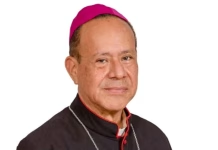
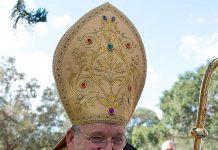
More than 200 mourners gathered on July 2 at St. Joseph’s Church for Peter’s funeral Mass. The service was celebrated by Archbishop Khalid Rehmat of Lahore, who had returned to the city only a day earlier after receiving the pallium from Pope Leo XIV at St. Peter’s Basilica in Rome on June 29, the solemnity of Saints Peter and Paul.
Addressing the gathering, Archbishop Rehmat expressed solidarity with the family, emphasizing the support of the Catholic Church during their loss.
“The whole Capuchin community and the Church are with Father Henry Paul and his family. We stand in solidarity with them,” he said.
Father Henry Paul also spoke with emotion about his brother’s final days, stating: “We take pride in the fact that my brother didn’t leave his Christian faith till the last moment.”
Legal representatives and rights advocates argue that Peter’s case illustrates serious flaws in how vulnerable defendants are treated within Pakistan’s justice system. Katherine Sapna, executive director of Christians’ True Spirit, the legal aid organization representing Peter, said repeated efforts were made to draw attention to his worsening condition.
“He was falsely accused of blasphemy. We repeatedly highlighted his deteriorating physical and mental health and the urgent need for appropriate medical treatment. Regrettably, despite these efforts, he passed away before justice could be served,” Sapna said.
She further criticized what she described as a failure to provide timely and adequate healthcare, calling Peter’s death a tragedy that unfolded within a flawed legal process.
“We mourn the loss of a man whose life was tragically cut short amid a flawed legal process. His serious medical condition was overlooked, and he was denied timely and adequate healthcare,” she said.
Sapna urged religious leaders, civil society groups, and state institutions to work together to ensure that individuals are not deprived of due process, dignity, or essential medical care because of false accusations or social prejudice.
The case has also renewed debate about the broader impact of Pakistan’s blasphemy laws, which human rights advocates have long argued are vulnerable to misuse. Critics contend that allegations can expose accused individuals to extended detention, social ostracism, and threats to their safety, regardless of whether convictions are ultimately secured.
Samson Salamat, chairman of the Rwadari Tehreek (Movement for Religious Tolerance), said Peter’s circumstances demonstrate the extreme vulnerability faced by those accused under the laws.
“The vulnerability of victims of the misused blasphemy laws is extreme. Mental illness offers no protection,” Salamat said after attending the funeral.
He pointed to the findings of the Punjab Institute of Mental Health, whose medical board reportedly declared Peter unfit to stand trial. According to Salamat, the case underscores the need for broader reform rather than case-by-case responses.
“No one is safe from the misuse of these laws, not even a priest’s brother. Instead of merely reacting to individual cases, Pakistan needs policy reforms. Otherwise, promises to protect religious minorities remain empty,” he said.
The concerns raised by Peter’s death extend beyond questions of religious freedom. Human rights organizations have repeatedly highlighted deficiencies in Pakistan’s treatment of prisoners with mental illnesses.
Human Rights Watch, in its World Report 2024, noted that limited public awareness of mental health issues contributes to the neglect and abuse of prisoners with psychosocial disabilities. The organization also reported significant shortages of mental health professionals within Pakistan’s prison system and inadequate access to psychological care for detainees.
Peter’s death is not the first recent case involving a Christian defendant accused of blasphemy. In October 2025, Pastor Zafar Bhatti, founder of the Pakistan-based Jesus World Mission Church, died of cardiac arrest at his home in Rawalpindi just three days after being released from prison. Bhatti had spent 13 years incarcerated while facing blasphemy charges.
For many within Pakistan’s Christian community, the death of Amir Peter has become a symbol of deeper concerns regarding justice, healthcare, and the protection of minority rights. As calls for accountability and reform grow louder, advocates argue that the case serves as a stark reminder of the human cost associated with prolonged detention, inadequate medical care, and the alleged misuse of blasphemy accusations.
Whether Peter’s death will lead to meaningful policy changes remains uncertain, but it has intensified demands for safeguards to protect vulnerable prisoners and ensure that due process is upheld regardless of faith, health status, or social standing.
- Raju Hasmukh with files from EWTN News
Related Images: