





Pope Leo XIV explains how liturgical rites, signs, and symbols deepen faith and unite believers, reflecting Vatican II teachings.
Newsroom (03/06/2026 Gaudium Press ) In his weekly General Audience catechesis, Pope Leo XIV offered a profound reflection on the essential role of rite, sign, and symbol in the sacred liturgy, drawing from the Second Vatican Council’s 1963 Constitution Sacrosanctum Concilium. His address emphasized the enduring relevance of the Council’s liturgical vision and underscored how these foundational elements serve as pathways to encounter the divine.
Continuing a catechetical series on the documents of Vatican II, the Pope invited the faithful to revisit key aspects of the liturgy—not as mere formalities, but as vital expressions of the Church’s living tradition. Central to his reflection was the assertion that liturgical rites are not superficial embellishments or arbitrary ceremonies. Rather, they function as “ecclesial mediation,” a means through which the grace and mystery of God are made accessible to believers.
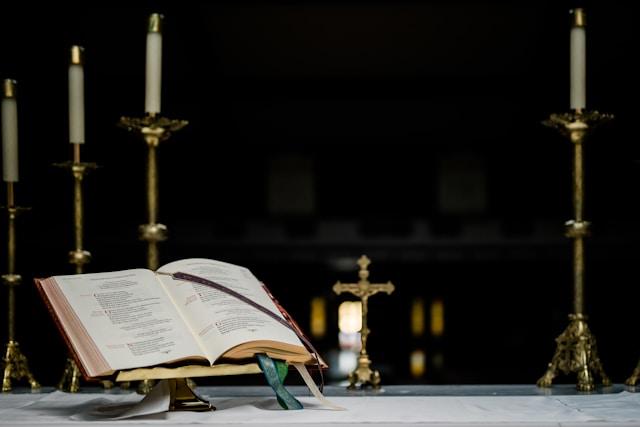
“The rites of the Christian liturgy are not a mere external covering of the sacramental mystery,” the Pope explained. Instead, they are the very medium through which the Mysterium fidei—the mystery of faith—is realized through prayer and action. This insight, rooted in Sacrosanctum Concilium, reflects a rediscovery of early Christian understanding, as preserved in the teachings of the Church Fathers.
Pope Leo XIV stressed that rites give structure not only to liturgical celebrations but also to the spiritual life of believers. By shaping patterns of prayer, reverence, and communal participation, they cultivate a “spiritual sensibility” capable of perceiving God’s presence in Christ. However, this formation depends on the faithful’s active involvement. The Pope cautioned against approaching the liturgy as detached observers, encouraging instead full participation—body, mind, and heart—in obedience to Christ’s call.
This active participation fosters essential dimensions of Christian life: attentiveness to the Word of God, gratitude, worship, fellowship, and unity within the Church. Through the shared experience of liturgy, believers come to recognize themselves as members of a diverse yet unified assembly grounded in a common faith.
Addressing contemporary sensibilities, Pope Leo XIV acknowledged that liturgical rites—with their structured sequences of gestures and prayers—may at times appear restrictive or counter to modern preferences for spontaneity. Yet he argued that this perception overlooks the deeper purpose of liturgical form. Far from constraining freedom, the rite introduces a rhythm that interrupts the frenetic pace of daily life and reorients the individual toward what is essential.
Within this framework, the Pope described the liturgy as embodying a “logic of gratuitousness”—a rhythm not dictated by productivity or efficiency but by grace. In the sacred space of ritual, believers experience a transformative pause, rediscovering a sense of time and action shaped by divine presence and guided by the Holy Spirit.
Central to this experience is the interplay of signs and symbols. Drawing on both Sacrosanctum Concilium and the Catechism of the Catholic Church, Pope Leo XIV highlighted how these elements communicate spiritual realities through tangible means. The liturgy, he explained, uses signs perceptible to the senses to signify and effect the sanctification of humanity.
The Pope offered the example of water as a powerful liturgical symbol. Rooted in the narrative arc of salvation—from creation and the Flood to the crossing of the Red Sea and the waters of the Jordan—water finds its fullest expression in Christ’s life and sacrifice. Flowing from Christ’s side, it becomes a sacramental sign of participation in His death and resurrection, particularly in Baptism.
Clarifying the distinction between “sign” and “symbol,” Pope Leo XIV noted that while the terms are often used interchangeably, a symbol carries a broader and more dynamic significance. It does not merely point to an idea but encompasses a network of meanings and values. Moreover, symbols in the liturgy are inherently practical and active. Gestures such as kneeling or exchanging the sign of peace, as well as the actions constituting each sacrament, engage believers in transformative encounters.
These symbolic actions have a “performative” quality—they not only signify but also effect change, shaping both the material elements involved and the individuals who participate. In doing so, they foster a sense of belonging and deepen ecclesial relationships, engaging both the intellect and the heart.
The Pope also referenced the Apostolic Letter Desiderio desideravi, echoing the insight of theologian Romano Guardini that modern humanity must “become once again capable of symbols.” This call underscores the importance of liturgical formation—an educational process through which believers learn to understand and live the meaning of liturgical actions.
To this end, Pope Leo XIV emphasized the need for care in the celebration of the liturgy, urging a balance of beauty, reverence, and fidelity without arbitrariness. He highlighted the role of mystagogical catechesis—guidance that leads deeper into the mystery of the liturgy—as essential for fostering a genuine encounter with God.
Ultimately, the Pope concluded that a vibrant and devout liturgical life remains one of the Church’s most effective means of awakening openness to the divine. In keeping with the logic of the Incarnation, this encounter involves the whole person—spirit, soul, and body—drawing believers into a transformative relationship with God.
As pilgrims from across the globe gathered for the audience, Pope Leo XIV also offered greetings and encouragement, particularly as the Church prepares for the Solemnity of the Most Holy Body and Blood of Christ. He urged the faithful to be strengthened by this divine gift and to bear witness to Christ’s love in their daily lives.
Through his catechesis, the Pope reaffirmed a timeless message: that within the structure and beauty of liturgical rites lies a profound invitation—to step beyond the surface, to enter the mystery, and to encounter God in the living tradition of the Church.
- Raju Hasmukh with files from Vatican News
Related Images: