









Filipino bishop urges unity and faith as thousands mark 400 years of devotion to Our Lady of Antipolo with historic fluvial procession.
Newsroom (19/06/2026 Gaudium Press ) A senior Filipino Catholic bishop has called for renewed unity and moral purpose amid growing social divisions, as thousands of devotees gathered to mark a milestone in one of the country’s most cherished religious traditions.
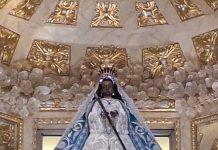
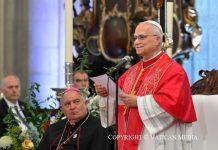
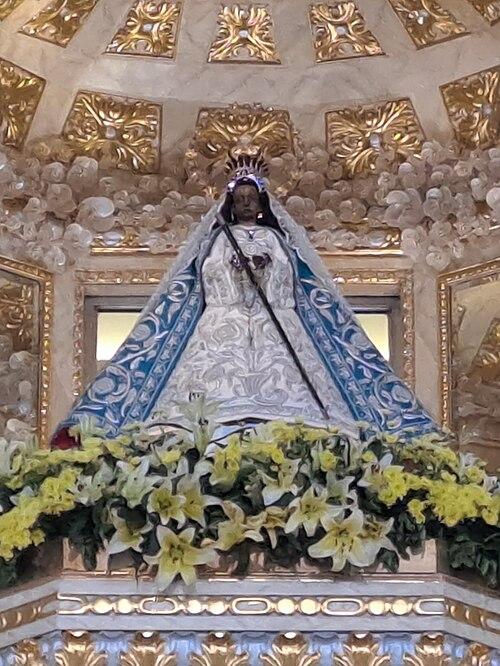
Bishop Ruperto Santos of Antipolo led commemorative rites on June 18 celebrating the 400th anniversary of the arrival of Our Lady of Peace and Good Voyage in the Philippines—an event that underscores the enduring importance of Marian devotion in the Catholic-majority nation.
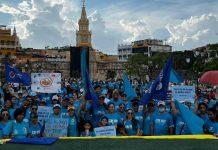
The celebration drew large crowds and featured a symbolic fluvial procession across Laguna de Bay, retracing the historic route taken by the revered image when it first reached Philippine shores from Mexico in 1626. The pilgrim image journeyed through Calamba City, Talim Island, Binangonan, Cardona, and Pasig before culminating at the International Shrine of Our Lady of Peace and Good Voyage in Antipolo City.
A Call for Unity in Divided Times
In his homily and public remarks, Bishop Santos emphasized the Virgin Mary’s role as a unifying figure, particularly in a time marked by social fragmentation and self-interest.
“We see a lack of unity today. And the one who brings us together is a mother,” Santos said. “That is why we must call upon, draw near to, and trust our Blessed Mother so that we Filipinos may once again become united.”
His message resonated with many faithful who view Mary not only as a spiritual guide but also as a symbol of national identity and cohesion. The bishop stressed that devotion to the Blessed Virgin remains deeply relevant as the country grapples with divisions fueled by competing interests and personal ambitions.
“We not only see disunity today, but also see selfishness,” Santos added. “Many people think only of their own welfare and personal interests.”
Honoring a Beloved Marian Image
The anniversary festivities were designed not only to commemorate history but to deepen public devotion to Our Lady of Antipolo, widely regarded by devotees as the “Mother of the Filipino people.”
“We are doing this to show who our Mother is. We introduce her, we honor her, and we take pride in her,” Santos said. “She is Our Lady of Antipolo, the Mother of the Filipino people.”
The Marian image has long been associated with protection, safe travel, and national resilience. Its journey across the Pacific during the Spanish colonial era—and its continued veneration today—reflects the Philippines’ enduring Catholic heritage.
As part of the observance, the shrine also unveiled commemorative stamps marking four centuries since the image’s transoceanic voyage aboard a galleon linking Mexico and the Philippines, a historical route that played a key role in cultural and religious exchange.
Historical Ties to José Rizal
The celebration also drew attention to a notable link between the Marian devotion and the country’s national hero, José Rizal. According to historical accounts, Rizal’s mother, Teodora Alonso, made a vow to bring her son to the Antipolo shrine in thanksgiving following a difficult childbirth.
That promise was fulfilled on June 6, 1868, when the young Rizal—then just seven years old—undertook a pilgrimage to Antipolo with his father, Francisco Mercado.
To honor this connection, the pilgrim image undertook a three-day visit to Calamba City, Rizal’s birthplace. The itinerary included stops at St. John the Baptist Parish, where Rizal was baptized, and the Rizal family home, reinforcing the intertwining of faith, history, and national identity.
“What our national hero did was beautiful,” Santos said. “He went to Antipolo. He gave thanks. He acknowledged God’s goodness. And he showed that goodness exists in every person.”
Faith, Heritage, and the Common Good
Bishop Santos used the occasion to call on Filipinos to rediscover the values embodied by both the Blessed Virgin Mary and José Rizal—humility, obedience to God, and commitment to the common good.
He urged believers to place faith above personal comfort and to strive for lives marked by holiness and generosity. According to the bishop, such values are essential to rebuilding unity and addressing societal challenges.
The 400th anniversary celebration thus served as more than a religious commemoration; it became a moment of reflection on the nation’s spiritual roots and shared identity.
As thousands of pilgrims joined prayers, processions, and acts of devotion, the message from Antipolo was clear: unity, grounded in faith and guided by enduring values, remains vital for the country’s future.
- Raju Hasmukh with files from UCA News
Related Images: