

















Vatican urges dialogue and warns against using humanitarian aid as leverage as U.S.–Cuba tensions escalate and hardship worsens.
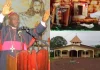
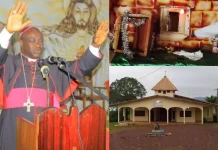
“Any logic of permanent confrontation risks worsening the burden that already falls on ordinary people,” said Czerny, prefect of the Dicastery for Integral Human Development. His remarks underscore mounting concern within the Holy See as tensions between Washington and Havana intensify, compounding the hardships faced by Cuba’s most vulnerable populations.
Condemnation of Aid as a Political Tool
Czerny’s criticism centered on the manipulation of humanitarian aid, which he said must never become an instrument of political pressure. “Humanitarian aid should arrive in sufficient quantities and without obstacles, without ever being instrumentalized for political or geopolitical purposes,” he stressed.
Framing his remarks within Catholic social teaching, Czerny reiterated that lasting peace and stability cannot be achieved through coercion or force. Echoing Pope Leo’s teachings, he emphasized that a sustainable international order cannot be built through “the force of arms” or through policies that “humiliate peoples.” Instead, he argued, authentic human development depends on dialogue, adherence to international law, cooperation among nations, and respect for human dignity.
Rising Geopolitical Strain
The Vatican’s intervention comes amid a sharp escalation between the United States and Cuba. In a significant development, the U.S. government recently announced an indictment for murder against former Cuban president Raúl Castro. The charges relate to the 1996 downing of two civilian aircraft belonging to the humanitarian group Brothers to the Rescue, an incident that resulted in the deaths of three Americans.
That event had already led to the passage of the Helms–Burton Act, which further entrenched the U.S. embargo on Cuba—a policy that remains a defining feature of bilateral relations.
More recently, broader regional developments have exacerbated Cuba’s already fragile situation. The U.S. military intervention in Venezuela in January, which resulted in the detention of President Nicolás Maduro on drug trafficking charges, has had direct consequences for Cuba. Venezuela had been a key supplier of oil to the island, and following the intervention, U.S. policy effectively cut off those shipments while restricting other foreign energy supplies.
The resulting energy shortages have intensified the economic crisis gripping Cuba, compounding long-standing structural challenges.
Humanitarian Crisis Deepens
Church leaders on the ground describe a rapidly deteriorating humanitarian situation. Bishop Arturo González Amador, president of the Cuban Bishops’ Conference, has painted a stark picture of life in the country today.
“Cuba is suffering,” he said, calling the current moment “the saddest and most difficult time… in the history of my people.” According to González Amador, daily life has become a struggle for survival, marked by soaring poverty, food scarcity, and a critical lack of medical supplies.
In some hospitals, operations have reportedly been suspended due to a lack of basic necessities such as water and surgical equipment. Families, when able, are seeking medical treatment abroad. Hunger is so acute that individuals have fainted during religious services.
The psychological toll is equally severe. González Amador described a pervasive atmosphere of “sadness, despair, and uncertainty,” heightened by fears of a possible military confrontation with the United States. “People’s daily lives are marked by a great fear,” he said, noting that anxiety is particularly acute among children and the elderly.
Church Calls for Dialogue and Solidarity
In this climate of escalating tension and humanitarian distress, the Catholic Church has positioned itself as both a moral voice and a source of practical support. Czerny emphasized that the Church’s mission is to “keep the spirit alive and to bring hope where there is none,” through accompaniment, listening, and service.
Reflecting on Pope Francis’s 2015 visit to Cuba, Czerny recalled the late pontiff’s call to place the human person—especially the most vulnerable—at the center of political and social life. Service, Francis had insisted, “is never ideological… It does not serve ideas, but people.”
Czerny also invoked the core principles of Catholic social doctrine, describing truth, justice, freedom, and love as “indispensable conditions” for human dignity. He argued that justice demands concrete attention to those who suffer most, while freedom requires genuine participation and shared responsibility. Truth, he added, must foster sincere dialogue capable of overcoming propaganda and mistrust, and love must lead to solidarity across nations.
A Plea for Peace and Prudence
Closing his homily, Czerny called for prayers for Cuba, expressing hope that the island nation might experience “days of greater serenity, of authentic human and social development, of harmony, and of hope.”
He urged policymakers and international actors to ensure that all decisions—political, economic, and diplomatic—are guided by “wisdom, prudence, and a sincere search for the well-being of the people.”
Appealing to religious sentiment, he also invoked the Virgin of Charity of El Cobre, Cuba’s patroness, asking for her intercession in securing peace and stability for the country.
As geopolitical tensions continue to mount, the Vatican’s message is clear: the cost of confrontation is borne not by governments, but by ordinary people—and their suffering must remain at the center of any global response.
- Raju Hasmukh with files from Crux Now
Related Images: