
















225 years after the Concordat of 1801, a landmark agreement that restored religious peace in France and ended years of conflict.
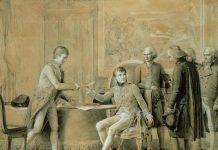
Newsroom (15/07/2026 Gaudium Press ) Two hundred and twenty-five years ago, on July 15, 1801, a historic agreement between First Consul Napoleon Bonaparte and Pope Pius VII brought an end to one of the most turbulent religious conflicts in French history. Known as the Concordat of 1801, the accord marked the reconciliation of the French state and the Catholic Church after more than a decade of revolutionary upheaval, persecution, and division.
Far more than a diplomatic settlement, the agreement represented the official return of Catholicism to public life in a nation profoundly scarred by the French Revolution. It sought to heal a deep social and spiritual fracture that had resisted both political reforms and military successes.
A Decade of Religious Upheaval
The years preceding the Concordat constituted one of the darkest periods in the history of the Catholic Church in France. During the Revolution, churches were desecrated, religious communities dissolved, and vast ecclesiastical properties confiscated. Priests were compelled to take the constitutional oath to the revolutionary state, while many who resisted faced imprisonment, exile, or execution.
The revolutionary authorities sought to reduce, and in many cases eliminate, the influence of Catholicism from national life. The result was a profound rupture between the revolutionary government and millions of French citizens who remained deeply attached to their faith.
When Napoleon Bonaparte came to power following the coup of 18 Brumaire, he inherited a country that, despite military victories and institutional reforms, remained deeply divided. Beneath the surface of political stability lay a conflict that could not be resolved through force alone: the enduring divide between revolutionary France and a society whose religious traditions remained deeply rooted.
The Road to Reconciliation
Recognizing the need for national unity, Napoleon entered into lengthy negotiations with Pope Pius VII. Their efforts culminated in the signing of the Concordat on July 15, 1801, creating a new framework for relations between France and the Holy See.
The agreement did not restore Catholicism as the official religion of the state. Instead, it acknowledged Catholicism as the religion of “the great majority of French citizens” and guaranteed freedom of worship.
Under the terms of the Concordat, bishops would be appointed by the French government and subsequently consecrated by the Pope. Priests would receive financial support from the state, while the Holy See agreed to relinquish claims to church property that had been confiscated during the Revolution.
The compromise reflected the realities of post-revolutionary France. Neither side achieved everything it desired, yet both recognized the necessity of reaching an agreement that could restore stability and religious peace.
A Practical Solution to a National Crisis
The Concordat generated criticism from multiple directions. Anticlerical revolutionaries viewed it as an unwelcome return of religious influence, while some Catholics considered Rome’s concessions too extensive.
Nevertheless, the agreement succeeded where years of conflict had failed. It created a framework through which the Church could resume its pastoral mission and the state could rebuild social cohesion.
For Napoleon, the decision was driven as much by political pragmatism as by personal conviction. He understood that governing a nation of millions while remaining in direct conflict with their faith was unsustainable. Beyond the revolutionary centers of power, Catholicism continued to serve as the spiritual foundation of much of French society.
For Pope Pius VII, the Concordat also represented a difficult calculation. By accepting significant compromises, he secured the Church’s ability to operate again openly and minister to the faithful after years of disruption and persecution.
Immediate Impact on French Society
The effects of the agreement were felt quickly across the country. Churches gradually reopened, dioceses were reorganized, and priests were once again able to exercise their ministry publicly.
Religious ceremonies and sacraments returned to everyday life, offering a sense of continuity and healing after years of uncertainty. Catholicism became visible once again within the public sphere, helping restore a measure of normality to communities that had experienced prolonged religious turmoil.
The Concordat did not erase all tensions between church and state, but it succeeded in restoring a degree of religious stability that France had lacked for more than a decade.
An Enduring Historical Legacy
Relations between Napoleon and Pius VII would later deteriorate dramatically, eventually leading to the Pope’s arrest and imprisonment by the French Emperor. Yet despite those later conflicts, the Concordat of 1801 remains one of the defining moments in the religious history of France.
Its significance lies not only in the restoration of Catholic worship but also in its demonstration that lasting national unity requires accommodation rather than perpetual confrontation. The agreement offered a practical solution to a conflict that had deeply divided French society and threatened its long-term stability.
As the 225th anniversary of the Concordat is commemorated, the agreement continues to stand as a reminder of a broader historical lesson: nations cannot be sustainably built by severing themselves from the spiritual traditions that helped shape their identity. Even Napoleon, a product of the Revolution and often hostile to the Church, came to recognize that France could not be governed without acknowledging the faith that had influenced its history and culture for more than a thousand years.
More than two centuries later, the Concordat of 1801 remains a powerful symbol of reconciliation, compromise, and the enduring relationship between faith, society, and the state
- Raju Hasmukh with files form Tribune Chretienne
Related Images: