










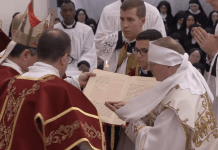
In Naples, St. Januarius’ blood liquefied on Sept. 19, a miracle renewing faith. Cardinal Battaglia linked it to Gaza’s plight, urging trust in God.
Newsroom (19/09/2025, Gaudium Press ) In a ritual steeped in centuries of devotion and mystery, the blood of St. Januarius, Naples’ beloved patron saint, liquefied once again on Thursday, drawing thousands of faithful to the city’s historic cathedral and prompting reflections on trust, martyrdom, and the ongoing horrors of global conflict. Abbot Monsignor Vincenzo De Gregorio, overseer of the relic, described the event as an “invitation to stake everything” on faith in God, underscoring its enduring significance in a world plagued by uncertainty.
The announcement came during a solemn morning Mass at the Naples Cathedral, where the centuries-old ampoules containing the saint’s dried blood were displayed before an eager congregation. “We are delighted to announce that the relic has been found completely liquid,” De Gregorio declared from the Treasury Chapel, his words met with applause and sighs of relief. As per time-honored tradition, the confirmation was signaled by the waving of a white handkerchief by a member of the Treasury of St. Januarius Deputation, a gesture that has symbolized the miracle’s occurrence for generations.
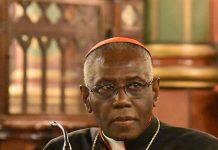
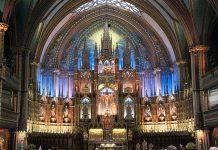
Presiding over the ceremony was Cardinal Domenico Battaglia, the Archbishop of Naples, who appeared visibly moved as he held aloft the vial of liquefied blood. Descending from the high altar amid liturgical chants, Battaglia carried the relic among the faithful, allowing them a close view of the dark red liquid swirling within the glass. The event, which unfolded in the ornate Chapel of the Treasury, transformed the cathedral into a focal point of communal hope and introspection.
Battaglia’s homily wove the miracle into broader themes of human suffering, with a poignant focus on the devastating war in Gaza. “It is the blood of every child of Gaza that is on display in this cathedral,” he intoned, his voice resonating through the vaulted space. He contrasted the festive calm of Naples on this day with the chaos of distant battlefields, noting, “Today Naples stands still like the sea when the wind dies down. It is an inner calm, the feeling of a day of celebration, of faith, of identity.”
The archbishop painted a vivid portrait of the city uniting in reverence: “The streets become naves, the balconies become choirs, the city becomes an entire cathedral.” At the heart of it all, he emphasized, was not mere superstition but a profound symbol – “a vial, a blood, a name: Januarius.” He framed the relic as a “living memory” of martyrs sustained by divine love, rather than a relic of triumph or conquest.
Drawing from the Gospel of Mark – “Whoever loses his life for my sake and the Gospel’s will save it” – Battaglia portrayed St. Januarius as a model of selfless surrender. “It is not a motto for a poster; it is a bridge between two shores,” he explained. “Januarius passed over that bridge in his entirety: His flesh surrendered, his fear conquered, his freedom restored to its Author. He did not choose to save himself: He chose to give himself.”
The cardinal highlighted how the saint’s blood, once spilled in violence around A.D. 305 during the persecutions under Emperor Diocletian, has become an enduring “voice” that defies oblivion. “The blood, which the violent believed to be a seal of oblivion, became a voice: a voice that still preaches to the city and calls it to trust the Gospel more than any calculation, more than any prudence,” Battaglia said. He urged the congregation to view the liquefaction not through the lens of folklore but as a call to radical entrustment: “Let us look at that sign not with superstition but as an invitation to stake everything on entrustment.”
Adding a layer of contemporary resonance, the Mass featured a video message from Father Gabriel Romanelli, pastor of the Holy Family Catholic Church in Gaza. In his heartfelt address, Romanelli expressed gratitude to Battaglia and the Neapolitan people for their “spiritual and material support,” a reminder of the tangible solidarity extending from this Italian city to the beleaguered enclave. The inclusion of the message amplified the homily’s plea for peace, linking the ancient miracle to modern-day pleas for mercy amid airstrikes and humanitarian crises.
St. Januarius, or San Gennaro as he is affectionately known in Naples, was a bishop martyred in the early fourth century. His blood, preserved in two glass ampoules – one larger than the other – resides in the Chapel of the Treasury within the Naples Cathedral. The liquefaction phenomenon, unexplained by science despite numerous studies, occurs traditionally three times annually: on the Saturday before the first Sunday in May (commemorating the transfer of his remains to Naples), on his liturgical feast day of September 19, and on December 16 (marking the 1631 eruption of Mount Vesuvius, when his intercession is credited with sparing the city from lava flows).
While skeptics attribute the event to chemical reactions or environmental factors, believers see it as a divine sign of protection and favor. The miracle’s failure to occur in past years has been interpreted as omens of calamity, such as during World War II or the 1980 earthquake that devastated southern Italy. On this September 19, however, the successful liquefaction brought a wave of optimism, with pilgrims spilling into the streets outside the cathedral, many waving their own white handkerchiefs in imitation of the deputation’s signal.
As Naples celebrated under clear skies, the event served as a momentary respite from global tensions, echoing Battaglia’s call to emulate St. Januarius’ courage. In a city where faith intertwines with daily life, the liquefied blood stood not just as a relic of the past, but as a beacon urging the present toward greater trust and compassion.
- Raju Hasmukh with files from CNA
Related Images: