










Holy See renews UNRWA funding, calls agency vital lifeline as Gaza crisis worsens and urges safe, unhindered humanitarian aid access.
Newsroom (01/07/2026 Gaudium Press ) The Holy See has renewed its financial commitment to the United Nations Relief and Works Agency for Palestine Refugees in the Near East (UNRWA), describing the organization as an “essential lifeline” for millions while warning that worsening conditions in Gaza demand urgent and sustained international support.
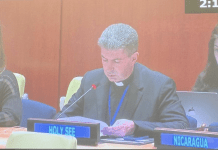
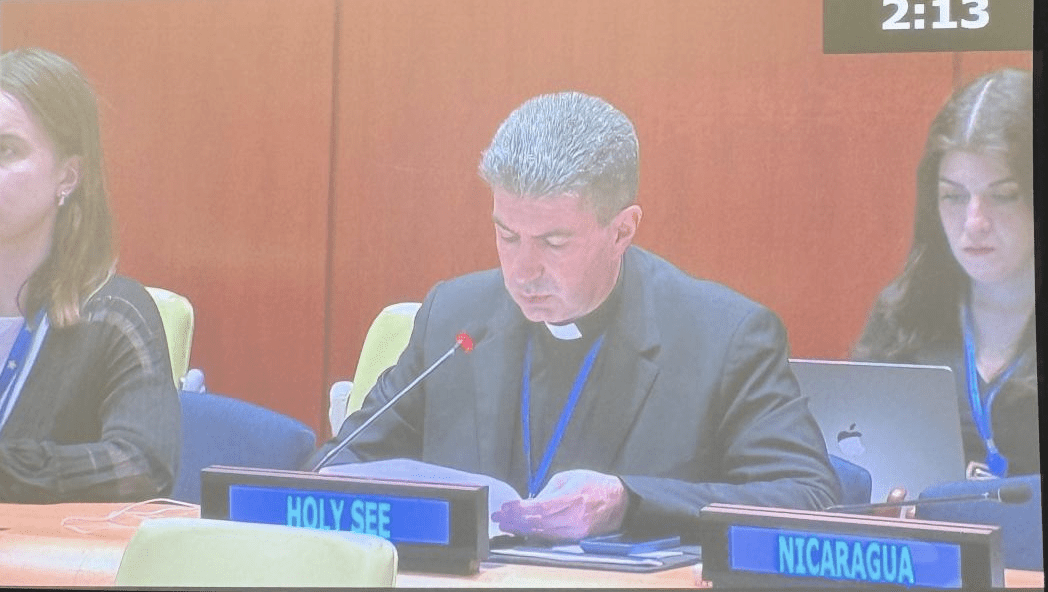
Speaking at the United Nations General Assembly’s Ad Hoc Committee for the Announcement of Voluntary Contributions to UNRWA on 30 June 2026, Msgr. Marco Formica, Chargé d’Affaires of the Holy See’s Permanent Observer Mission, underscored the agency’s indispensable humanitarian role. His remarks come at a time of deepening crisis across the occupied Palestinian territories, where violence, displacement and infrastructural collapse continue to affect civilian populations despite a ceasefire announced in late 2025.
“For over seven decades, UNRWA has provided education, healthcare, food assistance and social services,” the Holy See stated, emphasizing that the agency’s work extends beyond material relief to preserving “the opportunity to live with dignity.” Established by the UN General Assembly in 1949, UNRWA remains a central pillar of international assistance for Palestinian refugees across Gaza, the West Bank, Jordan, Lebanon and Syria.
The Holy See’s intervention highlighted mounting concern over the safety of humanitarian personnel and infrastructure. It condemned the killing of UNRWA staff and attacks on agency facilities, including schools sheltering displaced civilians. Such incidents, it warned, not only deepen the humanitarian toll but also violate international humanitarian law.
“These acts exacerbate the suffering of those already living in precarious conditions,” the statement said, calling for urgent measures to ensure the protection of civilians, aid workers and critical infrastructure. Particular emphasis was placed on Gaza, where the delivery of humanitarian assistance remains severely constrained.
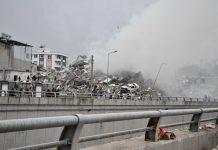
Current conditions in Gaza illustrate the scale of the emergency. More than 70 percent of the population now relies on trucked water, while shortages of shelter, healthcare and sanitation continue to intensify. Aid agencies report that access restrictions, damaged infrastructure and persistent funding gaps are significantly hampering relief operations.
Against this backdrop, United Nations Secretary-General António Guterres has warned that UNRWA is approaching a “breaking point,” citing a funding shortfall of approximately 100 million US dollars. The agency has already been forced to scale back services and introduce austerity measures, even as demand for assistance rises.
In response, the Holy See reaffirmed its financial pledge to UNRWA, framing the contribution as both a practical necessity and a moral commitment. It described the funding as “a concrete expression of solidarity with Palestinian refugees and confidence in the Agency’s humanitarian mission.”
However, the Holy See stressed that isolated contributions will not be sufficient. It called for “adequate, predictable and sustainable support” from the international community, warning that the agency’s ability to fulfill its mandate depends on stable and long-term financing.
Equally, the statement reaffirmed the importance of UNRWA’s adherence to the core humanitarian principles of humanity, neutrality, impartiality and independence. These principles, it noted, are essential to maintaining the agency’s credibility and effectiveness in a politically sensitive and volatile environment.
In its concluding remarks, the Holy See underscored the need to protect UNRWA’s mandate within the multilateral framework of the United Nations. Any deliberations about the agency’s future, it argued, must remain anchored in the collective will of member states rather than unilateral decisions.
As humanitarian needs continue to escalate and funding pressures mount, the Holy See’s renewed support serves as both a symbolic and material appeal for broader international engagement—one that underscores the enduring centrality of UNRWA in addressing one of the world’s most protracted refugee crises.
- Raju Hasmukh with files from Vatican News
Related Images: