














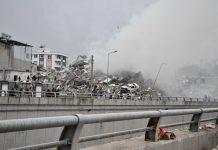







Israel captures Beaufort Castle in Lebanon, raising strategic and moral questions amid renewed conflict and fragile ceasefire.
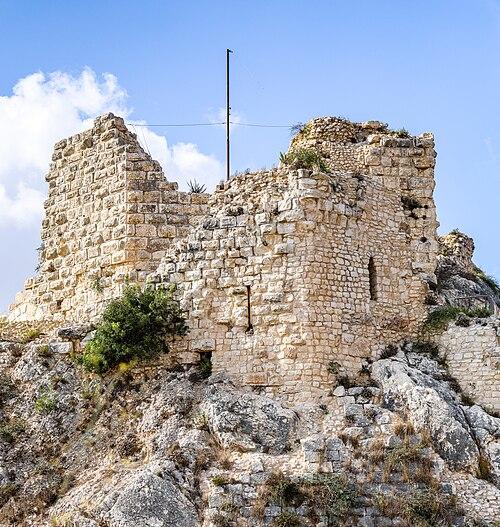
Newsroom (02/06/2026 Gaudium Press ) The ancient stones of Beaufort Castle have witnessed centuries of conquest, yet its latest capture by Israeli forces has once again thrust the medieval fortress into the center of a modern and deeply complex conflict. Perched high above southern Lebanon’s Litani Valley, the nearly 900-year-old stronghold has become both a symbol and a strategic prize amid escalating tensions between Israel and Hezbollah.
Israeli officials confirmed that troops seized Beaufort Castle as part of an intensified military campaign that Prime Minister Benjamin Netanyahu has described as a “decisive shift” against Hezbollah. The move comes despite an already fragile ceasefire, with Israeli ground forces advancing beyond previously observed demarcation lines along the Litani River. Lebanon’s prime minister has condemned the offensive as “collective punishment,” reflecting growing fears among civilians caught in the widening hostilities.
A Fortress Steeped in History
Originally constructed in the 12th century by Crusaders, Beaufort Castle—known in Arabic as Qalaat al-Shaqif—commands a sweeping view of southern Lebanon from its rocky summit roughly 700 meters above sea level. Its name, meaning “beautiful fortress” in Old French, reflects both its imposing presence and its strategic value.
Throughout history, control of the castle has shifted repeatedly among regional powers, including Crusaders, Muslim rulers, Ottoman authorities, and more recently, modern military forces. Its elevated vantage point has long allowed those who hold it to monitor vast swaths of territory, including the western Bekaa Valley and northern regions of Israel.
For Israelis, the site evokes memories of a hard-fought victory during the 1982 Lebanon war, when soldiers captured the fortress after intense combat. For many Lebanese, however, the image of the Israeli flag flying above Beaufort recalls the painful memory of an 18-year occupation that ended in 2000, a period widely viewed in Lebanon as one of subjugation.
Strategic Gain, Uncertain Outcome
In the present conflict, the castle’s capture provides Israeli forces with a powerful observation post overlooking key towns near Nabatieh and beyond. Military analysts suggest that securing such high ground enables greater surveillance and operational flexibility against Hezbollah positions near the border.
Yet beneath the tactical advantage lies a more uncertain reality. Reports indicate that Hezbollah did not heavily defend the fortress itself, and Israeli forces found no stockpiles of weapons upon taking control. Within hours, however, the area came under drone attack, leaving Israeli casualties and underscoring the persistent threat posed by Hezbollah’s capabilities.
Recent weeks have seen continued violence despite ceasefire efforts, with casualties on both sides. Israeli officials report significant losses inflicted on Hezbollah, while Hezbollah’s use of drones and rockets continues to disrupt life in northern Israel.
Political Pressures and Regional Tensions
The offensive also carries domestic political implications. Analysts note that Netanyahu faces mounting pressure ahead of possible elections and has pledged decisive action against Hezbollah. Critics, however, argue that symbolic gains—such as the reoccupation of Beaufort—may not translate into meaningful long-term security.
At the same time, international concern is rising. France has called for an emergency United Nations Security Council session, asserting that Israel’s actions in southern Lebanon may violate international law. The broader regional picture remains volatile, with renewed airstrikes between the United States and Iran near the Strait of Hormuz further heightening tensions across the Middle East.
A Christian Reflection: Power, Justice, and Peace
The events unfolding at Beaufort Castle prompt deeper reflection on the nature of power and the enduring human cost of conflict. Scripture consistently calls for justice tempered with mercy, and for leaders to pursue peace even amid deep divisions.
The Gospel of Matthew reminds believers, “Blessed are the peacemakers, for they shall be called children of God” (Matthew 5:9). Yet in regions marked by long histories of violence, peace remains elusive. The repeated contest for Beaufort—across centuries and civilizations—illustrates humanity’s tendency to seek security through dominance rather than reconciliation.
Christian teaching does not ignore the realities of defense or national security, but it challenges all parties to consider the moral weight of their actions, particularly when civilians suffer. The accusation of “collective punishment” raises serious ethical concerns, echoing biblical warnings against unjust treatment of the vulnerable.
An Unfinished Story
Today, Beaufort Castle stands once again under new control, its ancient walls bearing silent witness to yet another chapter in the region’s history. Whether its capture will mark a turning point or merely another moment in a prolonged cycle of conflict remains uncertain.
What is clear, however, is that beyond strategy and symbolism lies a human story—of fear, resilience, and longing for peace. For those viewing the conflict through a Christian lens, the call is not only to observe but to pray, advocate for justice, and seek pathways toward reconciliation in a land where history weighs heavily on the present.
- Raju Hasmukh with files from CBC and Al Jazeera
Related Images: